However Imperfectly: Lessons learned from thirty years of teaching
by Andrew Pudewa
It’s hard to say exactly when I began thinking myself a teacher, but I do remember when I set out on my own as an independent ...
Read More


It’s the height of summer. Summertime conjures thoughts of lazy days spent escaping the heat in the community swimming pool, binge reading a favorite book series in the icy cold air conditioning of... read more

How are astronauts protected from space dust traveling at the speed of a bullet? How do ants know when another ant has died? Which woman scientist was called the Sun Queen and why?... read more
One of my favorite jobs is working at a local academic homeschool co-op. This year I am the high school English teacher. I’m quite proud of my little IEW class. We’ve had a... read more

What is the best thesaurus for student writers? You might expect me to recommend a traditional thesaurus or an online tool. But, the best one I have found is actually an app: IEW... read more
Our customer service team talks to parents and instructors every day who receive their long-awaited IEW materials, open their bright and shiny package, and are instantly struck with a challenging conundrum of “Where... read more
Now that we are approaching the end of the school year, many students are in the midst of Unit 8, Formal Essay Models. In Podcast Episode 185, Andrew Pudewa and Julie Walker take... read more

We are excited to share with you that we have declared Ancient History-Based Writing Lessons to be IEW’s theme-based book of the year. What does this mean for you? Every month Andrew Pudewa... read more

Our online forums are a welcoming space where you can ask questions, share support, and feel encouraged. A community of people who share a common goal—teaching writing—the forums are supported by not only... read more
Once upon a time, there was only one IEW product—Teaching Writing: Structure and Style. It empowered, and continues to empower, teachers and parents to take the methodology back into their classrooms and homes... read more
I have been in the “IEW world” since fifth grade when I was first introduced to its method. Since then, I have known it intimately as a student, as a customer service representative,... read more
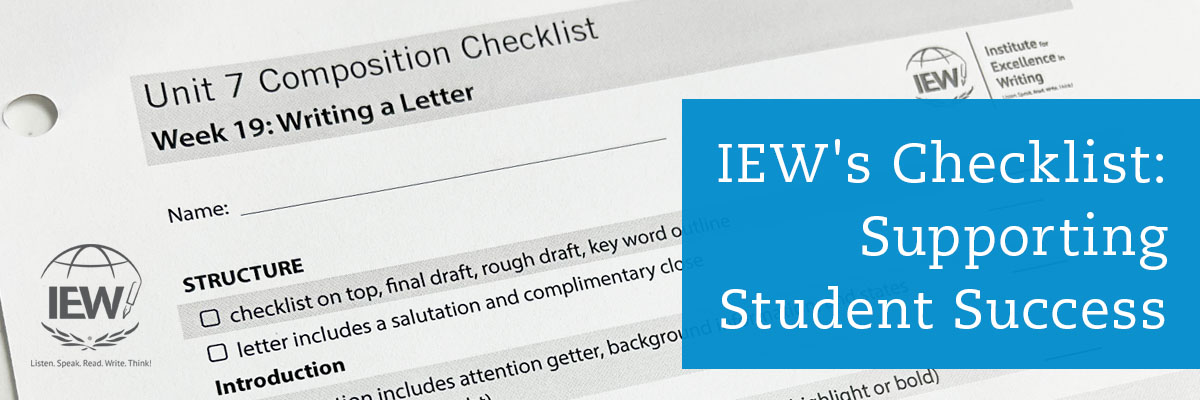
IEW’s Checklist: Supporting Student Success* One question we hear often regards the checklist. Many teachers wonder if they really have to hold their students to the checklist of dress-ups and sentence openers, mostly... read more
“How do I love thee? Let me count the ways.” This first line of Elizabeth Barrett Browning’s Sonnet 43 is familiar to most people. As we continue with our theme of “Furnishing the... read more

When IEW’s educational consultants talk with teachers who use our method, we always look forward to asking the question, “What surprises you the most?” Regularly the answer has something to do with how... read more

One of the students in Andrew Pudewa’s Level B Structure and Style for Students class is Gabbi. She was a member of the class for two years. Recently we reached out to Gabbi,... read more
by Ryan Weins Recently I had the privilege of completing a level of IEW’s spelling program, The Phonetic Zoo. Throughout my study, I found it enjoyable to finally experience how our approach to teaching... read more

Registration for Fall 2025 opens April 1, 2025. IEW® Online, which started in 2011 with just two instructors and a handful of classes, is not just another online writing class. Our foray into the... read more
This year, as the leaves depart from their branches and cover our lawns with their warm colors, I look back on one of the most integral parts of my childhood. Christmastime at the... read more

September is nearly over, but before you switch from retelling stories in Unit 3 to funneling facts in Unit 4, check out these story samples pulled from two of our latest theme-based books.... read more
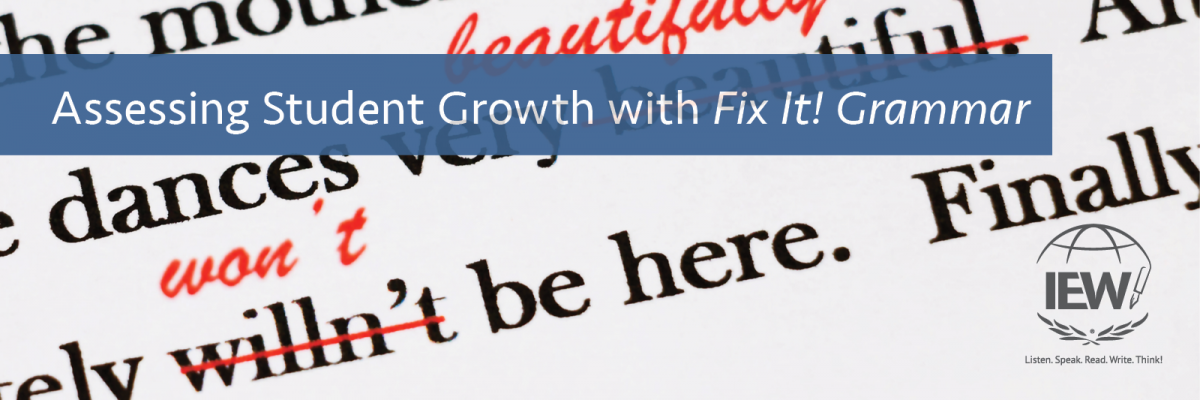
Teachers in school classrooms need opportunities for assessing student growth whether by traditional tests or by some other assessment. Educational assessments are methods of measuring students' learning and progress. They are essential tools... read more

Amy Wormald is an in-the-trenches veteran of IEW, both learning from and teaching the Structure and Style Writing Method. She learned writing as a student through IEW and then used it as a... read more

“Give me six hours to chop down a tree, and I will spend the first four sharpening the axe.” — Abraham Lincoln Do your college-bound students have a few hours this summer to sharpen their... read more

“The optimal learning environment is one which allows each child to progress at his own rate allowing sufficient repetition for mastery.” Andrew Pudewa, IEW Founder, Author, and Director In the Teaching Writing: Structure and... read more
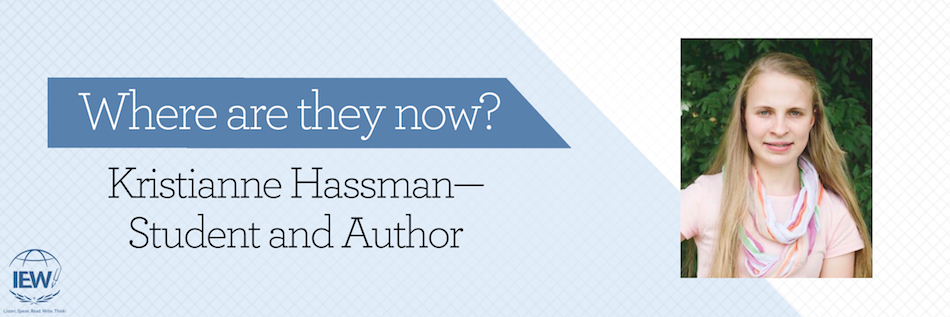
We love to hear from our customers. One of them recently contacted us to share her daughter’s success using IEW materials. Her daughter, Kristianne, had been working through Student Intensive Continuation Course Level... read more

For podcast Episode 223 Andrew Pudewa and Julie Walker invited Denise Boiko into the studio. The author of Homeschooled & Headed for College, Denise educated her own children beginning in kindergarten and continuing... read more
Our Student Resource Packet is a pretty nifty item. Broken down by the nine IEW units and including sections dedicated to writing about literature, dress-ups and word lists, sentence openers and transitions, decorations,... read more

Meet Sahar and her daughters, Sierra and Sonora. Sahar’s girls participated in Mr. Pudewa’s Structure and Style for Students Year 2 Level A class. We reached out to the family to learn more... read more
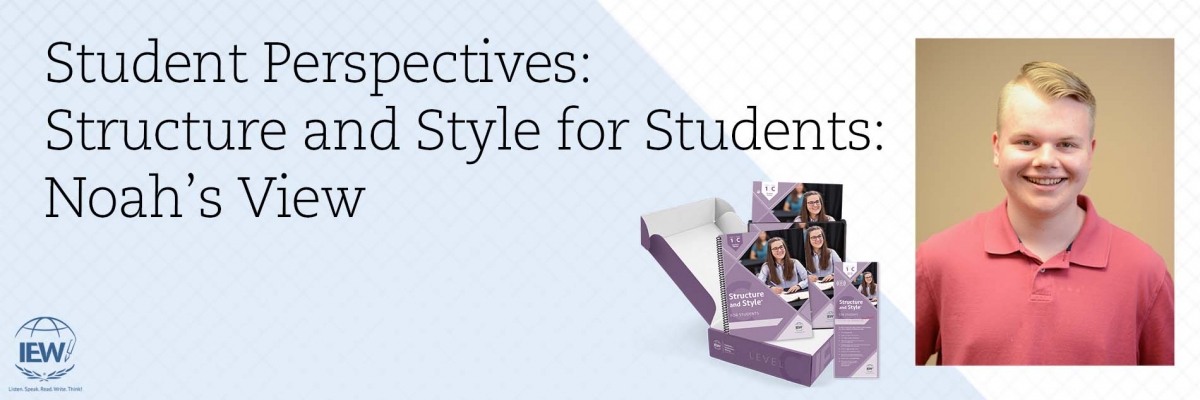
One of Andrew Pudewa’s Structure and Style for Students (SSS) high school students was Noah. At fifteen years of age, Noah arrived at his first SSS with little writing experience, feeling less than... read more

One of my greatest delights as a teacher is witnessing my students excel and move into the world with a powerful voice and readiness to meet the real world head-on. Meet Rebekah Goodrich,... read more
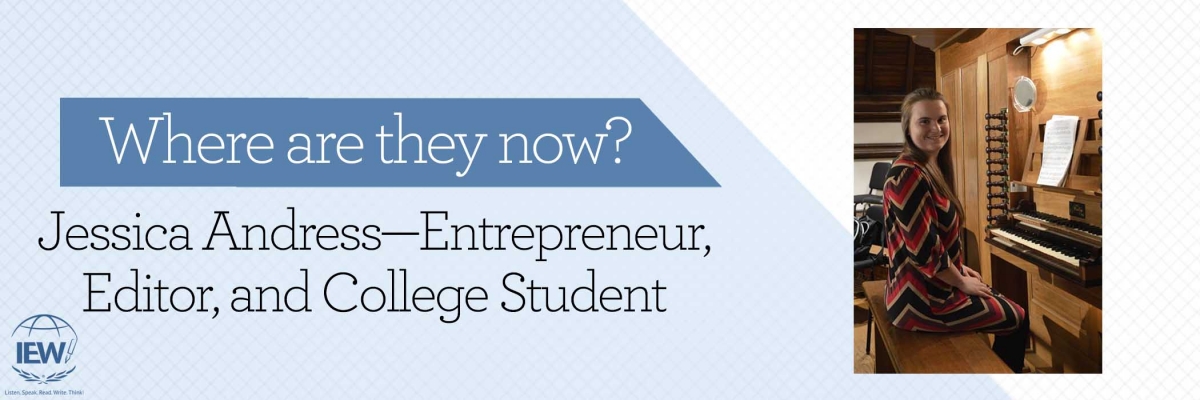
Our latest “Where Are They Now Student,” Jessica Andress, is a bit of a Renaissance gal. At her young age she has done a number of interesting things, including serving as a church... read more
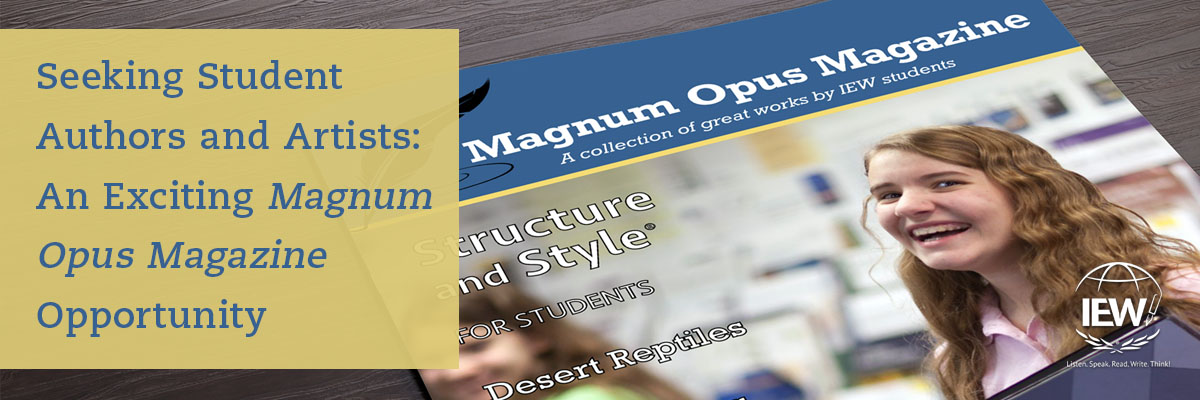
Magnum Opus Magazine, IEW’s premier showcase of work from students around the world, is publishing a print edition in 2023 and is actively soliciting submissions from students. Before you jump into the school... read more

Meet Joshua (Josh for short). One of Andrew Pudewa’s students in IEW’s newly released video-based Structure and Style for Students: Level A classes, he is ten years old. When he first started taking the... read more

Just as we all are, students are equipped with a vast range of interests and aptitudes. Some students absolutely love to write, and you can hardly tear them away from their novel-in-progress to... read more

School’s out! Time to put away the books and forget about school for a few precious, sun-drenched, fun-filled months, right? Wrong! And in Podcast Episode 194, Andrew and Julie talk about why. As... read more

Imagine a lightless world, full of sound, touch, and smell, but absent of color, visible texture, and sight. In their reading and writing studies, most students rely heavily on their sense of sight,... read more
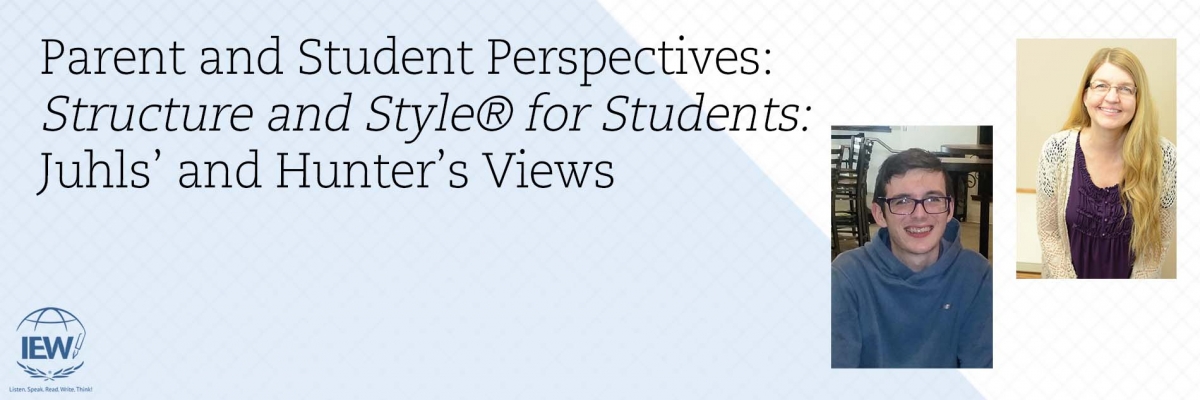
One of the students who participated in Andrew Pudewa’s Level B Structure and Style for Students is Hunter. His mother is Juhls. We recently reached out to the pair to get their thoughts... read more

Recently we had the opportunity to catch up with one of the Level A Structure and Style Students along with his mother. Benjamin participated in both years of the Level A course, and... read more
With all that is happening in the world and across the United States, IEW wanted to do what we could to help in some small way. That’s why today’s post is a bit... read more

As a mom of two students who participated in the filming of IEW’s new Structure and Style Students, Jenny observed first-hand the difference that Structure and Style made in her boys’ writing. Caleb... read more

I had the recent pleasure of meeting Andrew V., a high school student appearing in IEW®️’s newly released video-based Structure and Style for Students: Level C classes. I met him when I traveled... read more
I blanched and then squeezed my eyes shut, hoping the action would hint to my mouth to also stay closed. He had done it again! My son’s sentence, “Man, that was a close... read more

Writing contests are a fabulous way for students to further develop their writing skills, reach a broader audience, and potentially win a prize. They also provide a novel way to insert a little... read more
Summer has arrived! The slower pace of the season brings with it opportunities to read for perhaps hours on end, go swimming at the beach or pool, and enjoy your favorite grilled foods.... read more
We are excited to announce Success in Teaching Writing, an upcoming online conference that will focus on special needs. Happening on Saturday, January 16, 2021, this full-day writing conference will offer sessions for... read more
by Jean Nichols and Janet Spitler We have shared a plethora of information to help teachers and students who are new to the IEW approach to writing. This blog series answers the question, “What does... read more
IEW teaches students to write with structure and with style. Style includes vocabulary. Structure is the elements found in compositions. Throughout the year students progress through nine structural units. At this point in the... read more
We are excited to announce the writing prompts for IEW’s 2022 Writing Contest and invite your students to submit their compositions for a chance to win a cash prize. Why should your students... read more
As winter begins to wane, and the days slowly stretch out longer and longer, we at IEW grow excited because we know the annual IEW Writing Contest is nearly here. We look forward... read more

When I first heard the phrase interrogative thinking, I was immediately drawn to follow this idea. What an interesting combination of words. Of course we want our children to think clearly, quickly, carefully,... read more

Regardless of the educational environment students are in, whether it be a hybrid school, a charter school, or a five-day-a-week school, students learn best when they have unified support. This support primarily comes... read more
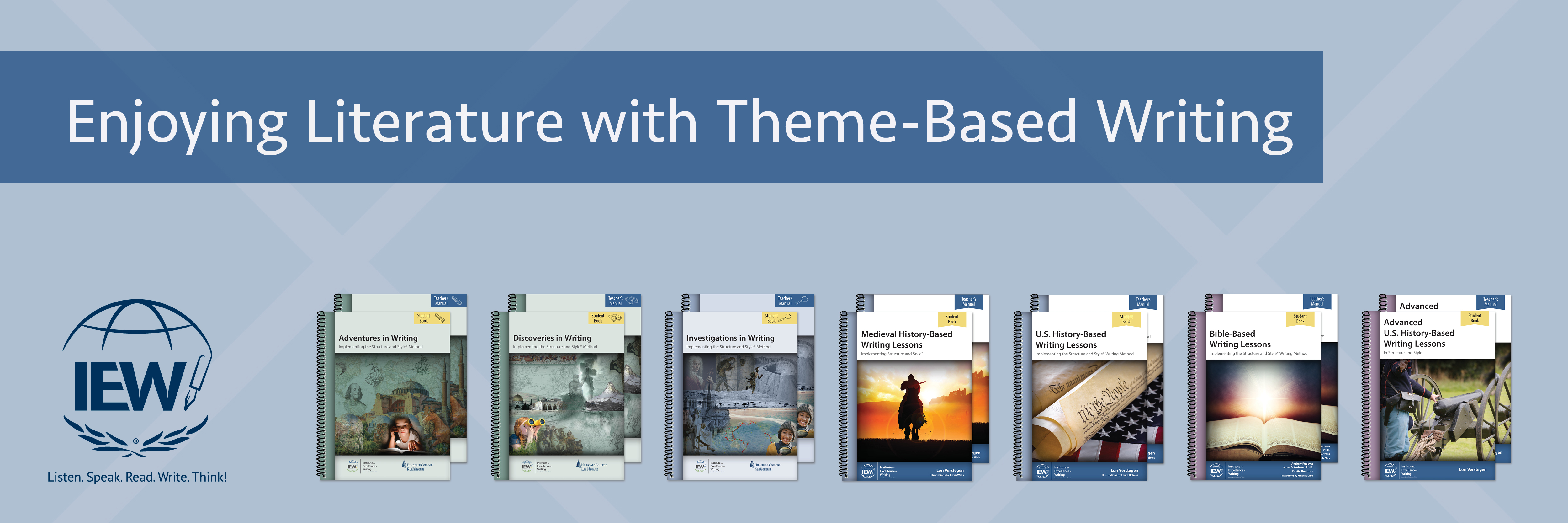
Reading and listening to high-quality literature is a vital component of a student’s education. When students engage with literature, some wonderful things happen: vocabulary expands, syntax develops, and comprehension matures. Not only that,... read more
IEW offers many excellent programs for language arts. Among them are products dedicated to written expression, speaking, literature, spelling, and handwriting. In this blog post we take a closer look at our Writing... read more
Learning is a struggle for some, and sometimes learning to write seems like an impossible task. We received this testimony from a mom whose daughter—now in college—had extreme learning difficulties. With IEW’s help,... read more

I started IEW when my twins were in fifth grade. I bought my Teaching Writing: Structure and Style (TWSS) in the spring. Truth be told, I was a little intimidated to begin, so... read more

Whether you are teaching two students or twenty, you have likely noticed that each of your students learns a bit differently. One child might happily read a book and remember what he’s read,... read more

On June 26, IEW is hosting the 2021 Online Writing Conference. We invite you to attend! Developed with teachers, administrators, tutors, parents, and students in mind, this free event will span the day,... read more

IEW teaches students to write with structure and with style. Style includes vocabulary. Structure is the elements found in compositions. Throughout the year students progress through nine structural units. After one, two, or maybe... read more
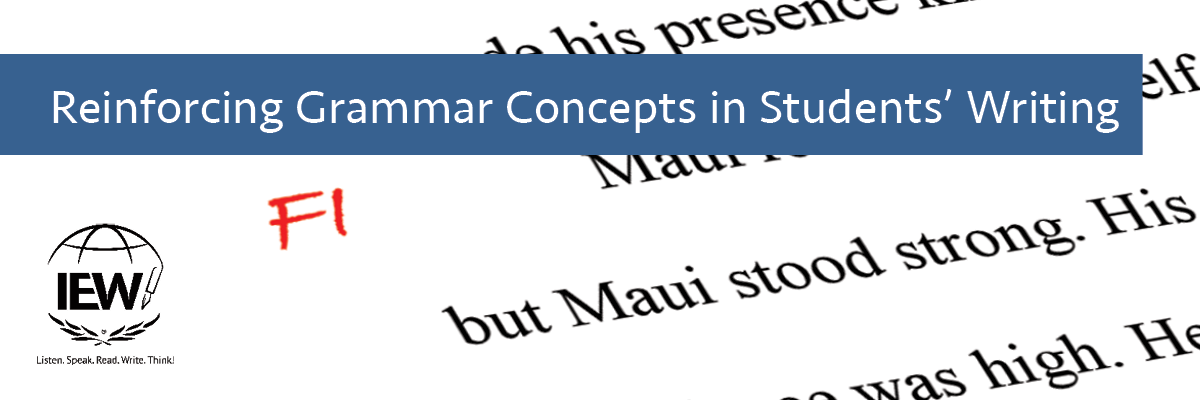
As a homeschooling mom, co-op teacher, and now a classroom teacher, I have found that Fix It!™ Grammar is the most practical and painless way to teach and learn grammar. In Andrew Pudewa’s... read more
Writing contests are a fabulous way for students to further develop their writing skills, reach a broader audience, and potentially win a prize. They also provide a novel way to insert a little... read more
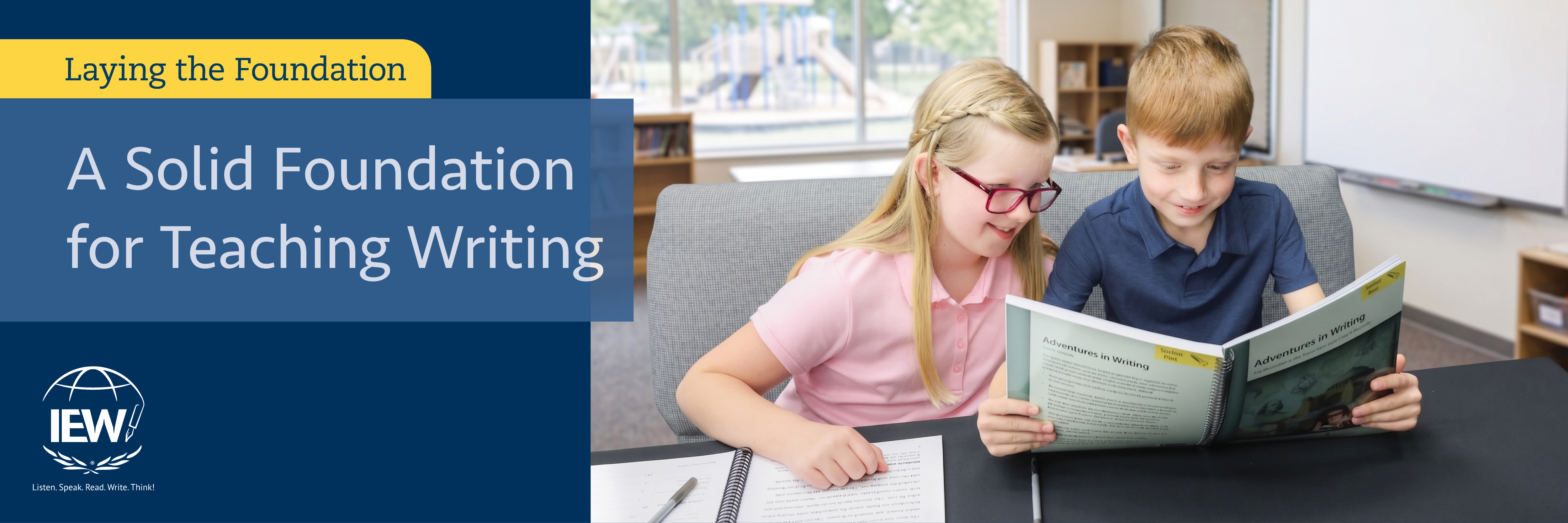
What is the most common complaint from students when they are asked to write something? “I don’t know what to write about.” How does the Structure and Style® method remove this obstacle to... read more
Have you committed one of these four errors in your teaching? Overcorrecting, holding back help, unclear assignments, and over-expectation can frustrate your students and hamper your best efforts. How can you overcome these... read more

All across the United States, people today peered up into the skies to participate in a unique heavenly event, a solar eclipse. Were you among the many? Here’s a way to extend the... read more
This spring, we were delighted to host our second annual writing contest, receiving submissions from students all around the world. Our online writing instructors served as the judges, carefully reading each submission and... read more
It’s become a tradition that each spring, we announce the prompts for the annual IEW Writing Contest. This year’s prompts were as follows: Level A: Write a 2-paragraph composition about why kindness is important,... read more

On Day 3 of Twelve Days of Christmas Giving, IEW is giving you a three-week sample from Writing Across the Curriculum. Be sure you are registered for the event to receive the email... read more

The Structure and Style® methodology provides a framework for incorporating writing into other subject areas. It is also flexible and easily adapted to specific situations. A state history project is one of these.... read more
“Writing across the curriculum” continues to be a common educational trend in the United States. In podcast Episode 294 Andrew and Julie discuss what writing across the curriculum actually means and how IEW’s... read more
The month of May doesn’t just bring flowers; if you have been keeping up with the suggested IEW unit pacing, it also brings Unit 9, the formal critique. But what is a formal... read more

Recently, I attended the 2024 NCFCA National Championship. Sitting at the IEW table, I was privy to all of the buzz as students swarmed around me, entering and exiting the student center of... read more
Each month in 2019, we would like to highlight one of our products and answer a few questions about it. It is our hope to create a space where you can learn more... read more
The blank page. It’s a formidable foe for young and old. Just looking at a blank page can be enough to increase the heart rate and make the palms sweat. Fortunately, IEW tackles... read more
You may have already heard some of the buzz from IEW® about an upcoming important announcement. It’s exciting news that we are looking forward to sharing with you all. While the clock has... read more
Learning to teach writing effectively is one of the most powerful investments a school can make in its teachers. If writing instruction is inconsistent or unclear, students become frustrated and lack confidence. IEW’s... read more
# # The month of December is a hectic one. You may barely be through the Thanksgiving turkey leftovers, and then suddenly you find yourself in the midst of Christmas decorating, baking, and socializing. Rather... read more

In her 1977 article “Writing as a Mode of Learning,” Janet Emig states, “Writing serves learning uniquely because writing as process-and-product possesses a cluster of attributes that correspond uniquely to certain powerful learning... read more

When you teach writing with IEW®, you are constructing a solid writing foundation for your students. IEW’s writing structure is based upon nine units or structural models. But what are those models? A... read more
At IEW, we mean it when we say our Structure and Style™ method works for students who have a wide range of abilities. This includes special learners. Sue Ewing is a Certified IEW... read more
In 2013 as an IEW Educational Consultant, I conducted the Teaching Writing: Structure and Style® (TWSS) seminar at Legacy Christian Academy, a hybrid school in Bakersfield, California. As the school prepared for the... read more
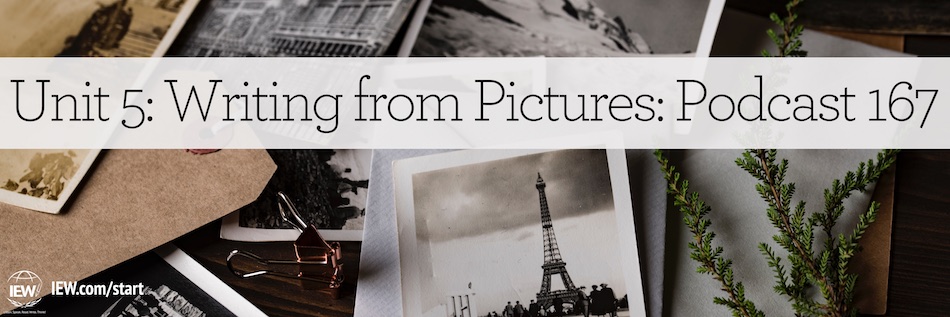
In Podcast 167 Andrew Pudewa and Julie Walker discuss Unit 5, Writing from Pictures. This unit is distinct from the other writing units in that the student uses pictures in order to describe... read more
Centering around the teaching of cursive, our latest “Best of” podcast episode deserves another listen. Why should cursive be taught? Isn’t it obsolete now that everyone can type on their phones, laptops, and... read more

The last several months have been filled with exciting events such as IEW’s twenty-fifth birthday bash and the brand new Structure and Style for Students courses. And the year is just getting started!... read more

It’s best to think of language acquisition as a journey, and every student is somewhere on the path. Our goal for our students is not perfection; our goal is progress. We want to... read more
During my thirty-four-year career as an elementary school teacher, I taught at seven schools in four school districts in three states. The districts ranged from rural to suburban to inner city, each with... read more

A History of Inconsistency Over the course of my thirty-four-year career as an elementary school teacher, I taught at seven schools in three school districts in three different states. The districts ranged from rural... read more
While the act of reading appears, at least on the surface, to be simple, it is anything but. Reading is actually an extremely complicated activity that involves lots of simultaneous processes within the... read more
by Jean Nichols and Janet Spitler When I began using IEW’s Structure and Style method in my classroom in 2001, I was anxious about teaching Unit 3: Summarizing a Narrative. Classroom Supplements hadn’t been... read more
Have you committed one of these four errors in your teaching? Overcorrecting, holding back help, unclear assignments, and over-expectation can frustrate your students and hamper your best efforts. Andrew Pudewa refers to these... read more

If your students are using IEW’s new Structure and Style for Students (SSS) program this year, you may be wondering whether you actually need Teaching Writing: Structure and Style (TWSS) in order to... read more
Meet Nataly and Breesa Pierce, IEW students ages 8 and 11. Each of them competed in her first writing contest this past summer. Nataly won first place, and Breesa took third in separate... read more
Once upon a time, IEW offered a single product—Teaching Writing: Structure and Style (TWSS). Since then the TWSS has undergone a few updates with the most recent one occurring in 2015 (TWSS2). Additionally... read more
Here at the Institute for Excellence in Writing, our mission is to equip teachers and teaching parents with methods and materials which will aid them in training their students to become confident and... read more

As any homeschooling parent knows, finding the right-fit curriculum for a subject can be overwhelming and expensive. We make a purchase, thinking This is the one! only to be disappointed. Alternatively, a curriculum... read more
We are blessed to live in a time where there are many educational options available for our students. The beauty of IEW methodology is that it is easily adaptable to most educational settings.... read more
In our last blog post, we described the initial steps you need to take in order to plan for a successful year utilizing our flagship course, Teaching Writing: Structure and Style, as the... read more
People are unique. Just as some people feel most at home in an urban environment, others chafe at the sounds and sights of the city and long for the quiet comfort of a... read more

Occasionally we get calls from parents of older children who are just starting out with IEW. They are worried that their students are starting too late for it to really work well. Alayna... read more

As a child, I wanted to become a second-grade teacher. In college, though, my parents pushed me to study business instead. Poor grades followed, and a degree change became imperative. I switched paths... read more
This year it seems as if there are more and more children who will be learning from home. With all of these new at-home learners, there are more and more at-home teachers. Parents... read more

While some educators are beginning to move into Unit 6 with their students, there are still several who choose to spread out Unit 5 over both December and January. For those who are... read more

If the summer break hasn’t started for you yet, most likely it is just around the corner. While teachers and teaching parents love having a nice break to rest and recharge for the... read more

Recently IEW hosted an online conference called “Success in Teaching Writing: A Special Education Writing Conference from IEW.” If you missed it, you can watch the recording of it by visiting this link.... read more
Last week Andrew and Julie began a conversation about how to teach writing. In this week’s podcast, Episode 234, they continue their discussion, this time centering more on how to appropriately evaluate writing.... read more
The 2021 IEW Online Writing Conference: Recorded and Ready to Watch! It’s a wrap! This past Saturday marked IEW’s second annual Online Writing Conference. Did you participate? It was a fabulous day featuring workshops... read more
We recently received this powerful testimonial from Johanna Mackin, a middle school teacher in Murfreesboro, Tennessee. Hoping that it will inspire other teachers, we are pleased to be able to share it with... read more
What is an essay? How is it distinguished from a report? Why is it important to teach our students how to write persuasively? And how do we help our students transition from writing... read more
In June IEW presented its second annual Online Writing Conference. Attended by people from all around the world, the conference offered education and support for teachers, administrators, parents, and students. In this week’s... read more
Recently in IEW’s official Facebook Group, mom Marcela B. wrote a post in which she explained how valuable she found the teacher training she received in Teaching Writing: Structure and Style to be.... read more
The month of March is traditionally when students encounter Unit 7: Inventive Writing. In Podcast 182, Andrew Pudewa and Julie Walker discuss this writing unit and introduce the writing prompts for this year’s... read more
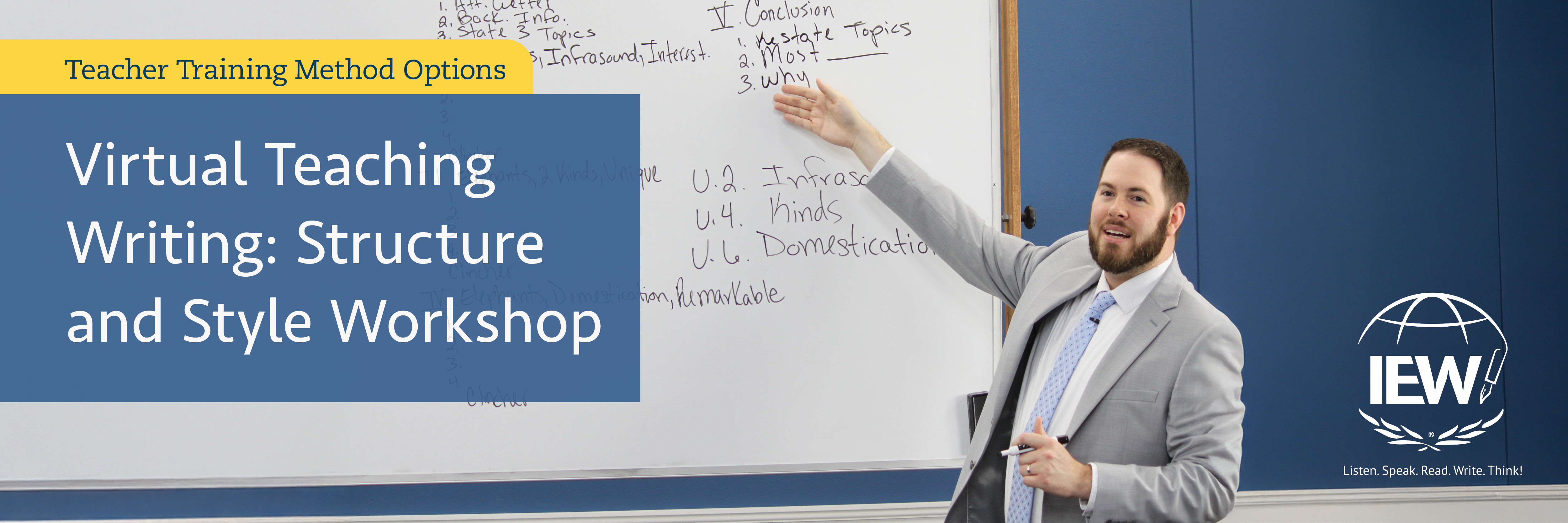
Learning to teach writing effectively is one of the most powerful investments teachers can make in improving their instruction. In parts one and two of this training methods series, we featured video training through... read more

Do you have a new or struggling reader in your home? If so, find direction and encouragement in our June 26 webinar with Jill Pike, author of Primary Arts of Language (PAL). Jill’s... read more
Whether you use one of IEW’s Writing Across the Curriculum courses or a Structure and Style® for Students video-based course, it is a win-win for your students. While both use a spiral method... read more

This past Saturday, people from all around the world gathered together virtually to participate in IEW’s online writing conference, From Imitation to Innovation. It was a day filled with inspiring instruction and useful... read more
Getting students to write using vivid language is easier said than done. Asking them to “show, not tell” when they write or to write in a way that creates a movie in... read more
Some instructors teaching with Structure and Style for Students have noticed something that appears to be missing from the checklists: the point values. While we do offer checklists with points as an optional... read more
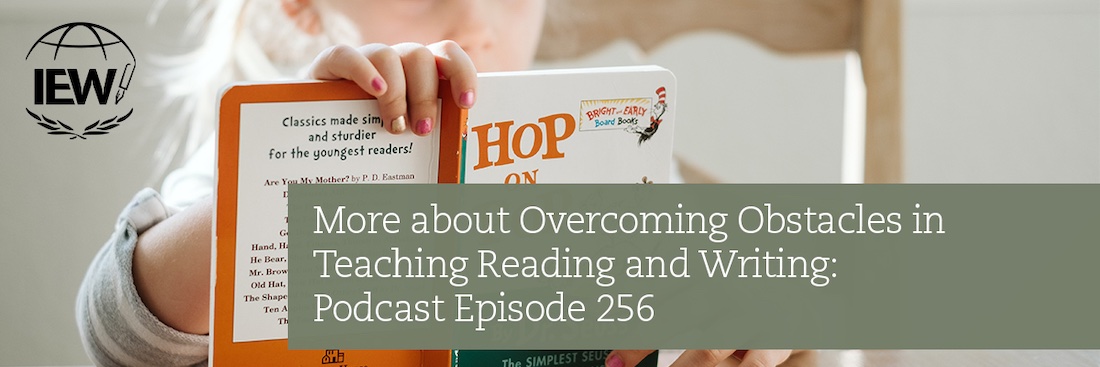
During last week’s Arts of Language Podcast episode, Andrew and Julie discussed effective ways to overcome obstacles in teaching reading and writing. One of the techniques they mentioned was implementing copywork. But rather... read more
Arranging desks, unpacking new textbooks, and dusting off classroom libraries in a freshly cleaned classroom gives even the most seasoned veteran a happy feeling of anticipation for the year ahead. Making a new... read more
In this podcast, Andrew and Julie uncover the powerful educational content in IEW's core product, Teaching Writing: Structure and Style (TWSS). Additionally, they discuss each one of the stylistic techniques as well as the supplemental contents... read more

The most recent “Best of” podcast features popular homeschool speaker and author Heidi St. John. During the podcast Julie Walker and Heidi St. John discuss how busy homeschool moms “do it all.” Quick... read more

Primary Writing with Structure and Style was designed specifically with primary teachers in mind. Providing a bridge between Anna Ingham's Blended Sound-Sight Program of Learning and the Structure and Style method, this seminar... read more
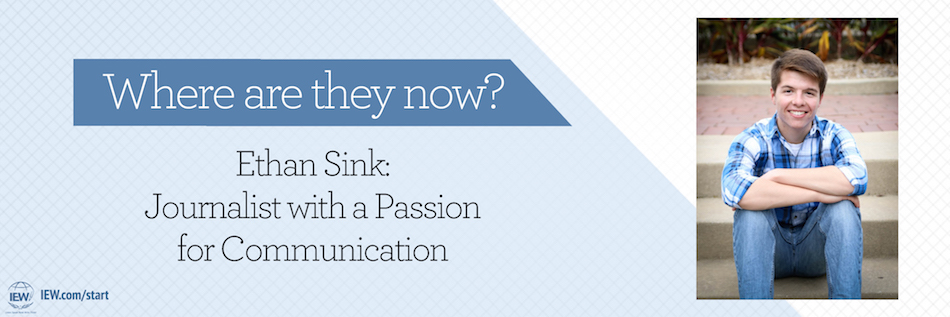
Occasionally at IEW we receive questions from parents wondering if our curriculum will work for students who are interested in pursuing careers in journalism. We would unequivocally say yes! As proof, we would... read more
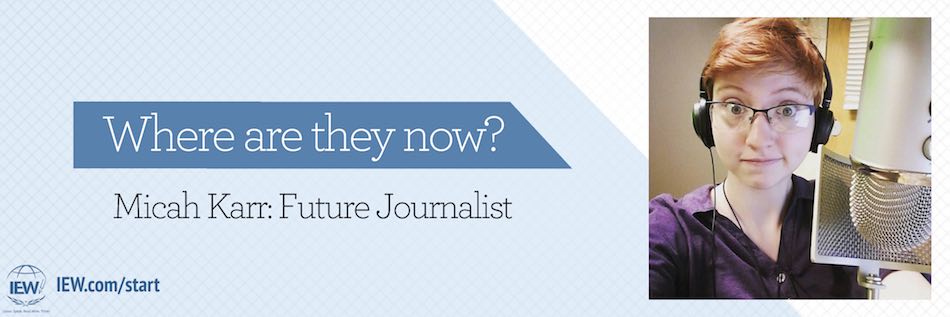
The oldest of three daughters, Micah Karr grew up near Wright-Patterson Air Force Base in Dayton, Ohio, and was home educated from kindergarten through grade 12. Now in college, Micah is enjoying the... read more

From time to time we enjoy highlighting former structure and style students to showcase their achievements both academically and professionally. Students who learn this writing method are able to confidently use the skills... read more
If you are participating in this year’s Great TWSS Adventure, this week you will be encountering formal essay models. The essay is the goal for formal writing. Units 4 and 6 have provided... read more

Which IEW courses will help prepare your students for writing at the collegiate level? Most colleges expect students to be able to write proficiently. Across academia, professors often assign essays to gauge their... read more

This week marks the penultimate week for this year’s Great TWSS Adventure. If you have kept up with the schedule, you will be encountering the final unit, Unit 9. In this section of... read more

Teachers and teaching parents from across the globe who are participating in the Great Adventure will tackle Unit 7 this week. Many teachers are very excited to reach this unit because it is... read more

In middle school, Malachi decided to do something he had never done before. He summoned up his courage, wrote an essay, and submitted it to a writing contest. What he learned in the... read more

Are you just beginning to use IEW with your high school students? Let Katherine Wilkins’ story encourage you! She began IEW in 9th grade and found it to be an excellent curriculum to... read more
This week on the Arts of Language Podcast marks the release of Episode 230. Every tenth episode features an “Ask Andrew Anything,” where listeners send in all different kinds of queries. Listen to... read more

One of the hallmarks of IEW’s Structure and Style® methodology is to assign students composition checklists that follow EZ+1. What does this mean? Simply this: adjust the checklist so that the student is only... read more
‘Tis the season! While many of us anticipate the upcoming holidays and start to plan the myriad of celebrations, not everyone is occupied with visions of sugarplums. High school and college students face... read more
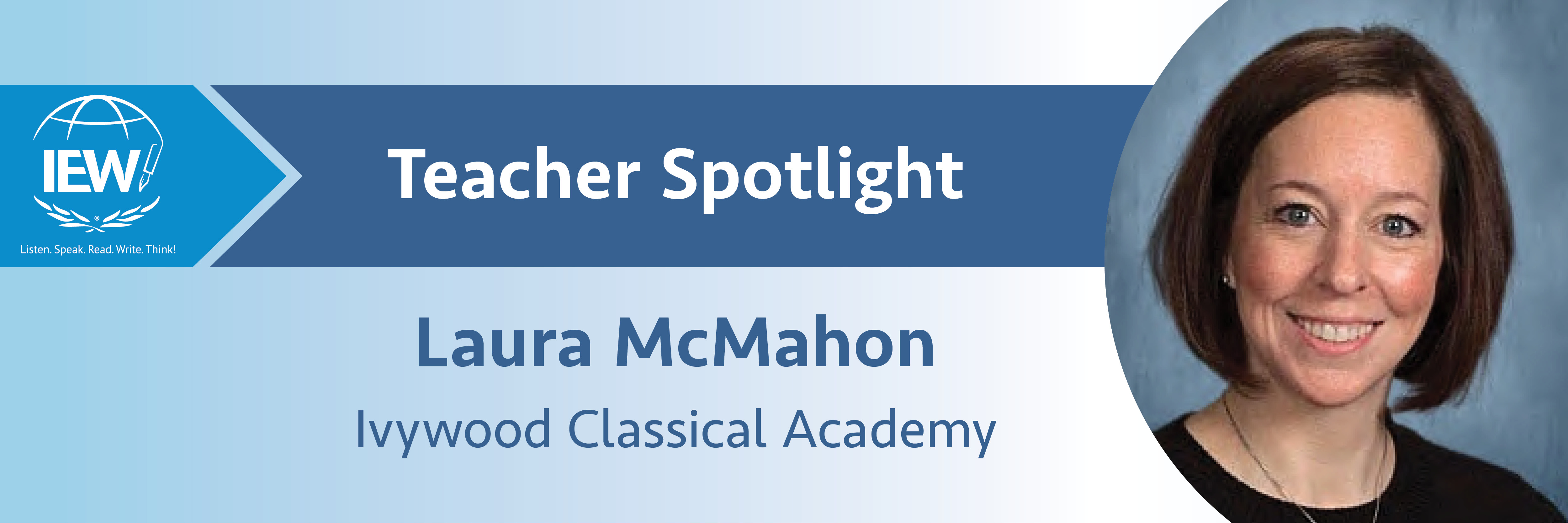
Laura McMahon is a middle-school teacher at Ivywood Classical Academy, a tuition-free public school located in Plymouth, Michigan. Ivywood Classical Academy is a Hillsdale College Member School. How many students do you have? In seventh... read more
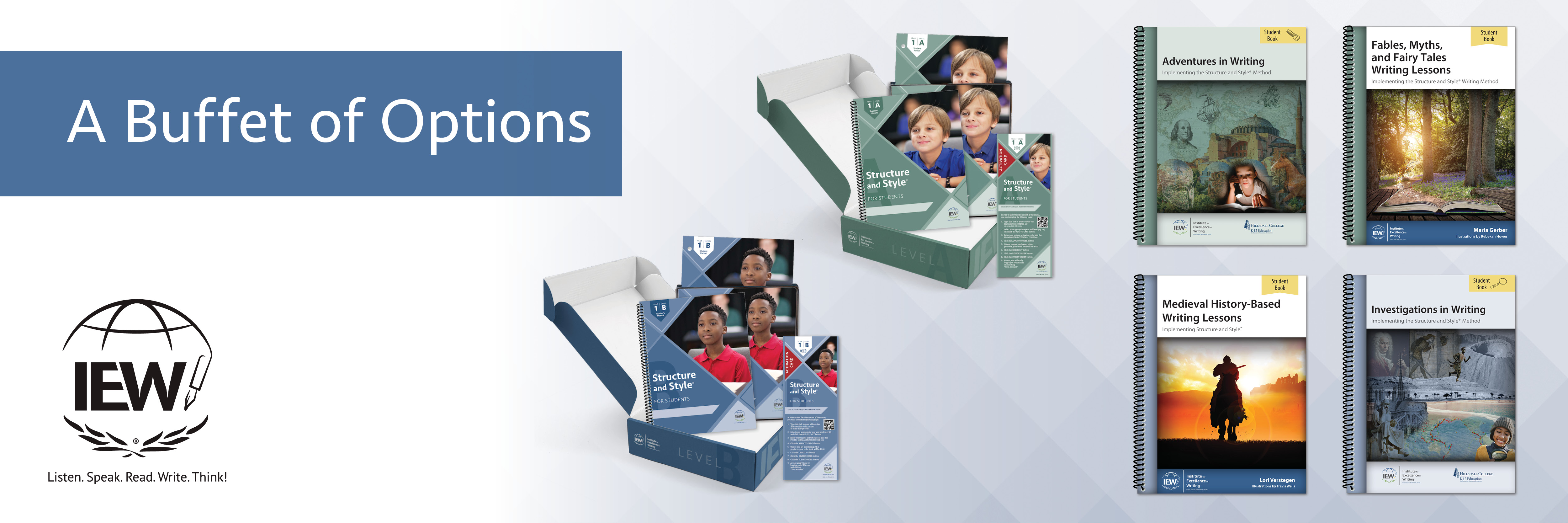
“Which should I choose?” is a common question from parents and teachers exploring IEW’s two main options for teaching the Structure and Style® methodology. While some create their own lessons, most prefer ready-made... read more
IEW teaches students to write with structure and with style. Style includes vocabulary. Structure is the elements found in compositions. Throughout the year students progress through nine structural units. At this point in the... read more
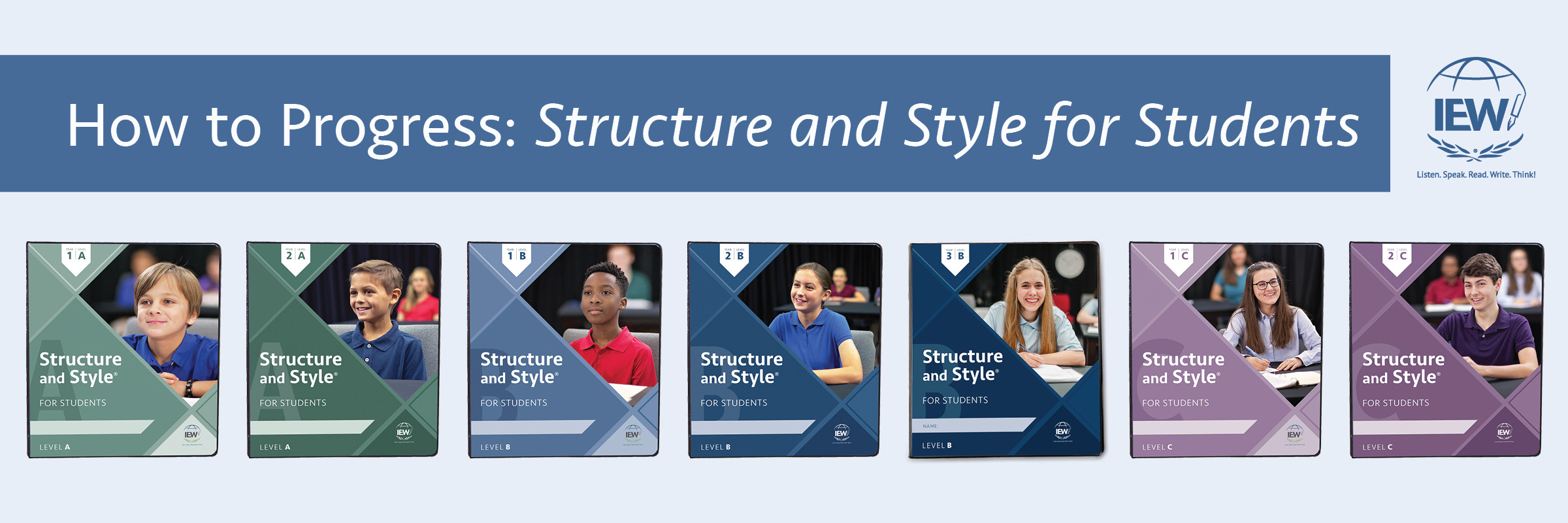
Structure and Style® for Students (SSS) video-based courses build on each other. Although many begin at Level A, older students who have used other curricula may begin at Year 1 of Level B... read more

What an inaugural year it has been for the Christian Halls International’s (CHI) dual enrollment program using IEW materials! English Composition I was taught in the fall semester, followed by English Composition II... read more

Narnia lovers, rejoice! If you’ve used and loved Following Narnia® Volume 1: The Lion’s Song, you’ll be delighted to know that IEW has recently released the sequel: Following Narnia® Volume 2: Aslan’s Country.... read more
Are you working with high school students? If so, Podcast Episode 187 is a must-listen episode! During the podcast, Andrew and Julie discuss advanced essay models, describing what some of these models look... read more
IEW Online classes are a perfect option for students who want to work through the Structure and Style for Students program but whose parents would prefer someone else to review the students’ work. The... read more
Occasionally at IEW our customer service team will receive questions about the differences between topic sentences and thesis statements. Hopefully this blog post will dispel any confusion between the two and empower you... read more
It has been a tremendous blessing to have discovered IEW early on in my homeschooling journey. With over twenty-one years in the trenches so far, I am still homeschooling... read more

In 2023 IEW released Introduction to Public Speaking. In honor of this, IEW hosted its first annual speech contest and received submissions from all over the country. After much deliberation, the winners were... read more

In the 1970s Dr. James B. Webster began each of his university history classes with lessons from his program Blended Structure and Style in Composition because his students could not write well enough... read more

It started with a question. Every year our daughter Grace poses the question “What is on your bingo card this year?” Instead of New Year’s resolutions, she encourages goals, fun experiences, and opportunities... read more

When students become aware of their own thinking processes and start to ask and answer questions about their learning, they are using metacognitive thinking skills. In a nutshell, metacognitive thinking happens when learners... read more

Not long ago in the forum, we had a member ask about using a graphic organizer in place of a key word outline. Jill Pike, IEW Accomplished Instructor and author, responded with her... read more

For those of you who have an older version of the Student Resource Packet (SRP) and have updated to the most recent edition, you may have noticed that we no longer include bibliography... read more
For Episode 123 Andrew Pudewa and Julie Walker waded a little deeper into the topic of advanced thinking skills. Now in Episode 124 they continue the conversation and go even deeper, exploring Aristotle... read more
“I hear and I forget; I see and I remember; I write and I understand.” According to this Chinese proverb, writing about something leads to understanding it. While writing instruction is commonly considered... read more
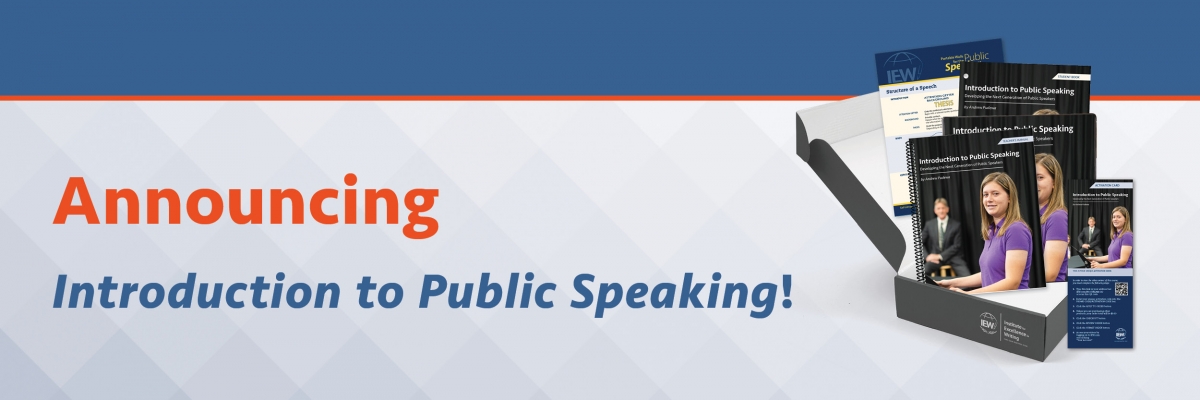
Listen. Speak. Read. Write. Think! At IEW, these are words to live by. While the Institute for Excellence in Writing is thought of primarily for its writing curricula, the primary focus is on... read more
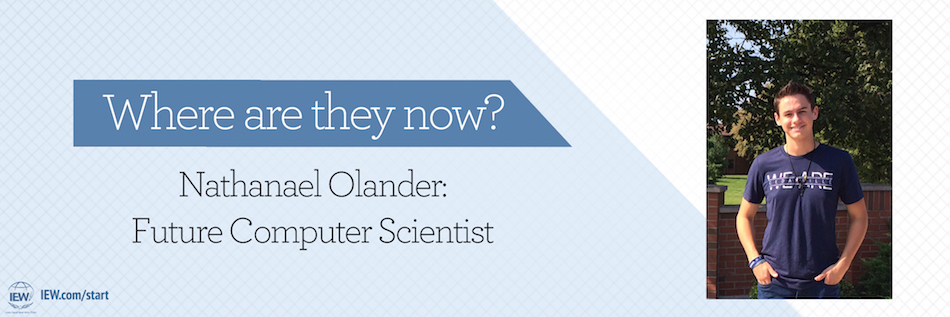
# Nathanael Olander grew up an “IEW kid.” His mom, Danielle Olander, is an IEW homeschool exhibitor. Together the two of them authored Rockets, Radar, & Robotics*, a technology-themed writing curriculum. The idea for... read more
It’s the height of summer. Summertime conjures thoughts of lazy days spent escaping the heat in the community swimming pool, binge... read more
How are astronauts protected from space dust traveling at the speed of a bullet? How do ants know when another ant... read more
One of my favorite jobs is working at a local academic homeschool co-op. This year I am the high school English... read more
What is the best thesaurus for student writers? You might expect me to recommend a traditional thesaurus or an online tool.... read more
Our customer service team talks to parents and instructors every day who receive their long-awaited IEW materials, open their bright and... read more
Now that we are approaching the end of the school year, many students are in the midst of Unit 8, Formal... read more
We are excited to share with you that we have declared Ancient History-Based Writing Lessons to be IEW’s theme-based book of... read more
Our online forums are a welcoming space where you can ask questions, share support, and feel encouraged. A community of people... read more
Once upon a time, there was only one IEW product—Teaching Writing: Structure and Style. It empowered, and continues to empower, teachers... read more
I have been in the “IEW world” since fifth grade when I was first introduced to its method. Since then, I... read more
IEW’s Checklist: Supporting Student Success* One question we hear often regards the checklist. Many teachers wonder if they really have to... read more
“How do I love thee? Let me count the ways.” This first line of Elizabeth Barrett Browning’s Sonnet 43 is familiar... read more
When IEW’s educational consultants talk with teachers who use our method, we always look forward to asking the question, “What surprises... read more
One of the students in Andrew Pudewa’s Level B Structure and Style for Students class is Gabbi. She was a member... read more
by Ryan Weins Recently I had the privilege of completing a level of IEW’s spelling program, The Phonetic Zoo. Throughout my study,... read more
Registration for Fall 2025 opens April 1, 2025. IEW® Online, which started in 2011 with just two instructors and a handful of... read more
This year, as the leaves depart from their branches and cover our lawns with their warm colors, I look back on... read more
September is nearly over, but before you switch from retelling stories in Unit 3 to funneling facts in Unit 4, check... read more
Teachers in school classrooms need opportunities for assessing student growth whether by traditional tests or by some other assessment. Educational assessments... read more
Amy Wormald is an in-the-trenches veteran of IEW, both learning from and teaching the Structure and Style Writing Method. She learned... read more
“Give me six hours to chop down a tree, and I will spend the first four sharpening the axe.” — Abraham Lincoln Do... read more
“The optimal learning environment is one which allows each child to progress at his own rate allowing sufficient repetition for mastery.”... read more
We love to hear from our customers. One of them recently contacted us to share her daughter’s success using IEW materials.... read more
For podcast Episode 223 Andrew Pudewa and Julie Walker invited Denise Boiko into the studio. The author of Homeschooled & Headed... read more
Our Student Resource Packet is a pretty nifty item. Broken down by the nine IEW units and including sections dedicated to... read more
Meet Sahar and her daughters, Sierra and Sonora. Sahar’s girls participated in Mr. Pudewa’s Structure and Style for Students Year 2... read more
One of Andrew Pudewa’s Structure and Style for Students (SSS) high school students was Noah. At fifteen years of age, Noah... read more
One of my greatest delights as a teacher is witnessing my students excel and move into the world with a powerful... read more
Our latest “Where Are They Now Student,” Jessica Andress, is a bit of a Renaissance gal. At her young age she... read more
Magnum Opus Magazine, IEW’s premier showcase of work from students around the world, is publishing a print edition in 2023 and... read more
Meet Joshua (Josh for short). One of Andrew Pudewa’s students in IEW’s newly released video-based Structure and Style for Students: Level A... read more
Just as we all are, students are equipped with a vast range of interests and aptitudes. Some students absolutely love to... read more
School’s out! Time to put away the books and forget about school for a few precious, sun-drenched, fun-filled months, right? Wrong!... read more
Imagine a lightless world, full of sound, touch, and smell, but absent of color, visible texture, and sight. In their reading... read more
One of the students who participated in Andrew Pudewa’s Level B Structure and Style for Students is Hunter. His mother is... read more
Recently we had the opportunity to catch up with one of the Level A Structure and Style Students along with his... read more
With all that is happening in the world and across the United States, IEW wanted to do what we could to... read more
As a mom of two students who participated in the filming of IEW’s new Structure and Style Students, Jenny observed first-hand... read more
I had the recent pleasure of meeting Andrew V., a high school student appearing in IEW®️’s newly released video-based Structure and... read more
I blanched and then squeezed my eyes shut, hoping the action would hint to my mouth to also stay closed. He... read more
Writing contests are a fabulous way for students to further develop their writing skills, reach a broader audience, and potentially win... read more
Summer has arrived! The slower pace of the season brings with it opportunities to read for perhaps hours on end, go... read more
We are excited to announce Success in Teaching Writing, an upcoming online conference that will focus on special needs. Happening on... read more
by Jean Nichols and Janet Spitler We have shared a plethora of information to help teachers and students who are new to the... read more
IEW teaches students to write with structure and with style. Style includes vocabulary. Structure is the elements found in compositions. Throughout... read more
We are excited to announce the writing prompts for IEW’s 2022 Writing Contest and invite your students to submit their compositions... read more
As winter begins to wane, and the days slowly stretch out longer and longer, we at IEW grow excited because we... read more
When I first heard the phrase interrogative thinking, I was immediately drawn to follow this idea. What an interesting combination of... read more
Regardless of the educational environment students are in, whether it be a hybrid school, a charter school, or a five-day-a-week school,... read more
Reading and listening to high-quality literature is a vital component of a student’s education. When students engage with literature, some wonderful... read more
IEW offers many excellent programs for language arts. Among them are products dedicated to written expression, speaking, literature, spelling, and handwriting.... read more
Learning is a struggle for some, and sometimes learning to write seems like an impossible task. We received this testimony from... read more
I started IEW when my twins were in fifth grade. I bought my Teaching Writing: Structure and Style (TWSS) in the... read more
Whether you are teaching two students or twenty, you have likely noticed that each of your students learns a bit differently.... read more
On June 26, IEW is hosting the 2021 Online Writing Conference. We invite you to attend! Developed with teachers, administrators, tutors,... read more
IEW teaches students to write with structure and with style. Style includes vocabulary. Structure is the elements found in compositions. Throughout... read more
As a homeschooling mom, co-op teacher, and now a classroom teacher, I have found that Fix It!™ Grammar is the most... read more
Writing contests are a fabulous way for students to further develop their writing skills, reach a broader audience, and potentially win... read more
What is the most common complaint from students when they are asked to write something? “I don’t know what to write... read more
Have you committed one of these four errors in your teaching? Overcorrecting, holding back help, unclear assignments, and over-expectation can frustrate... read more
All across the United States, people today peered up into the skies to participate in a unique heavenly event, a solar... read more
This spring, we were delighted to host our second annual writing contest, receiving submissions from students all around the world. Our... read more
It’s become a tradition that each spring, we announce the prompts for the annual IEW Writing Contest. This year’s prompts were... read more
On Day 3 of Twelve Days of Christmas Giving, IEW is giving you a three-week sample from Writing Across the Curriculum.... read more
The Structure and Style® methodology provides a framework for incorporating writing into other subject areas. It is also flexible and easily... read more
“Writing across the curriculum” continues to be a common educational trend in the United States. In podcast Episode 294 Andrew and... read more
The month of May doesn’t just bring flowers; if you have been keeping up with the suggested IEW unit pacing, it... read more
Recently, I attended the 2024 NCFCA National Championship. Sitting at the IEW table, I was privy to all of the buzz... read more
Each month in 2019, we would like to highlight one of our products and answer a few questions about it. It... read more
The blank page. It’s a formidable foe for young and old. Just looking at a blank page can be enough to... read more
You may have already heard some of the buzz from IEW® about an upcoming important announcement. It’s exciting news that we... read more
Learning to teach writing effectively is one of the most powerful investments a school can make in its teachers. If writing... read more
# # The month of December is a hectic one. You may barely be through the Thanksgiving turkey leftovers, and then suddenly you... read more
In her 1977 article “Writing as a Mode of Learning,” Janet Emig states, “Writing serves learning uniquely because writing as process-and-product... read more
When you teach writing with IEW®, you are constructing a solid writing foundation for your students. IEW’s writing structure is based... read more
At IEW, we mean it when we say our Structure and Style™ method works for students who have a wide range... read more
In 2013 as an IEW Educational Consultant, I conducted the Teaching Writing: Structure and Style® (TWSS) seminar at Legacy Christian Academy,... read more
In Podcast 167 Andrew Pudewa and Julie Walker discuss Unit 5, Writing from Pictures. This unit is distinct from the other... read more
Centering around the teaching of cursive, our latest “Best of” podcast episode deserves another listen. Why should cursive be taught? Isn’t... read more
The last several months have been filled with exciting events such as IEW’s twenty-fifth birthday bash and the brand new Structure... read more
It’s best to think of language acquisition as a journey, and every student is somewhere on the path. Our goal for... read more
During my thirty-four-year career as an elementary school teacher, I taught at seven schools in four school districts in three states.... read more
A History of Inconsistency Over the course of my thirty-four-year career as an elementary school teacher, I taught at seven schools in... read more
While the act of reading appears, at least on the surface, to be simple, it is anything but. Reading is actually... read more
by Jean Nichols and Janet Spitler When I began using IEW’s Structure and Style method in my classroom in 2001, I was... read more
Have you committed one of these four errors in your teaching? Overcorrecting, holding back help, unclear assignments, and over-expectation can frustrate... read more
If your students are using IEW’s new Structure and Style for Students (SSS) program this year, you may be wondering whether... read more
Meet Nataly and Breesa Pierce, IEW students ages 8 and 11. Each of them competed in her first writing contest this... read more
Once upon a time, IEW offered a single product—Teaching Writing: Structure and Style (TWSS). Since then the TWSS has undergone a... read more
Here at the Institute for Excellence in Writing, our mission is to equip teachers and teaching parents with methods and materials... read more
As any homeschooling parent knows, finding the right-fit curriculum for a subject can be overwhelming and expensive. We make a purchase,... read more
We are blessed to live in a time where there are many educational options available for our students. The beauty of... read more
In our last blog post, we described the initial steps you need to take in order to plan for a successful... read more
People are unique. Just as some people feel most at home in an urban environment, others chafe at the sounds and... read more
Occasionally we get calls from parents of older children who are just starting out with IEW. They are worried that their... read more
As a child, I wanted to become a second-grade teacher. In college, though, my parents pushed me to study business instead.... read more
This year it seems as if there are more and more children who will be learning from home. With all of... read more
While some educators are beginning to move into Unit 6 with their students, there are still several who choose to spread... read more
If the summer break hasn’t started for you yet, most likely it is just around the corner. While teachers and teaching... read more
Recently IEW hosted an online conference called “Success in Teaching Writing: A Special Education Writing Conference from IEW.” If you missed... read more
Last week Andrew and Julie began a conversation about how to teach writing. In this week’s podcast, Episode 234, they continue... read more
The 2021 IEW Online Writing Conference: Recorded and Ready to Watch! It’s a wrap! This past Saturday marked IEW’s second annual Online... read more
We recently received this powerful testimonial from Johanna Mackin, a middle school teacher in Murfreesboro, Tennessee. Hoping that it will inspire... read more
What is an essay? How is it distinguished from a report? Why is it important to teach our students how to... read more
In June IEW presented its second annual Online Writing Conference. Attended by people from all around the world, the conference offered... read more
Recently in IEW’s official Facebook Group, mom Marcela B. wrote a post in which she explained how valuable she found the... read more
The month of March is traditionally when students encounter Unit 7: Inventive Writing. In Podcast 182, Andrew Pudewa and Julie Walker... read more
Learning to teach writing effectively is one of the most powerful investments teachers can make in improving their instruction. In parts... read more
Do you have a new or struggling reader in your home? If so, find direction and encouragement in our June 26... read more
Whether you use one of IEW’s Writing Across the Curriculum courses or a Structure and Style® for Students video-based course, it... read more
This past Saturday, people from all around the world gathered together virtually to participate in IEW’s online writing conference, From Imitation... read more
Getting students to write using vivid language is easier said than done. Asking them to “show, not tell” when they... read more
Some instructors teaching with Structure and Style for Students have noticed something that appears to be missing from the checklists: the... read more
During last week’s Arts of Language Podcast episode, Andrew and Julie discussed effective ways to overcome obstacles in teaching reading and... read more
Arranging desks, unpacking new textbooks, and dusting off classroom libraries in a freshly cleaned classroom gives even the most seasoned veteran... read more
In this podcast, Andrew and Julie uncover the powerful educational content in IEW's core product, Teaching Writing: Structure and Style (TWSS). Additionally, they... read more
The most recent “Best of” podcast features popular homeschool speaker and author Heidi St. John. During the podcast Julie Walker and... read more
Primary Writing with Structure and Style was designed specifically with primary teachers in mind. Providing a bridge between Anna Ingham's Blended... read more
Occasionally at IEW we receive questions from parents wondering if our curriculum will work for students who are interested in pursuing... read more
The oldest of three daughters, Micah Karr grew up near Wright-Patterson Air Force Base in Dayton, Ohio, and was home educated... read more
From time to time we enjoy highlighting former structure and style students to showcase their achievements both academically and professionally. Students... read more
If you are participating in this year’s Great TWSS Adventure, this week you will be encountering formal essay models. The essay... read more
Which IEW courses will help prepare your students for writing at the collegiate level? Most colleges expect students to be able... read more
This week marks the penultimate week for this year’s Great TWSS Adventure. If you have kept up with the schedule, you... read more
Teachers and teaching parents from across the globe who are participating in the Great Adventure will tackle Unit 7 this week.... read more
In middle school, Malachi decided to do something he had never done before. He summoned up his courage, wrote an essay,... read more
Are you just beginning to use IEW with your high school students? Let Katherine Wilkins’ story encourage you! She began IEW... read more
This week on the Arts of Language Podcast marks the release of Episode 230. Every tenth episode features an “Ask Andrew... read more
One of the hallmarks of IEW’s Structure and Style® methodology is to assign students composition checklists that follow EZ+1. What does this... read more
‘Tis the season! While many of us anticipate the upcoming holidays and start to plan the myriad of celebrations, not everyone... read more
Laura McMahon is a middle-school teacher at Ivywood Classical Academy, a tuition-free public school located in Plymouth, Michigan. Ivywood Classical Academy... read more
“Which should I choose?” is a common question from parents and teachers exploring IEW’s two main options for teaching the Structure... read more
IEW teaches students to write with structure and with style. Style includes vocabulary. Structure is the elements found in compositions. Throughout... read more
Structure and Style® for Students (SSS) video-based courses build on each other. Although many begin at Level A, older students who... read more
What an inaugural year it has been for the Christian Halls International’s (CHI) dual enrollment program using IEW materials! English Composition... read more
Narnia lovers, rejoice! If you’ve used and loved Following Narnia® Volume 1: The Lion’s Song, you’ll be delighted to know that... read more
Are you working with high school students? If so, Podcast Episode 187 is a must-listen episode! During the podcast, Andrew and... read more
IEW Online classes are a perfect option for students who want to work through the Structure and Style for Students program but... read more
Occasionally at IEW our customer service team will receive questions about the differences between topic sentences and thesis statements. Hopefully this... read more
It has been a tremendous blessing to have discovered IEW early on in my homeschooling journey. With... read more
In 2023 IEW released Introduction to Public Speaking. In honor of this, IEW hosted its first annual speech contest and received... read more
In the 1970s Dr. James B. Webster began each of his university history classes with lessons from his program Blended Structure... read more
It started with a question. Every year our daughter Grace poses the question “What is on your bingo card this year?”... read more
When students become aware of their own thinking processes and start to ask and answer questions about their learning, they are... read more
Not long ago in the forum, we had a member ask about using a graphic organizer in place of a key... read more
For those of you who have an older version of the Student Resource Packet (SRP) and have updated to the most... read more
For Episode 123 Andrew Pudewa and Julie Walker waded a little deeper into the topic of advanced thinking skills. Now in... read more
“I hear and I forget; I see and I remember; I write and I understand.” According to this Chinese proverb, writing... read more
Listen. Speak. Read. Write. Think! At IEW, these are words to live by. While the Institute for Excellence in Writing is... read more
# Nathanael Olander grew up an “IEW kid.” His mom, Danielle Olander, is an IEW homeschool exhibitor. Together the two of them... read more
After learning the basic five-paragraph essay model, your student can begin to play with it and explore other types of essays. In this podcast Andrew and Julie introduce the advanced essay models. Tune in to hear Andrew walk through the various essay models and learn about the application they have in the real world.
If you have any questions about IEW or our products, do not hesitate to contact our Customer Service Team at 800.856.5815 or info@IEW.com
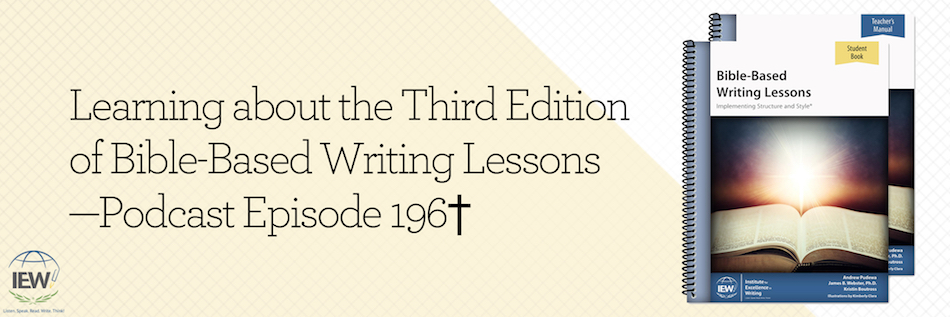
In this podcast Andrew and Julie announce the third edition of Bible-Based Writing Lessons. Tune in as the duo walks through the theme-based book, discussing what's different in the new edition and explaining how the Bible stories are so beautifully woven into the units.
† Contains distinctly Christian content
If you have any questions about IEW or our products, do not hesitate to contact our Customer Service Team at 800.856.5815 or info@IEW.com
Feel confident moving from inventive writing into the capstone of our Structure and Style™ program: Formal Essay Models. In this podcast Andrew takes you through the process of Unit 8 and demonstrates the value in learning the five-paragraph model.
If you have any questions about IEW or our products, do not hesitate to contact our Customer Service Team at 800.856.5815 or info@IEW.com
Have you ever wondered where it all began? Tune into this twenty-fifth birthday celebration recording where Andrew takes you through the history of IEW and expresses his gratitude toward the people that helped him along his journey.
Remember to send your questions to Podcast@IEW.com, and perhaps yours will be answered the next time we Ask Andrew Anything (AAA).
If you have any questions about IEW or our products, do not hesitate to contact our Customer Service Team at 800.856.5815 or Info@IEW.com
How can teachers and parents challenge their gifted and talented students? Will IEW's writing method stifle their creativity? With stories and insight, Andrew and Julie answer these questions. Learn how IEW's Structure and Style® program provides the tools for all students to be successful, and be ecouraged as Andrew shares how teachers and parents can help their students maximize their gifts.
Remember to send your questions to Podcast@IEW.com, and perhaps yours will be answered the next time we Ask Andrew Anything (AAA).
If you have any questions about IEW or our products, do not hesitate to contact our Customer Service Team at 800.856.5815 or Info@IEW.com
Join us in this enjoyable episode as Andrew and Julie welcome homeschool mom, blogger, and our top affiliate, Erica Arndt. In today's episode Erica describes her life as a homeschooling mom, tells the story of how her blog grew, and provides insight on how to juggle the many responsibilities of teaching your students at home.
Remember to send your questions to Podcast@IEW.com, and perhaps yours will be answered the next time we Ask Andrew Anything (AAA).
If you have any questions about IEW or our products, do not hesitate to contact our Customer Service Team at 800.856.5815 or Info@IEW.com
This is the twenty-third episode of twenty-four in the podcast series Reviewing Our Greatest Hits. This show was initially launched on December 5, 2018, as Episode 168.
In this podcast Andrew and Julie discuss a long-awaited topic: movies. Tune in to hear the duo explore some insights from a few of Andrew's favorite movies.
Remember to send your questions to Podcast@IEW.com, and perhaps yours will be answered the next time we Ask Andrew Anything (AAA).
If you have any questions about IEW or our products, do not hesitate to contact our Customer Service Team at 800.856.5815 or Info@IEW.com
Answering technical IEW questions ranging from topic/clincher sentences to crash writing courses before college, Andrew provides helpful insight and information about where to start and where to go during this Ask Andrew Anything episode.
3:50 - Kathy asks, "My question is related to a sentence my boy wrote which we couldn't decide if it fits one of the openers. The sentence was along the lines of: 'Found around the North Pole, Beluga whales...'"
8:30 - Cindy asks, "We feel our 6th grade, almost 12-year-old son has had weak writing instruction to this point. He's a voracious reader with great vocabulary and great grades to date, but he has Aspergers and ADHD. We are familiar with your work and are very interested in your online classes as a good way to meet his needs and receive great instruction. I was wondering if you had a good way of determining if we should select Level A or Level B for an online class?"
12:32 - Heidi asks, "I don't think my daughter can handle both Fix It! and the Student Writing Intensive Level A. What should I do first? She is nine and will be in the 4th grade."
14:42 - John asks, "I'm trying to determine the right course for my son, who will be in 9th grade this year. I see that Following Narnia Volume 1 is intended for grades 6–8. However, I believe someone mentioned on the IEW forum that Volume 1 can be adapted to make it appropriate for the High School level. Could you please provide some feedback?"
18:17 - Rebecca asks, "I'm trying to find a writing program for my daughter to use before she goes to college this fall. She has had some writing, but needs to have basic improvement and practice. What do you suggest?"
23:10 - Jacqueline asks, "My daughter is home-schooled and is entering the 9th grade. She writes very well and has not struggled in any area of the programs she has completed. She completed the Student Writing Intensive Level B and will be finishing the Continuation Course Level B in a couple of weeks. She would really like to complete a course geared more toward writing her own books this year. We are wondering if The Elegant Essay or Speech Boot Camp could be swapped out for A Guide to Writing Your Novel?"
Remember to send your questions to Podcast@IEW.com, and perhaps yours will be answered the next time we Ask Andrew Anything (AAA).
If you have any questions about IEW or our products, do not hesitate to contact our Customer Service Team at 800.856.5815 or Info@IEW.com
In this two-part webinar recording, Andrew and old-time friend and mentor Dr. Webster walk you through Unit 8: Formal Essay Models. Join us as Andrew explains the elements of an essay and discusses what differentiates Unit 8 from the previous units. Additionally, Dr. Webster answers questions and provides suggestions for tackling essay assignments.
5:04 - Melissa asks, "I have a fourteen-year-old, an eleven-year-old, and a nine-year-old all doing the same Student Writing Intensive group B together this year. The nine-year-old loves to write and is keeping up great with the others. Would it be unheard of for all of them to do the Student Continuation Level B together?"
7:24 - Erica says, "My two daughters are struggling with writing the conclusion and introduction paragraphs. We would appreciate more specifics on how to create a great attention-grabbing intro and a thoughtful conclusion."
11:53 - Christi asks, "My oldest, twelve, is a naturally comfortable writer and is beginning to be very resistant to writing outlines in general. Any suggestions on how to continue to help her see why they are important?"
18:59 - Melissa asks, "Do students write them in this order on their first draft then the correct order on the formal draft? Will it be easy for those typing? I wasn't sure on handwritten."
20:19 - Terra asks, "My fifteen-year-old student has been assigned a ten page science paper. I would like to know if you still include the most important and why. Would you state your opinion as an expert without using "I"? How do you write it in a way that keeps it a factual report and not an essay?"
Remember to send your questions to Podcast@IEW.com, and perhaps yours will be answered the next time we Ask Andrew Anything (AAA).
If you have any questions about IEW or our products, do not hesitate to contact our Customer Service Team at 800.856.5815 or Info@IEW.com
Experience excellence in writing as Laura House, IEW's marketing manager, explains IEW's methodology and walks you through both the structure and style of the nine units. With her insightful knowledge and cheery attitude, Laura provides encouragement and demonstrates how you can apply IEW's method to anything you're learning at home or in the classroom.
Remember to send your questions to Podcast@IEW.com, and perhaps yours will be answered the next time we Ask Andrew Anything (AAA).
If you have any questions about IEW or our products, do not hesitate to contact our Customer Service Team at 800.856.5815 or Info@IEW.com
In this podcast Andrew and Julie discuss a long-awaited topic: movies. Tune in to hear the duo explore some insights from a few of Andrew's favorite movies.
Remember to send your questions to Podcast@IEW.com, and perhaps yours will be answered the next time we Ask Andrew Anything (AAA).
If you have any questions about IEW or our products, do not hesitate to contact our Customer Service Team at 800.856.5815 or Info@IEW.com
As a teacher himself, Andrew has given many talks on pedagogical lessons at conferences across the nation. This week, Andrew shares a few of his favorite movies that relate to some of those lessons. Join us for part one of this two-part series, and learn about the different insights Andrew has gleaned from movies over the years.
Remember to send your questions to Podcast@IEW.com, and perhaps yours will be answered the next time we Ask Andrew Anything (AAA).
If you have any questions about IEW or our products, do not hesitate to contact our Customer Service Team at 800.856.5815 or Info@IEW.com.
Picking up where he left off last week, Andrew continues to share pedagogical lessons that he has learned from movies over the years. As Andrew points out, not all movies are suitable for students, but the stories found in them have shaped him into a better teacher.
Remember to send your questions to Podcast@IEW.com, and perhaps yours will be answered the next time we Ask Andrew Anything (AAA).
If you have any questions about IEW or our products, do not hesitate to contact our Customer Service Team at 800.856.5815 or Info@IEW.com.
Join Andrew Pudewa as he walks you through Unit 8, the daunting essay. Andrew will take you through the step-by-step process of crafting an essay so that you can understand the basic structure, discussing the various essay types and their differences. To ensure maximum understanding, he will also guide you through a practicum assignment.
1:32-Marcy asks "What is the difference between unit 7 and unit 8? Is the difference in the weight of the topic?"
3:18-Cathleen asks "Do we model the type of questions to ask?"
6:52-Deborah asks "Are we not asking questions to define the topics in unit 6?"
10:54-Deborah asks "Will the High School Essay Intensive help me understand how to guide my kids in writing the intro and conclusion?"
12:59-Sherry asks "How do you approach the expository essay? If a true essay must have an opinion, what do we do with an essay that explains something or one that describes something? Should I avoid these types of essays?"
16:55-Deborah asks "It is so hard for me to judge what is good enough for a 12-year-old. I want to edit to death."
Remember to send your questions to Podcast@IEW.com, and perhaps yours will be answered the next time we Ask Andrew Anything (AAA).
If you have any questions about IEW or our products, do not hesitate to contact our Customer Service Team at 800.856.5815 or Info@IEW.com
March forward with Andrew and Julie as you enter into Unit 7: Inventive Writing. This week Andrew and Julie discuss the process of Unit 7 and explore its value in unlocking the student's imagination and pairing it with the thinking skills they have developed. Stay tuned until the end to learn about our writing contest this year as well as the prizes that are awarded to the winners!
If you have any questions about IEW or our products, do not hesitate to contact our Customer Service Team at 800.856.5815 or info@IEW.com
This is the last episode in the podcast series Reviewing Our Greatest Hits. This show was initially launched on December 12, 2018, as Episode 169.
As they finish up their conversation on movies, Andrew and Julie head into a different direction: the book versus the movie. Join us to hear Andrew and Julie compare certain movies with the book that inspired the movie and listen to both of their takes on if you should read the book before watching the movie.
Remember to send your questions to Podcast@IEW.com, and perhaps yours will be answered the next time we Ask Andrew Anything (AAA).
If you have any questions about IEW or our products, do not hesitate to contact our Customer Service Team at 800.856.5815 or Info@IEW.com

Join Andrew Pudewa and Julie Walker for an exciting announcement about a new digital tool—IEW® Writing Companion. They are joined by Heidi Thomas, who worked with Joseph Tabenkin to create IEW® Writing Companion. She describes how IEW Writing Companion solves common problems and provides the assistance that students need to successfully “do what they check and check what they do” as Andrew always encourages. Don’t miss this episode!
If you have questions for Andrew, send them to podcast@IEW.com
Perhaps your question will be answered at the next Ask Andrew Anything (AAA).
If you have questions about IEW products or classes, contact customer service at 800.856.5815 or info@IEW.com
As they finish up their conversation on movies, Andrew and Julie head into a different direction: the book versus the movie. Join us to hear Andrew and Julie compare certain movies with the book that inspired the movie and listen to both of their takes on if you should read the book before watching the movie.
Remember to send your questions to Podcast@IEW.com, and perhaps yours will be answered the next time we Ask Andrew Anything (AAA).
If you have any questions about IEW or our products, do not hesitate to contact our Customer Service Team at 800.856.5815 or Info@IEW.com
After walking the pathway of all nine units, your student can begin to delve deeper into writing about literature. Join us as Andrew and Julie discuss IEW's Response to Literature and Literary Analysis models. Learn the difference between the two models and gain insight on how to help your student make a personal connection with literature in their writing.
If you have any questions about IEW or our products, do not hesitate to contact our Customer Service Team at 800.856.5815 or Info@IEW.com
In this episode, Andrew Pudewa and Julie Walker discuss the prompts for the annual IEW Writing Contest. Listen to this episode to learn why does IEW have a writing contest, what the value of entering a writing contest is for students, and how a writing contest fits into the types of motivation. Andrew breaks down the prompts and talks about how a writer might approach this essay.
If you have questions for Andrew, send them to podcast@IEW.com
Perhaps your question will be answered at the next Ask Andrew Anything (AAA).
If you have questions about IEW products or classes, contact customer service at 800.856.5815 or info@IEW.com
Join Andrew Pudewa as he walks you through Unit 8, the daunting essay. Andrew will take you through the step-by-step process of crafting an essay so that you can understand the basic structure, discussing the various essay types and their differences. To ensure maximum understanding, he will also guide you through a practicum assignment.
Remember to send your questions to Podcast@IEW.com, and perhaps yours will be answered the next time we Ask Andrew Anything (AAA).
If you have any questions about IEW or our products, do not hesitate to contact our Customer Service Team at 800.856.5815 or Info@IEW.com
In this podcast Andrew answers questions from our listeners as well as questions our Customer Service Team frequently receives. Join us for another round of inquiries where Andrew offers helpful insight on a variety of topics from how to implement Suzuki method when teaching piano, to how to choose appropriate pieces for copywork.
QUESTIONS ASKED:
1:18 - Jennifer asks, "In Unit 3, I have always found it confusing to list all the characters in the story under Characters and Setting in the key word outline. When we go to write the first paragraph, sometimes including a character that only shows up later in the story is challenging. Is it okay to only mention that character in the Conflict and Problem or Climax and Resolution sections, or is it good to try to mention all the characters in the first paragraph?”
3:25 - Misty asks, “Thanks for the great info! I was listening to the dyslexia podcast. When you talk about a dyslexic child listening to audiobooks, should they be trying to follow along with the print, or just simply listening to the story?”
6:06 - Christine asks, “Should we have commas after an -ly adverb opener?”
8:27 - Amy asks, “My question for you is regarding teaching my kids how to play the piano. I have listened to your podcasts talking about the Suzuki method and it intrigues me. My oldest is taking piano lessons; however, his teacher is retiring soon. She teaches using the traditional method, which is how I was taught piano. The nearest Suzuki teacher is an hour drive away. I’m wondering what your opinion is on a parent attempting to teach the Suzuki method at home. Of course I would read Suzuki’s books to gain better insight, but I wouldn’t have any formal training in the method. Can you help?”
11:52 - Wendy asks, “I am teaching a group of 16 students through the Continuation Course Level B. They are writing papers about famous people from history. The sources that Mr. Pudewa has required them to write are from a book, an encyclopedia/periodical, and whatever other material they might choose such as Internet or video. One of the questions I received was "Can I choose a Kindle book?" This started me questioning what I should allow. Since the filming of the series, much technology has come into play.”
16:37 - Customers frequently ask our Customer Service team, “Prior to Unit 6, how does a student put a word-for-word quotation on the key word outline?”
17:57 - Customers frequently ask our Customer Service team, “When a student with no previous IEW experience begins with High School Essay Intensive and then wants more help with writing, what program would be best to move on to next?”
20:10 - Customers frequently ask our Customer Service team, “What is the purpose of copywork and how do our families and teachers choose the appropriate pieces for students to copy?”
If you have any questions about IEW or our products, do not hesitate to contact our Customer Service Team at 800.856.5815 or info@IEW.com
This is the sixth episode of twenty-four in the podcast series Reviewing Our Greatest Hits. This show was initially launched on April 24, 2019, as Episode 188.
Although many schools are shifting away from cursive writing, Andrew and Julie hone in on its great value. While citing studies and speaking from experience, Andrew evaluates the pros of teaching cursive as it can have practical uses as well as neurological benefits.
If you have any questions about IEW or our products, do not hesitate to contact our Customer Service Team at 800.856.5815 or info@IEW.com
As the school year winds down and summer approaches, parents may be pondering strategies to enrich their students’ writing. Summer is a great time to take a break from regularly scheduled academics and embrace new activities to retain or expand writing skills. In this week’s podcast Andrew Pudewa and Julie Walker suggest some creative ways to do just that.
If you have questions for Andrew, send them to Podcast@IEW.com
Perhaps your question will be answered at the next Ask Andrew Anything (AAA).
If you have questions about IEW products or classes, contact customer service at 800.856.5815 or info@IEW.com
Although many schools are shifting away from cursive writing, Andrew and Julie hone in on its great value. While citing studies and speaking from experience, Andrew evaluates the pros of teaching cursive as it can have practical uses as well as neurological benefits.
If you have any questions about IEW or our products, do not hesitate to contact our Customer Service Team at 800.856.5815 or info@IEW.com
Should writing be confined to a single subject? Andrew and Julie address the question by discussing writing across the curriculum. Whether it be learning about history or studying science, learn how the incorporation of writing across multiple subjects allows for students to be more engaged with the content they're learning and gives them the opportunity for the application of their skills in a variety of ways.
Remember to send your questions to Podcast@IEW.com, and perhaps yours will be answered the next time we Ask Andrew Anything (AAA).
If you have any questions about IEW or our products, do not hesitate to contact our Customer Service Team at 800.856.5815 or Info@IEW.com
Is your student overwhelmed by having too many sources to write from? Join Andrew as he discusses Unit 6 and provides tips and suggestions for collecting, organizing, and summarizing facts from multiple references.
Remember to send your questions to Podcast@IEW.com, and perhaps yours will be answered the next time we Ask Andrew Anything (AAA).
If you have any questions about IEW or our products, do not hesitate to contact our Customer Service Team at 800.856.5815 or Info@IEW.com
With summer just around the corner, many parents and teachers are wondering how to help their students to continue building their writing and thinking skills. Tune in to this week's podcast as Andrew and Julie provide suggestions on how to incorporate and encourage learning in a fun manner throughout the summer.
Remember to send your questions to Podcast@IEW.com, and perhaps yours will be answered the next time we Ask Andrew Anything (AAA).
If you have any questions about IEW or our products, do not hesitate to contact our Customer Service Team at 800.856.5815 or Info@IEW.com
With seventy-four countries participating, IEW held a virtual writing conference last month. This week, we are posting one of the recordings from that conference. In this recording Andrew and Julie discuss the different ways to teach writing using Structure and Style. Stay tuned until the end, where Andrew provides insightful answers to questions that were submitted live from the audience!
Remember to send your questions to Podcast@IEW.com, and perhaps yours will be answered the next time we Ask Andrew Anything (AAA).
If you have any questions about IEW or our products, do not hesitate to contact our Customer Service Team at 800.856.5815 or Info@IEW.com
Applying for colleges can be overwhelming, especially for homeschoolers. Tune in this week as Andrew and Julie welcome the author of Homeschooled & Headed for College, Denise Boiko. In this episode Denise shares her best pieces of advice for applying to colleges, emphasizes the important role of good writing in college, and inspires students to keep their love of learning.
Remember to send your questions to Podcast@IEW.com, and perhaps yours will be answered the next time we Ask Andrew Anything (AAA).
If you have any questions about IEW or our products, do not hesitate to contact our Customer Service Team at 800.856.5815 or Info@IEW.com
Andrew and Julie discuss the most concrete of the language arts: writing. Learn how writing can be cultivated before your student even begins to put words to paper, and gain some insight on the tremendous value of copy work as it builds fluency and stamina.
Remember to send your questions to Podcast@IEW.com, and perhaps yours will be answered the next time we Ask Andrew Anything (AAA).
If you have any questions about IEW or our products, do not hesitate to contact our Customer Service Team at 800.856.5815 or Info@IEW.com
In honor of National Novel Writing Month, Andrew and Julie interview the young author of Forever Riders, Jemma Swift, and her mother and sister. Since using IEW's materials at a young age, Jemma has cultivated a love and special interest in writing. Learn about Jemma's journey in producing the book and gain some insight on her simple yet vital advice to young writers: never give up!
Remember to send your questions to Podcast@IEW.com, and perhaps yours will be answered the next time we Ask Andrew Anything (AAA).
If you have any questions about IEW or our products, do not hesitate to contact our Customer Service Team at 800.856.5815 or Info@IEW.com
Summer is a great time for relaxing, spending time outdoors, and taking a break from the long school year. It can also be a time when students forgot the skills they've learned. This week, Andrew Pudewa and Julie Walker suggest ways to keep your students writing throughout the summer season. From writing postcards to crafting commentary on recipes, the duo encourages some fun application of writing skills.

Remember to send your questions to Podcast@IEW.com, and perhaps yours will be answered the next time we Ask Andrew Anything (AAA).
If you have any questions about IEW or our products, do not hesitate to contact our Customer Service Team at 800.856.5815 or Info@IEW.com.
What's the purpose of the checklist? This question is often asked by students as well parents. Join Andrew Pudewa as he shares salient points about IEW's stylistic techniques and discusses the powerful benefits that come about when you require the checklist for your students' writing.
Remember to send your questions to Podcast@IEW.com, and perhaps yours will be answered the next time we Ask Andrew Anything (AAA).
If you have any questions about IEW or our products, do not hesitate to contact our Customer Service Team at 800.856.5815 or Info@IEW.com
Have you committed one of these four errors in your teaching? Overcorrecting, holding back help, unclear assignments, and over-expectation can frustrate your students and hamper your best efforts. Andrew Pudewa refers to these as the “Four Deadly Errors of Teaching Writing.” Join the Arts of Language podcast as Andrew and Julie Walker discuss these errors along with practical ways to overcome them.
If you have questions for Andrew, send them to podcast@IEW.com
Perhaps your question will be answered at the next Ask Andrew Anything (AAA).
If you have questions about IEW products or classes, contact customer service at 800.856.5815 or info@IEW.com
As you head into the busyness of December, listen to Andrew and Julie walk through Unit 5: Writing from Pictures. Gain confidence moving forward as Andrew and Julie explain the vital role Unit 5 plays in unlocking students' imagination and in developing their thinking skills.
Remember to send your questions to Podcast@IEW.com, and perhaps yours will be answered the next time we Ask Andrew Anything (AAA).
If you have any questions about IEW or our products, do not hesitate to contact our Customer Service Team at 800.856.5815 or Info@IEW.com
With the school year rolling around, Andrew and Julie turn their attention to teaching and evaluating writing. Join us in this two-part series where the duo hones in on teaching writing. Andrew goes through a series of decisions that need to be made when teaching writing and emphasizes the importance of providing length to your student's assignments as it dictates structure.
Remember to send your questions to Podcast@IEW.com, and perhaps yours will be answered the next time we Ask Andrew Anything (AAA).
If you have any questions about IEW or our products, do not hesitate to contact our Customer Service Team at 800.856.5815 or Info@IEW.com

In this engaging episode, Andrew Pudewa and Julie Walker discuss the idea of writing across the curriculum with Dr. Kathleen O’Toole, Associate Vice President for K-12 Education at Hillsdale College. They discuss the exciting partnership IEW has formed with the Hillsdale K-12 program that provides guidance and partnership for classical schools as well as teacher training events. They also share the benefits for students and teachers when writing can be integrated with the overall curriculum.
If you have questions for Andrew, send them to podcast@IEW.com
Perhaps your question will be answered at the next Ask Andrew Anything (AAA).
If you have questions about IEW products or classes, contact customer service at 800.856.5815 or info@IEW.com

In this episode, Andrew Pudewa and Julie Walker talk with Donahue Academy’s Dr. Marc Snyder, principal, and Deacon Edward Watson, assistant principal for curriculum and instruction. They share how and why Donahue Academy has chosen to use IEW, why classical education is growing, and how the IEW Schools Department can assist schools with implementing the Structure and Style® methodology.
If you have questions for Andrew, send them to podcast@IEW.com
Perhaps your question will be answered at the next Ask Andrew Anything (AAA).
If you have questions about IEW products or classes, contact customer service at 800.856.5815 or info@IEW.com

In this episode Andrew Pudewa and Julie Walker discuss the importance of learning the basic essay model even when many say it is outdated or formulaic. Learn how to take the basic essay model and expand it to a super-essay. Andrew even discusses the name of the longest essay model that uses one of his favorite words.
If you have questions for Andrew, send them to podcast@IEW.com
Perhaps your question will be answered at the next Ask Andrew Anything (AAA).
If you have questions about IEW products or classes, contact customer service at 800.856.5815 or info@IEW.com
In this podcast Andrew and Julie welcome Leigh Bortins, founder of Classical Conversations, to discuss the Global Home Education Conference which took place in Russia this summer. Tune in to enjoy Andrew and Leigh's stories of their experience in Russian culture and learn about the role Leigh plays in promoting home education both nationwide and internationally.
Remember to send your questions to Podcast@IEW.com, and perhaps yours will be answered the next time we Ask Andrew Anything (AAA).
If you have any questions about IEW or our products, do not hesitate to contact our Customer Service Team at 800.856.5815 or Info@IEW.com
"Sink or swim!" While we all may use the phrase in a comical sense, it simply isn't true. Today, Andrew and Julie turn to the second of the four deadly errors: withholding help. Join the conversation as Andrew and Julie discuss how committing this error actually impedes the development of your student, and learn why students must prove their independence in a skill before a teacher leaves them on their own.
Remember to send your questions to Podcast@IEW.com, and perhaps yours will be answered the next time we Ask Andrew Anything (AAA).
If you have any questions about IEW or our products, do not hesitate to contact our Customer Service Team at 800.856.5815 or Info@IEW.com
While Andrew is away, Julie chats with homeschool mom and author Heidi St. John. After homeschooling for many years, Heidi pulled together her experience and wrote The Busy Homeschool Mom's Guide to Romance. Join us as Heidi shares her goal of strengthening families and offers her advice to busy moms who feel overwhelmed with the tasks at hand.
Remember to send your questions to Podcast@IEW.com, and perhaps yours will be answered the next time we Ask Andrew Anything (AAA).
If you have any questions about IEW or our products, do not hesitate to contact our Customer Service Team at 800.856.5815 or Info@IEW.com
In this podcast, Andrew and Julie uncover the powerful educational content in IEW's core product, Teaching Writing: Structure and Style (TWSS). Additionally, they discuss each one of the stylistic techniques as well as the supplemental contents of the Premium Subscription.
Remember to send your questions to Podcast@IEW.com, and perhaps yours will be answered the next time we Ask Andrew Anything (AAA).
A week ago, IEW held a virtual conference on success in teaching writing to students in special education. For this two-part series, Andrew and Julie will recount that conference and discuss teaching students with obstacles in reading and writing. Whether your student is dyslexic or experiencing auditory problems, gain insight from Andrew as he shares the importance of surrounding your students with encouragement, and learn the value of creating a language rich environment.
Remember to send your questions to Podcast@IEW.com, and perhaps yours will be answered the next time we Ask Andrew Anything (AAA).
If you have any questions about IEW or our products, do not hesitate to contact our Customer Service Team at 800.856.5815 or Info@IEW.com
In this podcast, Andrew and Julie uncover the powerful educational content in IEW's core product, Teaching Writing: Structure and Style (TWSS). They also discuss how Andrew first discovered this methodology of writing and explain the purpose of each of the nine units.
Remember to send your questions to Podcast@IEW.com, and perhaps yours will be answered the next time we Ask Andrew Anything (AAA).
Join Andrew Pudewa as he shares some salient points on this important topic and answers your questions on writing, thinking, and speaking.
Many children (and some adults) have difficulty learning to spell, but the difficulty may not be with the student so much as with the method of presentation. Find out in this workshop how spelling information is most efficiently stored in the brain, and why. Parents and teachers, be well-equipped to meet the needs of all your children, not just the naturally good spellers. Bonus content: Learn best practices for using IEW’s Phonetic Zoo, our award-winning independent study spelling program!
Remember to send your questions to Podcast@IEW.com, and perhaps yours will be answered the next time we Ask Andrew Anything (AAA).
If you have any questions about IEW or our products, do not hesitate to contact our Customer Service Team at 800.856.5815 or Info@IEW.com
For this final episode honoring National Novel Writing Month, Andrew and Julie interview teen authors Cecelia and Solomon Schmidt. Having taken IEW's online classes, Cecelia and Solomon acquired the ability to structure paragraphs and write creatively. Gain some insight on both of their journeys in writing their novels, and learn how being read to aloud was key to their success.
Remember to send your questions to Podcast@IEW.com, and perhaps yours will be answered the next time we Ask Andrew Anything (AAA).
If you have any questions about IEW or our products, do not hesitate to contact our Customer Service Team at 800.856.5815 or Info@IEW.com
Join Andrew Pudewa as he shares some salient points on this important topic and answers your questions on writing, thinking, and speaking.
Many children (and some adults) have difficulty learning to spell, but the difficulty may not be with the student so much as with the method of presentation. Find out in this workshop how spelling information is most efficiently stored in the brain, and why. Parents and teachers, be well-equipped to meet the needs of all your children, not just the naturally good spellers. Bonus content: Learn best practices for using IEW’s Phonetic Zoo, our award-winning independent study spelling program!
Remember to send your questions to Podcast@IEW.com, and perhaps yours will be answered the next time we Ask Andrew Anything (AAA).
If you have any questions about IEW or our products, do not hesitate to contact our Customer Service Team at 800.856.5815 or Info@IEW.com
As you near the end of the school year, get the information and motivation you need to finish strong with Unit 9: Formal Critiques. In this two-part webinar, Andrew explains the purpose of Unit 9 and how to teach it to your students, walks you through a Unit 9 sample composition, describes the difference between a fiction and a non-fiction critique, and much more.
Remember to send your questions to Podcast@IEW.com, and perhaps yours will be answered the next time we Ask Andrew Anything (AAA).
If you have any questions about IEW or our products, do not hesitate to contact our Customer Service Team at 800.856.5815 or Info@IEW.com
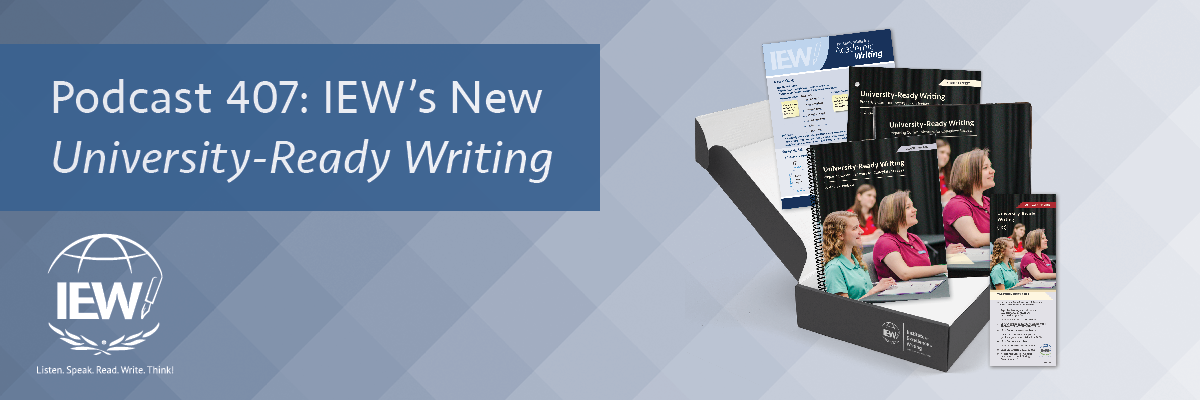
What skills do students need to succeed in collegiate writing? Listen to Andrew Pudewa and Julie Walker discuss this brand new video course that will prepare your high school and college students for college writing. Hear why Andrew would have called this “How to spy on your professor and figure out his or her writing style and imitate it so you can get a better grade on every paper you turn in”!
If you have questions for Andrew, send them to podcast@IEW.com
Perhaps your question will be answered at the next Ask Andrew Anything (AAA).
If you have questions about IEW products or classes, contact customer service at 800.856.5815 or info@IEW.com
In this episode, Andrew Pudewa and Julie Walker introduce IEW’s theme for 2026: Laying the Foundation. They answer the questions: What are the basics? How does IEW help students get back to the basics of learning? They talk about the simple, timeless, and elegant ways that IEW helps students cultivate attentiveness, memory, and ideas. Listen to the end to hear Julie make a special announcement.
If you have questions for Andrew, send them to podcast@IEW.com
Perhaps your question will be answered at the next Ask Andrew Anything (AAA).
If you have questions about IEW products or classes, contact customer service at 800.856.5815 or info@IEW.com
Conclude this podcast series with Andrew and Julie as they discuss evaluating writing. With the current mainstream grading system not being an effective motivator for students, the duo explores alternatives to providing good and insightful feedback on your student's writing and encourages teachers and teaching parents to nurture an environment of excellence.
Remember to send your questions to Podcast@IEW.com, and perhaps yours will be answered the next time we Ask Andrew Anything (AAA).
If you have any questions about IEW or our products, do not hesitate to contact our Customer Service Team at 800.856.5815 or Info@IEW.com
Often students as well as parents struggle with moving forward on the checklist. In this two-part episode, Andrew provides salient points on the stylistic techniques and offers advice, from being strict with the checklist to not drowning your students with more than they can handle.
Remember to send your questions to Podcast@IEW.com, and perhaps yours will be answered the next time we Ask Andrew Anything (AAA).
If you have any questions about IEW or our products, do not hesitate to contact our Customer Service Team at 800.856.5815 or Info@IEW.com
While many writing programs begin with a blank page, IEW understands the importance of developing students' thinking skills before asking them to write creatively. In this episode Andrew talks through the ins and outs of Unit 7, Inventive Writing, while explaining the methodology behind it.
Remember to send your questions to Podcast@IEW.com, and perhaps yours will be answered the next time we Ask Andrew Anything (AAA).
If you have any questions about IEW or our products, do not hesitate to contact our Customer Service Team at 800.856.5815 or Info@IEW.com
While many writing programs begin with a blank page, IEW understands the importance of developing students' thinking skills before asking them to write creatively. In this episode Andrew talks through the ins and outs of Unit 7, Inventive Writing, while explaining the methodology behind it.
Remember to send your questions to Podcast@IEW.com, and perhaps yours will be answered the next time we Ask Andrew Anything (AAA).
If you have any questions about IEW or our products, do not hesitate to contact our Customer Service Team at 800.856.5815 or Info@IEW.com
Jeff Nease joins Andrew Pudewa and Julie Walker in the studio to share his excitement about the Virtual Teaching Writing: Structure and Style® workshop which will be held August 4–6, 2026. They discuss the benefits of completing this training, the incentive to attend live, and the support the IEW Schools Department will provide throughout the workshop and after to assist you in training your students to become confident and competent communicators and thinkers.
If you have questions for Andrew, send them to podcast@IEW.com
Perhaps your question will be answered at the next Ask Andrew Anything (AAA).
If you have questions about IEW products or classes, contact customer service at 800.856.5815 or info@IEW.com
How can teachers and teaching parents teach writing confidently? This week, Andrew and Julie address the question. Andrew first explains the complex task of writing. Once teachers understand the process, they can then break it down into manageable steps that make the skill both teachable and learnable. Be encouraged by the episode and learn how IEW's methodology equips you to separate the complexity of writing so that you and your students can find success!
Remember to send your questions to Podcast@IEW.com, and perhaps yours will be answered the next time we Ask Andrew Anything (AAA).
If you have any questions about IEW or our products, do not hesitate to contact our Customer Service Team at 800.856.5815 or Info@IEW.com

In this episode, Andrew Pudewa and Julie Walker announce the prompts for the 2025 IEW Writing Contest. Andrew talks about why students should participate in writing contests, and Julie shares a story from her past about the importance of following instructions. Be sure to listen for the special prizes for the tenth annual IEW Writing Contest!
If you have questions for Andrew, send them to podcast@IEW.com
Perhaps your question will be answered at the next Ask Andrew Anything (AAA).
If you have questions about IEW products or classes, contact customer service at 800.856.5815 or info@IEW.com
As you near the end of the school year, get the information and motivation you need to finish strong with Unit 9: Formal Critiques. In this two-part webinar, Andrew explains the purpose of Unit 9 and how to teach it to your students, walks you through a Unit 9 sample composition, describes the difference between a fiction and a non-fiction critique, and much more.
Remember to send your questions to Podcast@IEW.com, and perhaps yours will be answered the next time we Ask Andrew Anything (AAA).
If you have any questions about IEW or our products, do not hesitate to contact our Customer Service Team at 800.856.5815 or Info@IEW.com
In this two-part webinar recording, Andrew and old-time friend and mentor Dr. Webster walk you through Unit 8: Formal Essay Models. Join us as Andrew explains the elements of an essay and discusses what differentiates Unit 8 from the previous units. Additionally, Dr. Webster answers questions and provides suggestions for tackling essay assignments.
Remember to send your questions to Podcast@IEW.com, and perhaps yours will be answered the next time we Ask Andrew Anything (AAA).
If you have any questions about IEW or our products, do not hesitate to contact our Customer Service Team at 800.856.5815 or Info@IEW.com
As you welcome the May flowers, be encouraged to have a strong finish of your school year with Unit 9: Formal Critique. Go beyond the "boring book report" with Andrew as he explains the structural model of Unit 9 and shares the power of the critique thesaurus.
If you have any questions about IEW or our products, do not hesitate to contact our Customer Service Team at 800.856.5815 or Info@IEW.com

In this episode, Andrew Pudewa and Julie Walker have a conversation with Dr. Colin Chesley, associate vice president of the College of Health and Public Services at Daytona State College in Daytona Beach, Florida. They discuss the challenges facing students today in higher education and the challenges presented by AI. Dr. Chesley discusses how IEW has helped his own children and how University-Ready Writing can prepare students for college writing assignments.
If you have questions for Andrew, send them to podcast@IEW.com
Perhaps your question will be answered at the next Ask Andrew Anything (AAA).
If you have questions about IEW products or classes, contact customer service at 800.856.5815 or info@IEW.com
When teaching Structure and Style for Students, Andrew had each student hire an editor and deliver a letter that he had written to him or her. After all, every good writer has an editor. Andrew and Julie read the letter and discuss the role that editors play in helping students bring their finest pieces to publication. Andrew cautions against overcorrecting and instead recommends that editors focus on ensuring that the composition or essay is "legal."
Remember to send your questions to Podcast@IEW.com, and perhaps yours will be answered the next time we Ask Andrew Anything (AAA).
If you have any questions about IEW or our products, do not hesitate to contact our Customer Service Team at 800.856.5815 or Info@IEW.com.
In a world with many opinions, it's important to teach students how to take up an issue and write persuasively. In this episode Andrew and Julie walk through the pathway of developing an essayist and discuss how teachers can cultivate critical thinking. Additionally Andrew and Julie talk about the importance of acknowledging and respecting the opposing point of view when engaging in a discussion or writing persuasively.
Remember to send your questions to Podcast@IEW.com, and perhaps yours will be answered the next time we Ask Andrew Anything (AAA).
If you have any questions about IEW or our products, do not hesitate to contact our Customer Service Team at 800.856.5815 or Info@IEW.com.
Join Andrew and Julie as they welcome teen author Taylor Bennett for another podcast honoring National Novel Writing Month. As a lover of writing, Taylor enjoyed sitting down and writing her first novel: Porch Swing Girl. In this episode Taylor shares her experience with writing her book and offers tips from being responsible with your deadlines to staying focused on learning the craft of writing.
Remember to send your questions to Podcast@IEW.com, and perhaps yours will be answered the next time we Ask Andrew Anything (AAA).
If you have any questions about IEW or our products, do not hesitate to contact our Customer Service Team at 800.856.5815 or Info@IEW.com
Picking up where they left off last week, Andrew and Julie discuss Dr. Webster's paragraph models and author imitation as ways of challenging students stylistically. Learn how the different paragraphs can fit into a Unit 7: Inventive Writing essay, and gain insight on the benefits of author imitation in learning stylistic techniques.
Remember to send your questions to Podcast@IEW.com, and perhaps yours will be answered the next time we Ask Andrew Anything (AAA).
If you have any questions about IEW or our products, do not hesitate to contact our Customer Service Team at 800.856.5815 or Info@IEW.com.
An encomium is a speech or piece of writing that praises someone or something highly. In this week’s episode, Andrew Pudewa and Julie Walker brainstorm ways to show appreciation to teachers and mothers. They also reminisce about teachers who influenced them. Has your student ever written an encomium to show appreciation for you or a teacher? Listen to this episode to hear Andrew’s and Julie’s topic ideas for an encomium in praise of a teacher or mother.
If you have questions for Andrew, send them to podcast@IEW.com
Perhaps your question will be answered at the next Ask Andrew Anything (AAA).
If you have questions about IEW products or classes, contact customer service at 800.856.5815 or info@IEW.com
Join us as Andrew and Julie continue the conversation on success in teaching writing to students in special education. This week, Andrew and Julie walk through the nine units of our Structure and Style® program, describe how it's applicable to all students regardless of their obstacles, and share encouragement to parents and teachers to take everything one step at a time.
Remember to send your questions to Podcast@IEW.com, and perhaps yours will be answered the next time we Ask Andrew Anything (AAA).
If you have any questions about IEW or our products, do not hesitate to contact our Customer Service Team at 800.856.5815 or Info@IEW.com
Is your student overwhelmed by having too many sources to write from? Join Andrew as he discusses Unit 6 and provides tips and suggestions for collecting, organizing, and summarizing facts from multiple references.
Questions Asked
Remember to send your questions to Podcast@IEW.com, and perhaps yours will be answered the next time we Ask Andrew Anything (AAA).
If you have any questions about IEW or our products, do not hesitate to contact our Customer Service Team at 800.856.5815 or Info@IEW.com
Being able to write and speak effectively are important language skills that many teachers and parents hope to instill in their students. This week, Andrew and Julie discuss copywork, narration, and dictation as practices to cultivate the arts of language in students. From increasing fluency in writing to exercising the memory, learn about the different benefits that each of these practices can have.
Remember to send your questions to Podcast@IEW.com, and perhaps yours will be answered the next time we Ask Andrew Anything (AAA).
If you have any questions about IEW or our products, do not hesitate to contact our Customer Service Team at 800.856.5815 or Info@IEW.com.
Are you teaching through Unit 5, Writing from Pictures, and interested to know the ins and outs of the unit? Join Andrew Pudewa in part two of this webinar recording as he discusses the how-to of Unit 5, explaining both the process and purpose of the unit.
Remember to send your questions to Podcast@IEW.com, and perhaps yours will be answered the next time we Ask Andrew Anything (AAA).
If you have any questions about IEW or our products, do not hesitate to contact our Customer Service Team at 800.856.5815 or Info@IEW.com
Beginning the series on "The Four Deadly Errors of Teaching Writing," Andrew and Julie address the first error: overcorrecting. Listen as Andrew and Julie discuss the negative effect of overcorrecting your student's writing, and stay tuned as Andrew elaborates on how a student's editor should take a "minimalist" approach.
Remember to send your questions to Podcast@IEW.com, and perhaps yours will be answered the next time we Ask Andrew Anything (AAA).
If you have any questions about IEW or our products, do not hesitate to contact our Customer Service Team at 800.856.5815 or Info@IEW.com
Are you teaching through Unit 5, Writing from Pictures, and interested to know the ins and outs of the unit? Join Andrew Pudewa in part one of this webinar recording as he discusses the how-to of Unit 5, explaining both the process and purpose of the unit.
Remember to send your questions to Podcast@IEW.com, and perhaps yours will be answered the next time we Ask Andrew Anything (AAA).
If you have any questions about IEW or our products, do not hesitate to contact our Customer Service Team at 800.856.5815 or Info@IEW.com
Has Andrew ever written a formal complaint letter to a restaurant? Tune into this Ask Andrew Anything to find out! From a question about key word outlines to an inquiry about the most valuable thing a writing student should know, Andrew provides answers with clarity, advice, and, of course, some humor.
Remember to send your questions to Podcast@IEW.com, and perhaps yours will be answered the next time we Ask Andrew Anything (AAA).
If you have any questions about IEW or our products, do not hesitate to contact our Customer Service Team at 800.856.5815 or Info@IEW.com
Having participated in countless conventions, Andrew and Julie reminisce about past events in IEW's history. Andrew also offers teachers and teaching parents ways to skillfully generate their own lesson plans. Join us this week to hear about the growth of IEW's products, and listen for the questions that Andrew asks himself before imagining lesson plans for his students.
Remember to send your questions to Podcast@IEW.com, and perhaps yours will be answered the next time we Ask Andrew Anything (AAA).
If you have any questions about IEW or our products, do not hesitate to contact our Customer Service Team at 800.856.5815 or Info@IEW.com
Join us in this episode of "Ask Andrew Anything" as Andrew responds to questions submitted by our podcast listeners. Offering helpful tips and humorous insight, Andrew explains ways to motivate students and where to get started with IEW.
QUESTIONS ASKED:
2:11 - Shannon asks, "I have a girl, but she would rather be digging in the dirt, doing science experiments, or playing in her tree house than doing sit-down work, especially writing. How can you make IEW work for a kinesthetic/tactile learner that prefers to play and experiment?"
9:24 - Karen asks, "I have high school students, and I use a literature-based English curriculum. The books are fantastic, but my students are reluctant to do the reading outside of class time. They also do not want to do other homework outside of class time. Do you have suggestions for motivating students to work independently?"
14:11 - Julie asks, "My son has a short attention span when it comes to lesson time. How can I help with that but still let him build forts?"
16:45 - Angela asks, "I've been a homeschooling mom for over ten years. Normally I'm not nervous about how my kids are doing in the grand scheme of things. Dealing with high school, however, has been a totally different story. How do you know for sure that this is really enough? I think about how my son will succeed in life, what is he doing after high school and college. How can I really know that what we're doing is enough and all will be well?"
23:26 - Julie asks, "How do you deal with a moody and incompliant teen?"
27:22 - Brianne asks, "Where do I start? What do I need in order to teach my middle school student to be prepared for high school writing?"
Remember to send your questions to Podcast@IEW.com, and perhaps yours will be answered the next time we Ask Andrew Anything (AAA).
If you have any questions about IEW or our products, do not hesitate to contact our Customer Service Team at 800.856.5815 or Info@IEW.com
This week Andrew and Julie are honored to welcome Marie Greenhalgh, the homeschooling mom of an autistic student. After pulling her child out of school, Marie discovered IEW and its methodical step-by-step process. In this episode Marie describes how IEW has helped her student learn, shares her own tips for success, and discusses the importance of not withholding help.
Remember to send your questions to Podcast@IEW.com, and perhaps yours will be answered the next time we Ask Andrew Anything (AAA).
If you have any questions about IEW or our products, do not hesitate to contact our Customer Service Team at 800.856.5815 or Info@IEW.com
Andrew Pudewa and Julie Walker discuss preparing to teach Unit 7: Inventive Writing. While most writing programs start with writing from a prompt, the Structure and Style method does not teach this until later in the course. Learn why this is and discover tips for helping even the youngest writers overcome the blank page.
If you have questions for Andrew, send them to podcast@IEW.com
Perhaps your question will be answered at the next Ask Andrew Anything (AAA).
If you have questions about IEW products or classes, contact customer service at 800.856.5815 or info@IEW.com
For teachers and parents, it can be easy to be concerned about your student meeting the expectations set. In this episode Andrew and Julie address the concern and discuss the different stages of learning for students. Gain insight on how helping them during each stage, whether it be a cute or an awkward phase, is important in developing competent communicators, and learn the importance of believing in and encouraging your students.
Remember to send your questions to Podcast@IEW.com, and perhaps yours will be answered the next time we Ask Andrew Anything (AAA).
If you have any questions about IEW or our products, do not hesitate to contact our Customer Service Team at 800.856.5815 or Info@IEW.com
If an episode number ends in zero, then that means it's time for another Ask Andrew Anything! Join us this week as Julie asks Andrew questions submitted by our listeners. Pulling from his experience, Andrew provides insightful and informative answers to questions ranging from how to know if you're expecting too much from your student, to how to help when the source text seems overwhelming.
Remember to send your questions to Podcast@IEW.com, and perhaps yours will be answered the next time we Ask Andrew Anything (AAA).
If you have any questions about IEW or our products, do not hesitate to contact our Customer Service Team at 800.856.5815 or Info@IEW.com.
In most learning experiences, there is typically a period of awkwardness when the new skill is attempted. Wrap up the series with Andrew and Julie as they discuss the fourth deadly error of teaching writing: over-expectation. Learn the importance of being aware of the natural learning process, and be inspired by Andrew's expectation of his students.
Remember to send your questions to Podcast@IEW.com, and perhaps yours will be answered the next time we Ask Andrew Anything (AAA).
If you have any questions about IEW or our products, do not hesitate to contact our Customer Service Team at 800.856.5815 or Info@IEW.com
Picking up where they left off, Andrew and Julie hone in on the third of the four deadly errors of teaching writing: unclear assignments. Many of us have experience with the frustration of an unclear assignment and the confusion it can bring. Join Andrew as he discusses what makes for an unclear assignment and provides practical ways to ensure the assignments you give your students are clear and helpful.
Remember to send your questions to Podcast@IEW.com, and perhaps yours will be answered the next time we Ask Andrew Anything (AAA).
If you have any questions about IEW or our products, do not hesitate to contact our Customer Service Team at 800.856.5815 or Info@IEW.com
From inspiring to technical, IEW's blogs are here to support and guide teachers and parents and aid students in their educational journey. In this podcast Andrew and Julie welcome the IEW blog "curator," Jennifer Mauser. Enjoy a fun conversation with Jennifer as she explains her role with IEW's blog, and learn about the different content that she publishes on the website.
Remember to send your questions to Podcast@IEW.com, and perhaps yours will be answered the next time we Ask Andrew Anything (AAA).
If you have any questions about IEW or our products, do not hesitate to contact our Customer Service Team at 800.856.5815 or Info@IEW.com
Are you teaching through Unit 4 and interested to know the ins and outs of the unit? Join Andrew in this two-part webinar recording, as he discusses Unit 4, the lynchpin unit, explaining both the process and purpose of the unit as well as the topic/clincher rule and how it is to be used.
Remember to send your questions to Podcast@IEW.com, and perhaps yours will be answered the next time we Ask Andrew Anything (AAA).
If you have any questions about IEW or our products, do not hesitate to contact our Customer Service Team at 800.856.5815 or Info@IEW.com
This is the third episode of twenty-four in the podcast series, Reviewing Our Greatest Hits. This show was initially launched on November 21, 2018, as Episode 166.
To finish up this conversation on relevancy, Andrew and Julie discuss the last of the four forms of relevancy: contrived relevancy and enforced relevancy. Learn how creating a game can motivate your student to learn, and discover how enforced relevancy is the least effective motivator as it can lead to a dislike for learning.
Remember to send your questions to Podcast@IEW.com, and perhaps yours will be answered the next time we Ask Andrew Anything (AAA).
If you have any questions about IEW or our products, do not hesitate to contact our Customer Service Team at 800.856.5815 or Info@IEW.com
To finish up this conversation on relevancy, Andrew and Julie discuss the last of the Four Forms of Relevancy: Contrived Relevancy and Enforced Relevancy. Learn how creating a game can motivate your student to learn, and discover how Enforced Relevancy is the least effective motivator as it can lead to a dislike for learning.
Remember to send your questions to Podcast@IEW.com, and perhaps yours will be answered the next time we Ask Andrew Anything (AAA).
If you have any questions about IEW or our products, do not hesitate to contact our Customer Service Team at 800.856.5815 or Info@IEW.com
As a student or even a teacher, it can be overwhelming to navigate the amount of sources available for a research paper. In this podcast Andrew Pudewa and Julie Walker discuss Unit 6: Summarizing Multiple References. Join us as Andrew provides tips and suggestions for collecting, organizing, and summarizing facts from multiple references.
Remember to send your questions to podcast@IEW.com, and perhaps yours will be answered the next time we Ask Andrew Anything (AAA).
If you have any questions about IEW or our products, do not hesitate to contact our Customer Service Team at 800.856.5815 or info@IEW.com
Are you teaching through Unit 4 and interested to know the ins and outs of the unit? Join Andrew in this two-part webinar recording, as he discusses Unit 4, the lynchpin unit, explaining both the process and purpose of the unit as well as the topic/clincher rule and how it is to be used.
Remember to send your questions to Podcast@IEW.com, and perhaps yours will be answered the next time we Ask Andrew Anything (AAA).
If you have any questions about IEW or our products, do not hesitate to contact our Customer Service Team at 800.856.5815 or Info@IEW.com
This week, Dr. David Wilkes joins The Arts of Language podcast. As a professor at Mount Vernon Nazarene University, David is passionate about aiding students in discovering truth and knowledge through literature and writing. Learn about David's role at the university and gain insight as David discusses the implications of a Christian worldview.
† Contains distinctly Christian content
Remember to send your questions to Podcast@IEW.com, and perhaps yours will be answered the next time we Ask Andrew Anything (AAA).
If you have any questions about IEW or our products, do not hesitate to contact our Customer Service Team at 800.856.5815 or Info@IEW.com
So many young people are intimidated when asked questions about their next steps in life following graduation. In this episode Andrew shares stories about his experience in high school and as an adult and encourages students to take ownership of their education.
Remember to send your questions to Podcast@IEW.com, and perhaps yours will be answered the next time we Ask Andrew Anything (AAA).
If you have any questions about IEW or our products, do not hesitate to contact our Customer Service Team at 800.856.5815 or Info@IEW.com

In this Live Ask Andrew Anything episode, Julie Walker asks Andrew Pudewa questions submitted by listeners, including how to follow the topic-clincher rule, what to do when a student uses a dress-up incorrectly, how to help visual learners with communication skills, and how to encourage perseverance and excellence. The episode ends with Andrew reading an assignment from one of his current students who claims to hate writing. Be sure to listen all the way to the end!
If you have questions for Andrew, send them to podcast@IEW.com
Perhaps your question will be answered at the next Ask Andrew Anything (AAA).
If you have questions about IEW products or classes, contact customer service at 800.856.5815 or info@IEW.com
As Father's Day approaches and graduates move on to the next chapter of their life, Andrew and Julie open the conversation discussing the tools or "ingredients" grads can pack away in their suitcase. Join us for this insightful episode where Andrew reflects on the environment he tried to create for his children to aid them as they began building a life of their own.
If you have any questions about IEW or our products, do not hesitate to contact our Customer Service Team at 800.856.5815 or info@IEW.com

In this “While Andrew is Away” episode, Julie Walker is joined by IEW’s Schools Department Manager Jeff Nease. He explains the importance of connecting with an Educational Consultant and staying connected even after the order has been placed. Additionally, he explains how schools use IEW writing courses for student instruction, teacher modeling, and professional development. Jeff wraps up the episode with his personal motivation: “When teachers feel equipped, students flourish.”
If you have questions for Andrew, send them to podcast@IEW.com
Perhaps your question will be answered at the next Ask Andrew Anything (AAA).
If you have questions about IEW products or classes, contact customer service at 800.856.5815 or info@IEW.com
In this two-part podcast, Andrew reviews the methodology behind and procedure for successfully teaching Unit 3: Retelling Narrative Stories. After a brief overview of the unit, Andrew will walk step-by-step through an assignment, demonstrating Unit 3 methods and concepts for both the teacher/parent and student.
QUESTIONS ASKED:
Remember to send your questions to Podcast@IEW.com, and perhaps yours will be answered the next time we Ask Andrew Anything (AAA).
If you have any questions about IEW or our products, do not hesitate to contact our Customer Service Team at 800.856.5815 or Info@IEW.com
Structure and Style is a registered trademark of the Institute for Excellence in Writing, L.L.C.
Keeping up with tradition, Andrew responds to inquiries submitted by our podcast listeners in another "Ask Andrew Anything." This week, Andrew addresses questions about the checklist, grading, teaching in a classroom, and much more! Whether you're a parent, a co-op tutor, or a full-time school teacher, you'll glean much from Andrew's insightful answers. Also, Andrew reads a sweet letter he received in the mail from an IEW student!
Remember to send your questions to Podcast@IEW.com, and perhaps yours will be answered the next time we Ask Andrew Anything (AAA).
If you have any questions about IEW or our products, do not hesitate to contact our Customer Service Team at 800.856.5815 or Info@IEW.com.
Cannon or canon? While Andrew would probably love to talk about cannonballs, he and Julie turn their attention to the five canons of rhetoric. Enjoy part one of this series as the duo takes on these classic elements of persuasive writing and speaking: invention, arrangement, elocution, memory, and delivery.
Remember to send your questions to Podcast@IEW.com, and perhaps yours will be answered the next time we Ask Andrew Anything (AAA).
If you have any questions about IEW or our products, do not hesitate to contact our Customer Service Team at 800.856.5815 or Info@IEW.com
This is the nineteenth episode of twenty-four in the podcast series Reviewing Our Greatest Hits. This show was initially launched on January 3, 2018, as Episode 122.
Share the fun and gain some insights as Julie chats with homeschool mom and author Heidi St. John. After homeschooling for many years, Heidi pulled together her experience and wrote The Busy Homeschool Mom's Guide to Romance. Join us as Heidi shares her goal of strengthening families and offers her advice to busy moms who feel overwhelmed with the tasks at hand.
Remember to send your questions to Podcast@IEW.com, and perhaps yours will be answered the next time we Ask Andrew Anything (AAA).
If you have any questions about IEW or our products, do not hesitate to contact our Customer Service Team at 800.856.5815 or Info@IEW.com
Are there factors that make learning easier? As Andrew notes, “If something is relevant to you, if it is significant, meaningful, useful, interesting, helpful to you, then it is easy to study and learn.” This week Andrew and Julie discuss the four forms of relevancy: intrinsic, inspired, contrived, and enforced. Andrew and Julie dive into these ideas and share how they can be used to help both students and teachers!
If you have questions for Andrew, send them to podcast@IEW.com
Perhaps your question will be answered at the next Ask Andrew Anything (AAA).
If you have questions about IEW products or classes, contact customer service at 800.856.5815 or info@IEW.com
Is your student overwhelmed by having too many sources to write from? Join Andrew as he discusses Unit 6 and provides tips and suggestions for collecting, organizing, and summarizing facts from multiple references.
Questions Asked
Remember to send your questions to Podcast@IEW.com, and perhaps yours will be answered the next time we Ask Andrew Anything (AAA).
If you have any questions about IEW or our products, do not hesitate to contact our Customer Service Team at 800.856.5815 or Info@IEW.com
While you're still in the midst of Unit 5, sail through style with Andrew and Julie as they discuss the different stylistic techniques. Learn about IEW's philosophy of gradually increasing the intensity of the checklist and notice how the checklist allows your students to take ownership of their writing as they discover the world of words.
Remember to send your questions to Podcast@IEW.com, and perhaps yours will be answered the next time we Ask Andrew Anything (AAA).
If you have any questions about IEW or our products, do not hesitate to contact our Customer Service Team at 800.856.5815 or Info@IEW.com
As you near the end of the school year, get the information and motivation you need to finish strong with Unit 9: Formal Critique. In this two-part webinar recording, Andrew takes you through Unit 9, discusses its purpose, and explains the power of the critique thesaurus.
Remember to send your questions to Podcast@IEW.com, and perhaps yours will be answered the next time we Ask Andrew Anything (AAA).
If you have any questions about IEW or our products, do not hesitate to contact our Customer Service Team at 800.856.5815 or Info@IEW.com
In this episode, Andrew Pudewa and Julie Walker review Andrew’s article “Process versus Product” from However Imperfectly and discuss why the process of learning is just as or even more important than the student’s finished product.
If you have questions for Andrew, send them to podcast@IEW.com
Perhaps your question will be answered at the next Ask Andrew Anything (AAA).
If you have questions about IEW products or classes, contact customer service at 800.856.5815 or info@IEW.com
Whether you have a young student just beginning to learn letters or an older student struggling with reading, Jill Pike's Primary Arts of Language (PAL) program is here to guide you through helping your student learn to read and write. Join Andrew and Julie as they interview Jill Pike about the background and methods of IEW’s PAL program.
Referenced Materials:
Remember to send your questions to Podcast@IEW.com, and perhaps yours will be answered the next time we Ask Andrew Anything (AAA).
Since Andrew is unable to make it to the mic, Julie sits down with Laura House, IEW's Marketing Manager, and asks Laura questions about her experience with the company. Laura shares how she came to know IEW and encourages parents and teachers to take that first step and give IEW a try.
Remember to send your questions to Podcast@IEW.com, and perhaps yours will be answered the next time we Ask Andrew Anything (AAA).
If you have any questions about IEW or our products, do not hesitate to contact our Customer Service Team at 800.856.5815 or Info@IEW.com
In this two-part podcast, Andrew reviews the methodology behind and procedure for successfully teaching Unit 3: Retelling Narrative Stories. After a brief overview of the unit, Andrew will walk step-by-step through an assignment, demonstrating Unit 3 methods and concepts for both the teacher/parent and student.
QUESTIONS ASKED:
Remember to send your questions to Podcast@IEW.com, and perhaps yours will be answered the next time we Ask Andrew Anything (AAA).
If you have any questions about IEW or our products, do not hesitate to contact our Customer Service Team at 800.856.5815 or Info@IEW.com
Structure and Style is a trademark of the Institute for Excellence in Writing, L.L.C.
Once again, Andrew answers questions from teachers and parents across the country. Whether it be a Latin question or a technical inquiry about sentence openers, Andrew provides helpful insight and clarity. Tune in till the end for an electrifying lightning round, where various students ask questions like "Who is your favorite composer?" and "How many ties do you actually own?"
QUESTIONS ASKED:
1:44 - Sandra asks, "My son was an A student in high school and is doing well enough in college, except for Latin. He took Latin for three years in high school and did fine, but he's taking his second year of Latin in college and it's proving to be excruciating for him. Do you have any advice for this level of Latin?"
4:55 - Christine asks, "Are there a limited number of words that work as invisible openers? For example, "Being exhausted, the man sank down into a sofa." In this example, it works to drop the word "being." Do all words work this way? It doesn't sound right to me to say, "Tired, the man sank down into a sofa." Or, "Sleepy the man..."
8:42 - Holly says, "It would be great to get a little more help or advice on the taking notes from lectures and then writing paragraphs. I'm finding that my son and I are needing more guidance in this area."
11:18 - Leah asks, "I'm interested in one of your courses for my 10th grade daughter. I would like something that she could work on independently. Do you have recommendations? Are there assessments built into the program?"
13:06 - Melissa asks, "I recently listened to episode 66 of the podcast. My son has ADD and learning disabilities such as significant delays in spelling and mild delays in reading and math. He also has delays in working memory and processing speed. He's currently in the 5th grade in a public school. I am unfortunately unable to homeschool him, but we are working with him after school and in the summers as much as possible. I wanted to see what would be recommended for him? He's currently in 5th grade so I'm unsure whether level A or level B would be best for him."
16:13 - Mary asks, "My fourteen-year-old has some issues: lack of proper punctuation in sentences, run-ons, and tense agreements, to name a few. I have addressed these in editing, but I feel like he's missing something pretty important. Should I continue to coach him through editing? He is grasping all the dress-ups quite well. We are in Unit 4."
23:52 - Paula asks,"Hi there. I'm in a bit of a pickle. I am tutoring an IEW writing class at a tutoring center and the grades range from 3-8. The director insists that we use Medieval History-Based Writing Lessons. It's actually been going really well, but now we have started unit 6 and the younger students are confused. Do you have any suggestions?"
Remember to send your questions to Podcast@IEW.com, and perhaps yours will be answered the next time we Ask Andrew Anything (AAA).
If you have any questions about IEW or our products, do not hesitate to contact our Customer Service Team at 800.856.5815 or Info@IEW.com

After the fun we had with our 400th episode live question and answer, we invited some of our affiliates to join Andrew Pudewa and Julie Walker for this live Q & A episode. This week Mandi Malz asked for Andrew’s advice for preparing a student for college. Alicia Brown asked which of Andrew’s articles in However Imperfectly is the most vital lesson in the book and what aspects make it particularly significant. Listen for these and other questions sent in by listeners.
If you have questions for Andrew, send them to podcast@IEW.com
Perhaps your question will be answered at the next Ask Andrew Anything (AAA).
If you have questions about IEW products or classes, contact customer service at 800.856.5815 or info@IEW.com

Go to Part 2.
In this recording from the 2026 IEW Winter Retreat, a panel of Schools Department team members join Andrew Pudewa and Julie Walker to discuss tips and tricks for avoiding the four deadly errors in the classroom. They give classroom-tested strategies for using IEW tools to make writing accessible and enjoyable for every student.
If you have questions for Andrew, send them to podcast@IEW.com
Perhaps your question will be answered at the next Ask Andrew Anything (AAA).
If you have questions about IEW products or classes, contact customer service at 800.856.5815 or info@IEW.com
Frustration and tears are things that many students experience when writing. Consequently, it can be difficult for teachers and parents to encourage these students to complete the task. For the next two weeks, Andrew and Julie will discuss how to reach the reluctant writer. To begin the series, Andrew talks about the importance of understanding why your student is reluctant so that you can best address the issue. Then, Andrew and Julie unpack the writing process and explain the power of the key word outline as it helps students separate the complexity of the process.
Remember to send your questions to Podcast@IEW.com, and perhaps yours will be answered the next time we Ask Andrew Anything (AAA).
If you have any questions about IEW or our products, do not hesitate to contact our Customer Service Team at 800.856.5815 or Info@IEW.com
As you begin this new school year, be encouraged to make a great start in public speaking and writing. Andrew reviews Units 1 and 2 of the IEW syllabus, Note Making and Outlines and Writing from Notes, giving you tips and tricks for easy implementation. Learn how to lay a solid foundation for your students' coming year.
Remember to send your questions to Podcast@IEW.com, and perhaps yours will be answered the next time we Ask Andrew Anything (AAA).
If you have any questions about IEW or our products, do not hesitate to contact our Customer Service Team at 800.856.5815 or Info@IEW.com
Structure and Style is a trademark of the Institute for Excellence in Writing, L.L.C.
Wonders of Science Writing Lessons joined the theme-based writing series in March 2023. In this podcast Andrew Pudewa and Julie Walker bring clarity to the IEW theme-based product line and give recommendations on where to start and where to continue. They also explore the reason why these are the most frequently asked questions from our customers. Listen in as they praise the benefits and wonders of the IEW theme-based writing lessons.
If you have questions for Andrew, send them to podcast@IEW.com
Perhaps your question will be answered at the next Ask Andrew Anything (AAA).
If you have questions about IEW products or classes, contact customer service at 800.856.5815 or info@IEW.com
With the school year closing and the sun coming out, teachers and students alike enjoy the nice summer break. However, with the cumulative subjects such as music, language, and math, a break is just the thing that allows students to forget all the memorization they had worked so diligently on throughout the year. Join us as Andrew and Julie encourage you to set a little time aside during the summer to continue building that repertoire of mastery in your students.
If you have any questions about IEW or our products, do not hesitate to contact our Customer Service Team at 800.856.5815 or info@IEW.com
Sit back and receive inspiration from Andrew and veteran homeschool mom and Primary Arts of Language author Jill Pike as they discuss their experience and provide suggestions for parents of struggling learners. Whether your child is dyslexic or has comprehension difficulties, Jill encourages parents to work with their student in all that they do, emphasizing her life-long motto: you can never help your child too much!
Remember to send your questions to Podcast@IEW.com, and perhaps yours will be answered the next time we Ask Andrew Anything (AAA).
If you have any questions about IEW or our products, do not hesitate to contact our Customer Service Team at 800.856.5815 or Info@IEW.com
Andrew once again answers just about anything our podcast listeners ask. Tune in to hear Andrew's response to questions on topics like memorization, grammar, and mind mapping.
QUESTIONS ASKED:
1:52 - Ann asks, “I heard Andrew say many times to always spell any word a child asks you to spell. Does he feel the same about math facts? I so commonly hear, ‘Mom, what is six times seven?’ My kids, ages eleven and fourteen, have a difficult time memorizing math facts. They are continuing to improve, but it is quite a process. They have a times table chart to refer to during math and drill math facts. I want them to continue learning new concepts, so often I give them the answer to not muddy the water. I am curious to hear your take on this situation.
7:11 - Jennifer asks, “Teaching class today regarding who/which clauses, I had a parent ask about ‘whose’ and where that fits in the IEW curriculum. For instance: ‘The bicycle whose chain is broken is mine.’”
8:40 - Emily asks, “I have been listening to the podcast and getting prepared all summer. I am telling everyone IEW is my ‘curriculum crush’ of the year! Andrew mentions using this with his dyslexic son. As I recall, he got 20 minutes to copy 100 words and got 1 point per word, but there were also various ways to lose points. Can you explain that?”
16:13 - Anonymous asks, “I have a sixth grader and was wanting to get Linguistic Development through Poetry Memorization, but wasn’t sure whether we should start with Level 1. Will it be as effective as a first grader starting? Is it worth it?”
19:58 - Anonymous asks, “I have a seven-year-old who writes his numbers backwards. He used to write his letters backwards, but that has since been corrected with making them out of clay per the Gift of Dyslexia method. He has made the numbers in clay models too, but the method didn't take with those. Any suggestions for how to help writing with numbers?”
24:27 - Amber asks, “I love the podcast. I am a homeschool mom and have a six-year-old gifted child. She is on the last few lessons of the first Fix It!. We have modified it by having her write the sentence the next day for copywork versus writing the whole paragraph in one day. She completed the PAL writing program at the age of five and writes amazingly well on her own. Should I move her into the second Fix It! right away or switch to traditional copywork?”
27:13 - Janet asks, “What does Andrew say about mind-mapping?”
If you have any questions about IEW or our products, do not hesitate to contact our Customer Service Team at 800.856.5815 or info@IEW.com
"I just can't think of what to write!" Why is it that students have a difficult time making a thought concrete? Tune in as Andrew Pudewa and Julie Walker address this issue, highlight the power of asking questions, and explain the importance of good thinking as it relates to listening, speaking, reading, and writing.
Remember to send your questions to podcast@IEW.com, and perhaps yours will be answered the next time we Ask Andrew Anything (AAA).
If you have any questions about IEW or our products, do not hesitate to contact our Customer Service Team at 800.856.5815 or info@IEW.com
In this episode Andrew Pudewa and Julie Walker answer the question: What should I buy? They simplify the steps for implementing IEW’s Structure and Style materials in your homeschool or classroom.
If you have questions for Andrew, send them to podcast@IEW.com
Perhaps your question will be answered at the next Ask Andrew Anything (AAA).
If you have questions about IEW products or classes, contact customer service at 800.856.5815 or info@IEW.com
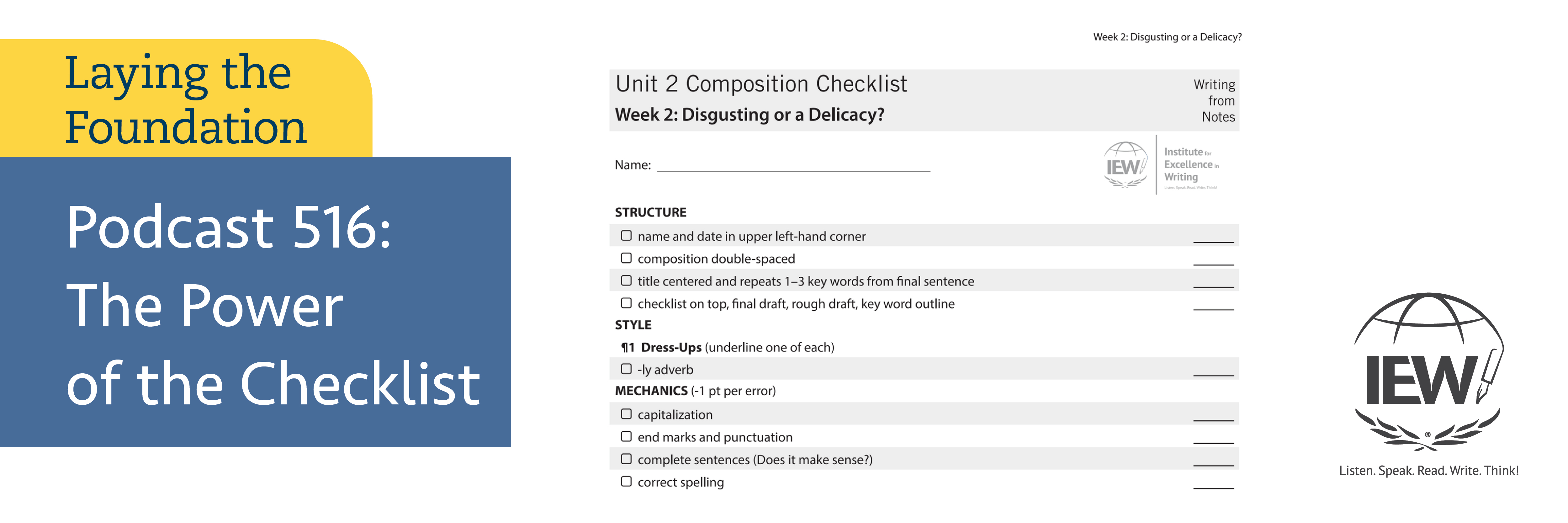
Andrew Pudewa and Julie Walker discuss the history of the IEW’s methodology and how the checklist makes it possible for students to enjoy writing. Julie also shares about the IEW Checklist Generator™, IEW® Gradebook, and instructor accreditation.
If you have questions for Andrew, send them to podcast@IEW.com
Perhaps your question will be answered at the next Ask Andrew Anything (AAA).
If you have questions about IEW products or classes, contact customer service at 800.856.5815 or info@IEW.com
This is the ninth episode of twenty-four in the podcast series Reviewing Our Greatest Hits. This show was initially launched on May 18, 2017, as Episode 94.
In this podcast Andrew and Julie address some of the elements of individualized learning. Discover how customizing your students' materials can enhance their learning abilities and motivate them to complete their tasks.
Remember to send your questions to Podcast@IEW.com, and perhaps yours will be answered the next time we Ask Andrew Anything (AAA).
If you have any questions about IEW or our products, do not hesitate to contact our Customer Service Team at 800.856.5815 or Info@IEW.com
In this podcast Andrew and Julie interview longtime friend and homeschool mom Pam Barnhill. Pam explains how she came to create her own podcast and shares her goal of fostering an environment of truth, goodness, and beauty.
Remember to send your questions to Podcast@IEW.com, and perhaps yours will be answered the next time we Ask Andrew Anything (AAA).
If you have any questions about IEW or our products, do not hesitate to contact our Customer Service Team at 800.856.5815 or Info@IEW.com

In this fascinating episode, Andrew Pudewa and Julie Walker talk with Dr. Steven Hales about the challenges of teaching and learning in the age of AI. Dr. Hales is a professor of philosophy at the Commonwealth University of PA at Bloomsburg and has spent a lot of time thinking and writing about the challenges that students and professors are facing.
If you have questions for Andrew, send them to podcast@IEW.com
Perhaps your question will be answered at the next Ask Andrew Anything (AAA).
If you have questions about IEW products or classes, contact customer service at 800.856.5815 or info@IEW.com
Desiring to learn and understand IEW's methodology better, school teachers and parents ask Andrew questions about Structure and Style. Join Andrew as he answers questions such as "What can I do to prepare myself for the upcoming school year?" and "What are your favorite sources for historical fiction?"
Remember to send your questions to Podcast@IEW.com, and perhaps yours will be answered the next time we Ask Andrew Anything (AAA).
If you have any questions about IEW or our products, do not hesitate to contact our Customer Service Team at 800.856.5815 or Info@IEW.com
In this episode of "Ask Andrew Anything," IEW's ingenious leader answers questions from our latest Facebook Party, such as "Do you recommend the use of a thesaurus?" and "Is there any creative writing course with IEW?". What would your question be if you could ask Andrew anything?
16:36 - Courtney asks "How long is it okay to scribe for them? I've been following Jill's advice on scribing for them for as long as needed but sometimes it seems as though they will never learn to do it themselves. I am doing U.S History-Based Writing Lessons with my 13 year old dyslexic daughter, along with my 12 year old. Both of them need quite a bit of handholding."
18:19 - Lisa asks "On average how long would you expect it to take a 5th grader to do a key word outline and write there own rough draft from their key word outline? This is out first year with TWSS and it's taking a very long time. Do you ever have students try and write their rough draft from scratch because they can't remember what the key word outline means? What's the best thing to do in this case?"
22:04 - Brandy asks "Is there any creative writing course with IEW? "
29:06- Kristen asked "Our freshman son has some vision issues which delayed his reading and impacted his spelling and writing. We have some of your products. Am I right in thinking slow and steady wins the race or is there something specific I should be doing to help his written communication become easier? "
Remember to send your questions to Podcast@IEW.com, and perhaps yours will be answered the next time we Ask Andrew Anything (AAA).
If you have any questions about IEW or our products, do not hesitate to contact our Customer Service Team at 800.856.5815 or Info@IEW.com
In this "Ask Andrew Anything," Andrew answers questions asked by school teachers and parents. Gain some insight on the advanced dress-ups and learn the importance of mastery, especially in the area of spelling.
Remember to send your questions to Podcast@IEW.com, and perhaps yours will be answered the next time we Ask Andrew Anything (AAA).
If you have any questions about IEW or our products, do not hesitate to contact our Customer Service Team at 800.856.5815 or Info@IEW.com
This is the fourteenth episode of twenty-four in the podcast series Reviewing Our Greatest Hits. This show was initially launched on October 11, 2016, as Episode 64.
Since October is National Learning Disabilities Month, the Arts of Language Podcast brings to you our Special Education series. Join us as Andrew and Julie begin the series by talking about dyslexia. Drawing from his experience and training, Andrew provides insights on helping your dyslexic students. Andrew also discusses his mission of educating teachers so that they can best aid their students.
Remember to send your questions to Podcast@IEW.com, and perhaps yours will be answered the next time we Ask Andrew Anything (AAA).
If you have any questions about IEW or our products, do not hesitate to contact our Customer Service Team at 800.856.5815 or Info@IEW.com
As teachers and parents it can be challenging to acknowledge that not all children can be taught the same way. In Part 2 of "However Imperfectly," Andrew addresses the importance of adaptability by teaching at the point of need.
Remember to send your questions to Podcast@IEW.com, and perhaps yours will be answered the next time we Ask Andrew Anything (AAA).
If you have any questions about IEW or our products, do not hesitate to contact our Customer Service Team at 800.856.5815 or Info@IEW.com
It's time to open the bag: the mailbag, that is. Wanting to share the love, Andrew and Julie open up letters from teachers and students. Tune in to this gratifying episode during which the duo reads letters in which teachers express how equipped they feel to teach writing after using IEW, and they learn how successful their students have been.
Remember to send your questions to Podcast@IEW.com, and perhaps yours will be answered the next time we Ask Andrew Anything (AAA).
If you have any questions about IEW or our products, do not hesitate to contact our Customer Service Team at 800.856.5815 or Info@IEW.com
This week's podcast moves beyond sentence openers and dress-ups. Andrew and Julie discuss the advanced style techniques. Providing examples, Andrew goes through quite a few of them. To name some, he discusses dual -ly adverbs, alliteration, parallelism, metaphor, and more! Learn how the goal with these techniques is not to make better writing right now but to help form better writers.
Remember to send your questions to Podcast@IEW.com, and perhaps yours will be answered the next time we Ask Andrew Anything (AAA).
If you have any questions about IEW or our products, do not hesitate to contact our Customer Service Team at 800.856.5815 or Info@IEW.com.

Happy 30th birthday, IEW! In this special Ask Andrew Anything episode, Andrew Pudewa and Julie Walker are joined in the studio by IEW staff members from Oklahoma and around the United States. Listen as Andrew answers questions from listeners presented by the live audience, including how to apply Structure and Style to other languages, how to teach multiple ages, how to translate IEW skills to other assignments, and many others.
If you have questions for Andrew, send them to podcast@IEW.com
Perhaps your question will be answered at the next Ask Andrew Anything (AAA).
If you have questions about IEW products or classes, contact customer service at 800.856.5815 or info@IEW.com
In Part 1 of this new three part series, Andrew shares two of the seven important lessons he has learned in almost thirty years of teaching to help teachers and students alike excel in their skills. With characteristic wisdom and insight, Andrew offers valuable tips for teaching any subject from music to writing with confidence.
Remember to send your questions to Podcast@IEW.com, and perhaps yours will be answered the next time we Ask Andrew Anything (AAA).
If you have any questions about IEW or our products, do not hesitate to contact our Customer Service Team at 800.856.5815 or Info@IEW.com
Why is writing so easy for some kids, but not for others? Why do some students not enjoy writing? Join Andrew in our Unit 7 Webinar as he discusses the “Blank-Brain, Blank-Page Syndrome” and addresses a few of the roadblocks to winsome writing.
Remember to send your questions to Podcast@IEW.com, and perhaps yours will be answered the next time we Ask Andrew Anything (AAA).
If you have any questions about IEW or our products, do not hesitate to contact our Customer Service Team at 800.856.5815 or Info@IEW.com
Motivated by a desire to set teachers up for success, Denise Kelley, IEW Manager of Product Development, works tirelessly to ensure all IEW products and services are aligned with the company’s cornerstone product, Teaching Writing: Structure and Style. Join Andrew Pudewa and Julie Walker as they discuss with Denise how her over two decades of experience at IEW have shaped her philosophy of product development.
If you have questions for Andrew, send them to podcast@IEW.com
Perhaps your question will be answered at the next Ask Andrew Anything (AAA).
If you have questions about IEW products or classes, contact customer service at 800.856.5815 or info@IEW.com

In this episode, Andrew Pudewa and Julie Walker address how to assist students who join midyear. They discuss whether it is necessary to teach all the previous units before new students join the rest of the class and how to handle customizing the checklist. Listen to this helpful conversation that focuses on the best practices that will truly benefit a student.
If you have questions for Andrew, send them to podcast@IEW.com
Perhaps your question will be answered at the next Ask Andrew Anything (AAA).
If you have questions about IEW products or classes, contact customer service at 800.856.5815 or info@IEW.com

This year marks the 250th anniversary of the writing of the Declaration of Independence. Andrew Pudewa and Julie Walker discuss the rich heritage of thought and compelling writing of the Founding Fathers. This episode also includes a look back at a source text about Thomas Jefferson and music from the old Student Writing Intensive course.

If you have questions for Andrew, send them to podcast@IEW.com
Perhaps your question will be answered at the next Ask Andrew Anything (AAA).
If you have questions about IEW products or classes, contact customer service at 800.856.5815 or info@IEW.com
✟Contains distinctly Christian content
In this two-part series, Andrew and Julie discuss Reaching the Reluctant Writer (RRW), offer suggestions, and provide a step-by-step process to help your student excel in developing their writing skills.
Remember to send your questions to Podcast@IEW.com, and perhaps yours will be answered the next time we Ask Andrew Anything (AAA).
If you have any questions about IEW or our products, do not hesitate to contact our Customer Service Team at 800.856.5815 or Info@IEW.com
Does the checklist stiffen creativity in students? With this being a common concern, Andrew and Julie address it and continue their conversation regarding misunderstandings about IEW's stylistic techniques. Whether your student is in grade school, middle school, or high school, learn how the checklist provides students with the opportunity to explore and understand language.
Remember to send your questions to Podcast@IEW.com, and perhaps yours will be answered the next time we Ask Andrew Anything (AAA).
If you have any questions about IEW or our products, do not hesitate to contact our Customer Service Team at 800.856.5815 or Info@IEW.com
Are you teaching through Unit 5, Writing from Pictures, and interested to know the ins and outs of the unit? Join Andrew Pudewa in part two of this webinar recording as he discusses the how-to of Unit 5, explaining both the process and purpose of the unit.
Remember to send your questions to Podcast@IEW.com, and perhaps yours will be answered the next time we Ask Andrew Anything (AAA).
If you have any questions about IEW or our products, do not hesitate to contact our Customer Service Team at 800.856.5815 or Info@IEW.com

It’s time for another Live Ask Andrew Anything episode! Join Andrew Pudewa and Julie Walker as they answer questions from listeners. They were joined by Nicki Truesdell, who asked “How much grammar and writing do you think is necessary throughout the years of K-12?” Andrew and Julie also answer questions about Structure and Style® for Students, The Phonetic Zoo, instructor accreditation, and many others. This episode covers all things IEW!
If you have questions for Andrew, send them to podcast@IEW.com
Perhaps your question will be answered at the next Ask Andrew Anything (AAA).
If you have questions about IEW products or classes, contact customer service at 800.856.5815 or info@IEW.com
Why is writing so easy for some kids, but not for others? Why do some students not enjoy writing? Join Andrew in our Unit 7 Webinar as he discusses the “Blank-Brain, Blank-Page Syndrome” and addresses a few of the roadblocks to winsome writing.
Remember to send your questions to Podcast@IEW.com, and perhaps yours will be answered the next time we Ask Andrew Anything (AAA).
If you have any questions about IEW or our products, do not hesitate to contact our Customer Service Team at 800.856.5815 or Info@IEW.com
With the end of the school year comes new opportunities to spend time outside. Listen to this week’s episode as Andrew Pudewa and Julie Walker discuss furnishing the mind with time spent outdoors. We all know that spending time outside is good for children. How might spending time outside also improve students’ writing skills?



If you have questions for Andrew, send them to podcast@IEW.com
Perhaps your question will be answered at the next Ask Andrew Anything (AAA).
If you have questions about IEW products or classes, contact customer service at 800.856.5815 or info@IEW.com

In this episode Andrew Pudewa and Julie Walker continue to discuss and provide tips for teaching through the final five units from Teaching Writing: Structure and Style® if you are not using one of the theme-based lessons or the Structure and Style for Students video courses.
If you have questions for Andrew, send them to podcast@IEW.com
Perhaps your question will be answered at the next Ask Andrew Anything (AAA).
If you have questions about IEW products or classes, contact customer service at 800.856.5815 or info@IEW.com
This is the thirteenth episode of twenty-four in the podcast series Reviewing Our Greatest Hits. This show was initially launched on September 15, 2015, as Episode 8.
Over the past century there has been a great decline in thinking skills. Be a part of this week's conversation as Andrew and Julie examine what critical thinking actually is, and discover how good thinking is teachable, learnable, and practicable.
Remember to send your questions to Podcast@IEW.com, and perhaps yours will be answered the next time we Ask Andrew Anything (AAA).
If you have any questions about IEW or our products, do not hesitate to contact our Customer Service Team at 800.856.5815 or Info@IEW.com

Happy Thanksgiving! In this episode Andrew Pudewa and Julie Walker discuss the power of gratitude. Andrew reads a letter from a student expressing his gratitude for the writing courses. In sharing things they are grateful for, Andrew and Julie encourage listeners to see how simply expressing thanks can change your perspective.
If you have questions for Andrew, send them to podcast@IEW.com
Perhaps your question will be answered at the next Ask Andrew Anything (AAA).
If you have questions about IEW products or classes, contact customer service at 800.856.5815 or info@IEW.com
In this week’s podcast Julie Walker asks Andrew Pudewa how imitation applies to teaching writing along with other questions about his talk From Copywork to Composition. Imitation is the cornerstone of excellent writing. Just as no music teacher hands a new student a blank sheet of manuscript paper and expects an original composition, writing instructors should not expect students to write without a model to imitate when they are first learning.
If you have questions for Andrew, send them to podcast@IEW.com Perhaps your question will be answered at the next Ask Andrew Anything (AAA).
If you have questions about IEW products or classes, contact customer service at 800.856.5815 or info@IEW.com
In this podcast Andrew and Julie interview the managing editor of the Magnum Opus Magazine, Megan Horst. Learn about the great student work Megan puts into the magazine and receive some background on the history of Magnum Opus Magazine.
Remember to send your questions to Podcast@IEW.com, and perhaps yours will be answered the next time we Ask Andrew Anything (AAA).
If you have any questions about IEW or our products, do not hesitate to contact our Customer Service Team at 800.856.5815 or Info@IEW.com
In this episode, Andrew Pudewa and Julie Walker open the mailbag (or the email inbox) and read letters IEW has received from students, parents, and teachers. Listen to this episode to find out how one student saved a library after writing an IEW assignment! Some students sent Andrew samples of their work, and he shares some excerpts on this podcast. We love hearing from our customers!


Julie’s Flat Stanley in Astoria, Oregon


Eli and Caleb, former Introduction to Public Speaking students
If you have questions for Andrew, send them to podcast@IEW.com
Perhaps your question will be answered at the next Ask Andrew Anything (AAA).
If you have questions about IEW products or classes, contact customer service at 800.856.5815 or info@IEW.com

In this episode, Andrew Pudewa and Julie Walker discuss how children thrive when parents read aloud to them. Reading aloud builds family bonds and shared memories as well as increases vocabulary and comprehension. Listen to this episode to learn more.
If you have questions for Andrew, send them to podcast@IEW.com
Perhaps your question will be answered at the next Ask Andrew Anything (AAA).
If you have questions about IEW products or classes, contact customer service at 800.856.5815 or info@IEW.com

To kick off National Gratitude Month, this podcast episode highlights Ron Clark’s book The Essential 55: An Award-Winning Educator’s Rules for Discovering the Successful Student in Every Child. Join Andrew Pudewa and Julie Walker as they discuss how teaching students the concepts outlined in the book can help students express gratitude in a myriad of situations.
If you have questions for Andrew, send them to podcast@IEW.com
Perhaps your question will be answered at the next Ask Andrew Anything (AAA).
If you have questions about IEW products or classes, contact customer service at 800.856.5815 or info@IEW.com
Andrew and Julie welcome our Lead Educational Consultant, Sharyn Staggers, to the mic this week. Learn how Sharyn came to know IEW, appreciate her role in aiding teachers and schools, and be inspired by her message about the power of the teacher training.
Remember to send your questions to Podcast@IEW.com, and perhaps yours will be answered the next time we Ask Andrew Anything (AAA).
If you have any questions about IEW or our products, do not hesitate to contact our Customer Service Team at 800.856.5815 or Info@IEW.com
Having gathered insights and experiences over three decades of teaching, Andrew presents seven lessons he’s learned. These seven lessons are listed in his article, “However Imperfectly,” and in the first chapter of his book of the same title. In part one of this two-part series, Andrew unpacks the first four lessons he’s learned. Andrew notes that while he did not adhere to these principles perfectly over the years, teaching has been well worth it—however imperfectly he may have done it.
Remember to send your questions to podcast@IEW.com, and perhaps yours will be answered the next time we Ask Andrew Anything (AAA).
If you have any questions about IEW or our products, do not hesitate to contact our Customer Service Team at 800.856.5815 or info@IEW.com.
A webinar for those who would like support using Ancient History-Based Writing Lessons in a class setting.
A webinar for those who would like support using U.S. History-Based Writing Lessons in a class setting.
A webinar for those who would like support using U.S. History-Based Writing Lessons in a class setting.
A webinar for those who would like support using U.S. History-Based Writing Lessons in a class setting.
Is your young student ready to begin learning to read and write? Or do you have an older student who struggles with basic skills? The Institute for Excellence in Writing is pleased to bring you Primary Arts of Language (PAL), a beginning reading and writing program created by Jill Pike and based on Anna Ingham’s award-winning, 70-year legacy, The Blended Sound-Sight Program of Learning.
A webinar for those who would like support using Ancient History-Based Writing Lessons in a class setting.
A webinar for those who would like support using Medieval History-Based Writing Lessons in a class setting.
A webinar for those who would like support using Medieval History-Based Writing Lessons in a class setting.
A webinar for those who would like support using Ancient History-Based Writing Lessons in a class setting.
A webinar for those who would like support using Medieval History-Based Writing Lessons in a class setting.
When a big job is broken down into bite-sized pieces, students and teachers alike can enjoy the journey together! Join Andrew Pudewa as he answers your questions about teaching Unit 8: Easy Essays and Beyond, IEW's process of crafting an essay. Gain an understanding of the basic structure, then prepare to unpack and explore the various essay types, their differences, and how a good structural strategy can inform written works of five, fifty, or five hundred paragraphs! Andrew will lead you through the process step-by-step, then answer questions from the audience.
Have you ever noticed that students seem to learn so much more when they are having fun? Join Lori Verstegen and Laura House as they share a variety of engaging games that capture student interest while reinforcing Structure and Style. This webinar will also present numerous ideas for end-of-the-year events, submitted by teachers from around the country. Have fun and finish strong!
Join us for an enjoyable and important webinar as Andrew Pudewa and Julie Walker shed some light on how teachers and parents can facilitate learning in the new, exclusively at-home learning environment now prevalent nationwide. Andrew and Julie will be talking about how to continue learning at home, the benefits of reading aloud, how to incorporate poetry memorization, how to implement the free lessons offered by IEW, and more.
A webinar for anyone who wants support using USH in a class setting.
A webinar for anyone who wants support using USH in a class setting.
A webinar for anyone who wants support using USH in a class setting.
A webinar for anyone who wants support using USH in a class setting.
A webinar for anyone who wants support using USH in a class setting.
A webinar for anyone who wants support using USH in a class setting.
A webinar for anyone who wants support using USH in a class setting.
A webinar for anyone who wants support using MHW in a class setting.
A webinar for anyone who wants support using MHW in a class setting.
A webinar for anyone who wants support using MHW in a class setting.
A webinar for anyone who wants support using MHW in a class setting.
A webinar for anyone who wants support using MHW in a class setting.
A webinar for anyone who wants support using MHW in a class setting.
A webinar for anyone who wants support using MHW in a class setting.
A webinar for anyone who wants support using AHW in a co-op setting.
A webinar for anyone who wants support using AHW in a co-op setting.
A webinar for anyone who wants support using AHW in a co-op setting.
A webinar for anyone who wants support using AHW in a co-op setting.
A webinar for anyone who wants support using AHW in a co-op setting.
A webinar for anyone who wants support using AHW in a co-op setting.
A webinar for anyone who wants support using USH in a class setting.
A webinar for anyone who wants support using MHW in a class setting.
A webinar for anyone who wants support using AHW in a co-op setting.
A webinar for anyone who wants support using Adventures in Writing in a class setting.
A webinar for anyone who wants support using Frontiers in Writing in a class setting.
A webinar for anyone who wants support using Discoveries in Writing in a class setting.
A webinar for anyone who wants support using Discoveries in Writing in a class setting.
A webinar for anyone who wants support using Discoveries in Writing in a class setting.
A webinar for anyone who wants support using Discoveries in Writing in a class setting.
A webinar for anyone who wants support using Discoveries in Writing in a class setting.
A webinar for anyone who wants support using Discoveries in Writing in a class setting.
A webinar for anyone who wants support using Frontiers in Writing in a class setting.
A webinar for anyone who wants support using Investigations in Writing in a class setting.
A webinar for anyone who wants support using Investigations in Writing in a class setting.
A webinar for anyone who wants support using Investigations in Writing in a class setting.
A webinar for anyone who wants support using Discoveries in Writing in a class setting.
A webinar for anyone who wants support using Frontiers in Writing in a class setting.
A webinar for anyone who wants support using Frontiers in Writing in a class setting.
• The individual lessons have the added components of daily lesson plans and clearer weekly lesson goals.
• Source texts are either new or have been modified to include more regions of the world.
• The pacing of stylistic techniques has been adjusted so that students have success and enjoy the writing experience more.
• Advanced elements of Structure and Style have been placed in the Advanced Additions optional e-book, which is a free download with the purchase of the Student Book. This means that that the basic Student Book along with the Advanced Additions e-book is a perfect fit for all Level B students.
• Vocabulary words have been reevaluated to coincide with the dress-ups being taught in the lessons, making it easier for the students to use them in their lesson assignments.
• The lessons align with the updated version of Teaching Writing: Structure and Style, both in the order and manner in which elements of Structure and Style are taught.
• The new edition is not compatible with the former.
Yes.
All the individual letters are introduced in the PAL: Writing program using letter stories as the student learns to print. Even if your student is too young to do much printing (age 3–4), you should still get the Writing package and do the printing lessons. He should just do his writing on a whiteboard (a lap sized one should work well). He won't start the copy work until his fine motor skills develop further, so the parent will then just shelve the Writing part until he is older. He can continue to practice his letters on the whiteboard. When he is old enough to manage a pen or pencil (usually around age 5), then he can pick up where he left off.
IMPORTANT: A child should not try to print on lines using a regular pencil until he has developed enough fine motor control. If you try to do it too early, the child ends up using goofy pen grips because his hand is not strong enough to use a mature pen grip. Thus, it is very important to be patient and WAIT until your child is old enough before working on handwriting.
Yes, if your student is already reading fluently you can use PAL: Writing without PAL: Reading. However, in order to use the PAL: Reading package, you will need PAL: Writing as well.
The primary goal of the Institute for Excellence in Writing is teacher training. We offer lessons and video courses for the student to make the job of the teacher as easy as possible, but it is important for teachers to gain the training necessary to help their children write well.
Writing is an art and requires a give and take between student and teacher. The teacher’s course equips you to provide that for your student. If you only have the student videos, your student will learn a good deal, but will only get the answers to whatever questions were asked when the course was originally recorded. If your student has any difficulty, you may find it challenging to provide him the unique help he needs. The teacher’s course provides all the hows and whys behind the program so that you too can become an accomplished writing teacher over time.
One experienced homeschool mother explains, "I homeschool eight children, so I can appreciate how precious time is, but trying to teach writing without taking the time to watch my teacher’s videos was like pushing the car down the highway because I didn’t have time to stop for gas. :)
You don’t have to watch the entire teacher’s course in one sitting. Just watch a video a month or so and you will do just fine.
As Andrew Pudewa has said, our materials are like ice cream—the more the better! But be sure the first serving is for the teacher.
You will generally begin the Primary Arts of Language program when your student is around age 5 or 6, but it may be used with reading-ready 3 and 4 year olds, as well as older students who need some remedial help.
If you have an advanced 3 or 4 year old who is eager to learn to read, you can begin with PAL: Reading, along with Part 1 of PAL: Writing. You won’t want your student to start printing on lines using a regular pencil until he has developed enough fine motor control, usually around age 5. (If you try to start this too early, the child often ends up developing a goofy pencil grip because his hand is not strong enough to use a mature pencil grip.) So a younger student can practice writing his letters on a whiteboard. Since he won't continue with Part 2 of PAL: Writing until his fine motor skills develop further, you can set it aside and keep working through PAL: Reading until he is older and ready to move in to copy work.
The program isn't too cutesy, so it is an excellent resource if you have an older student who needs some gentle remedial help. And if you are already using it with a younger child, older siblings can easily join in as your "helpers," playing the reading games with their younger sibling and sitting in on the lessons as needed.
No matter what your child's age when you begin, the Teacher’s Manuals will give recommendations for how to adjust the program to meet your unique child’s needs.
Each student will need access to the Narnia books as they will be directed to read one or more chapters with each lesson in the Following Narnia student book.
Response from author Janice Campbell:
The new edition has a new chapter on how to write an essay, plus a pacing chart (a birds-eye view of what to do in each module), and a clearer, more detailed table of contents. The E1 level has a few new resources, and as in every edition, I've worked to make everything clearer. All the links in each level have been checked and updated (most are the same).
If you already have the second edition, it is still useful, and you don't need to update unless you want to. Just remember that many of the context resources are being moved to our website at http://excellence-in-literature.com, so if you encounter a link that does not work, check there first. If it's not there, try searching via Google or other search engine. A few items completely disappeared due to the retirement of the professors who authored them, and in that case other resources were substituted.
Yes! You do! The Writing Across the Curriculum courses are meant to be supplemental—an aid to the teacher. They presume that the instructor has been through the Teaching Writing: Structure and Style course. A book can't teach writing to a child without teacher support. After you learn our system these books will be able to serve as a support to you in teaching your child to write.
You can find the copyright policy for each of our products as a link on the specific product page. For example, to view the copyright for Structure and Style for Students: Year 1 Level A, go to the product page and click on the "Details" tab.
Yes! Two parents respond to this question below. The first teaches a student with Aspergers (on the autistic scale) and the second has a son who is dyslexic.
Jill states:
"IEW is fantastic for those with expressive disorders. A dear friend of mine has a son with Aspergers. This year, I offered to teach him writing. His mom returned immediately with, 'Oh, he can't write.' I asked for a chance.
"We just started the Student Writing Intensive B. He flew through the first disc, outlined and wrote beautifully. I think he will find the help he needs with this program. I am so happy for him!"
Jen writes:
"My ten year old is dyslexic. Written expression has been a chore for him from day 1. Since we started with IEW two years ago, the lights have come on, and slowly but surely he's become a writer. The logical progression, the straightforward steps and checklists, and the knowledge that he can't 'do it wrong' (there are simply ways that he can 'do it better') have been incredible confidence builders for him.
"IEW has helped him get through the blocks that have always made written communication so difficult for him. Two years ago, he threw a literal screaming fit if I asked him to write his name on his paper...now, he journals a page a day and thinks nothing of writing a paper a week.
"IEW is so customizable (yet makes so much sense to the kids) that it works very, very well for kids that just don't 'get it' otherwise."
The PAL: Reading will require about 30 minutes of your time each day you do it, and another 30-60 minutes of your student’s time to do his things with some, but not always significant, supervision.
The PAL: Writing will take about 30 minutes of your day. It also includes a brief discussion of a story every day. You can use any story you are reading to your child, so it works with anything you are already doing. As with most programs, your first week or two will likely require more time, but as you get it running, it does not take much time to maintain. Using the PAL: Reading, your child will likely be reading after just a few months. At that point, less time will need to be spent on the Reading, so you can spend a little more time on the PAL: Writing Composition section when you get to it. However, it won’t really cost you any more time in the long run.
Traditional grammar programs systematically teach concepts about grammar, punctuation, and usage with sentences artificially contrived to fit the rules. The theory behind such approaches is that after learning the rules, students will be able to apply them to their own writing. Often these programs teach more concepts than are need-to-know in terms of punctuation, correct grammar, or performance on the ACT or SAT, but they cover the rules well.
Diagramming is a method for helping students grasp the underlying structure of sentences, which is critical for punctuating sentences correctly but which seems to work with only about half the population. Most diagramming programs also teach more than is truly helpful to students learning grammar.
Fix It! Grammar emerged from a teacher's frustration with traditional approaches. Like many teachers, Pamela White (who earned her Master's Degree and A.B.D. in English from Vanderbilt University) recognized that students using traditional grammar programs may learn the rules well but seem to have a disconnect in applying them. The more that grammar is rooted in the writing experience, the better it sticks.
The ultimate goal of teaching grammar should be to train students to be able to edit their own writing effectively. When a side benefit is improved performance on the SAT or ACT, so much the better. Fix It! Grammar (third edition) is a complete grammar program for these goals that truly matter, but it teaches students in the context of writing and through editing rather than through exercises focusing on specific rules.
The early books in Fix It! Grammar begin with marking parts of speech and then identifying phrases (mainly prepositional phrases), main clauses, and dependent clauses. This is better than diagramming because it focuses on the structural parts of sentences that matter most and most affect punctuation rather than getting students bogged down in labeling the parts of sentences that rarely become punctuation hurdles.
Gradually, the Fix It! Grammar stories incorporate usage, grammar, and punctuation concepts, taught by asking students to correct the mistakes in passages and then discuss with their teacher the reasons for corrections.
Early stories have advanced concepts which can be used with stronger students and which pave the way for concepts in later stories.
The six books, each lasting a full year, contain some instruction at the start of each week's lesson as well as added instruction and tips to teachers to use as needed.
All six stories use natural sentences--rather than ones artificially contrived to fit an exercise--that closely mimic the kinds of errors in student writing, so students get repeated practice looking for errors in sentences (the same methods achievement tests use), along with the challenge of needing to explain the why's behind fixes. Since the sentences have the normal complexity of real writing, they also deal with the same issues any writer faces in editing his or her own work.
I remember when I was at a homeschool conference looking at some other writing materials and a very nice Mom poked her head over my shoulder and pointed me to IEW. I glanced at it then, but like you, thought it looked overwhelming.
A year later, I decided to give it a try and I absolutely wish I had done it so much sooner. IEW is not difficult to use or teach, in fact, it's easier and clearer than most of what's out there. The "thought" of it is what can be overwhelming, but the program itself is not complicated. Once you get it, begin using it and learn how to teach writing using IEW - you'll wish you started sooner. Plus, you have this great group for support if you ever have questions!!
Blessings,
Tina
I looked at the website yearly for about 4 years before I finally bought it. Each time I looked at the website I thought, "I can't do this. It looks too hard. It's $269 and I won't be able to do it” Fast forward to the next year and I said the same thing.
Finally this year I decided that all the people I admire that recommend it must have a REASON for liking it so much so I bit the bullet.
Between what is in the plans and the help on the (previous) forum, you won't have to put much effort into lesson planning especially if you have a curriculum you already use. Your son will learn the techniques and then apply them to his regular assignments.
I'm currently working through the student videos with my two oldest. I'm going at our own pace (slower than 1 disc/day MUCH faster than the 15 week lesson plan). And I'm NOT a good lesson planner. I'm happy when I'm convinced they 'get' a topic like the KWO or the dress-ups.
This is NOT hard to teach. It really isn't. If you flip through the tezcher's manual without watching the videos it can look confusing and overwhelming. Once you listen to Andrew explain everything it all makes sense.
Last night, dd (13) thanked me for getting IEW. It is making writing 'fun and much easier' for her. My ds (11) feels the same way. He never put pen to paper before. Now he is doing it, enjoying it and showing a creative side that he never has.
(Name withheld)
Grade levels are approximate, as each child's ability level will vary, regardless of grade level. In general, however, the following levels apply (for all products except the Phonetic Zoo):
Note: If a student is significantly behind in reading ability, you may wish to choose a level that corresponds with reading level rather than grade level.
For the Phonetic Zoo, the spelling placement test should be given to determine each student's starting level.