The Art and Science of Motivation
by Andrew Pudewa
I have studied the science and art of motivation for many years, first as a violin teacher, then as a writing teacher, and finally a...
Read More

How are astronauts protected from space dust traveling at the speed of a bullet? How do ants know when another ant has died? Which woman scientist was called the Sun Queen and why?... read more
Loosely defined, rhetoric is the art of persuasion. In Podcast 175, Andrew Pudewa and Julie Walker talk about what persuasion is, what it isn’t, and how people can learn to harness the science... read more
Over the past two podcasts, Episodes 221 and 222, Andrew Pudewa and Julie Walker discussed the topic of motivation. As educators, how do we motivate students to learn? What steps and strategies can... read more

My teacher training began around age eight. After my grandfather died, we moved to be closer to my grandmother, and my father changed careers from accounting to teaching. This is truly his gift.... read more

In her 1977 article “Writing as a Mode of Learning,” Janet Emig states, “Writing serves learning uniquely because writing as process-and-product possesses a cluster of attributes that correspond uniquely to certain powerful learning... read more

Do writing skills really matter if you are wanting to pursue a STEM pathway? Jamie Poston, a computer science and engineering major at the University of Nevada, Reno, would absolutely assert that they... read more
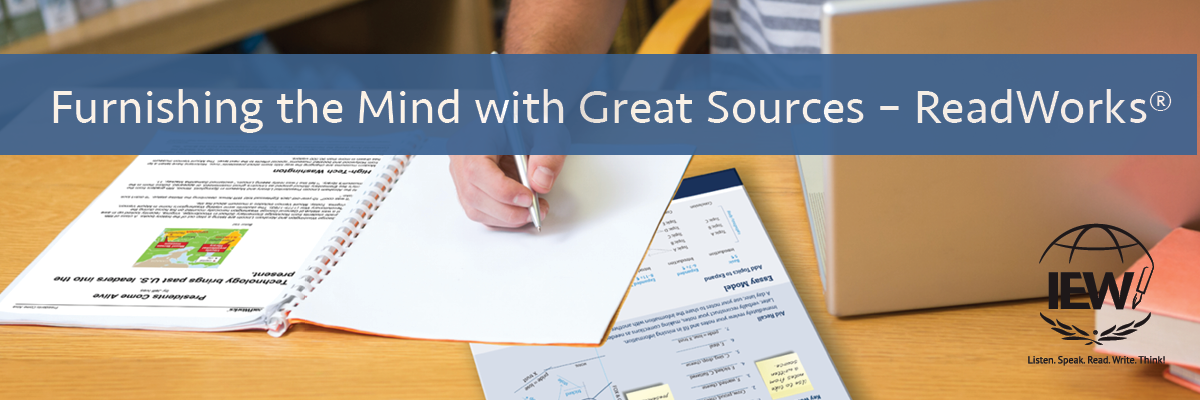
IEW is widely recognized for exceptional writing courses for the homeschool, classroom, co-op, and tutorial, providing students with excellent content to cover a wide range of subject matter and topics. Whether you use... read more

IEW teaches students to write with structure and with style. Style includes vocabulary. Structure is the elements found in compositions. Throughout the year students progress through nine structural units. At this point in the... read more

“Why, Mum, why?” According to my mother, that was my constant refrain when I was young. I guess it matched my grandfather’s nickname for me: “Busy One.” Being busy meant I encountered many... read more
Now that the relaxing Christmas break is over, are you finding yourself suddenly thrust back in the business of life and already feeling overwhelmed and exhausted? You are not alone! Check out this... read more
Louis Lemmon: Hybrid School Administrator Founded in 2005, Lake Pointe Academy is a K–12 University-Model® school of approximately 195 students. Louis Lemmon served for two years as a teacher, and then began serving as head... read more

Many of us at IEW are veteran homeschoolers and are being peppered with questions and concerns from friends who are suddenly finding themselves in the unexpected position of needing to homeschool. If you... read more
Many years ago when I was a much younger, somewhat bewildered homeschool mom standing in front of the IEW® booth at a homeschool convention, I had one goal in mind—finding support to help... read more
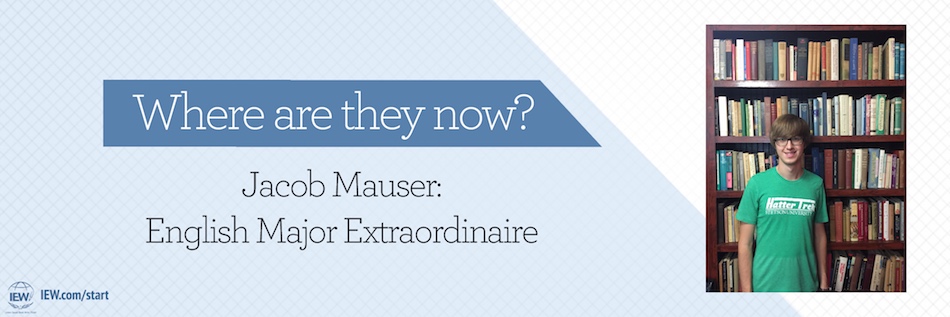
Graduating from high school last year, Jacob Mauser has taken the IEW writing skills he learned while being homeschooled to college and discovered that English and writing are the things he most loves... read more
What elements need to be in place for a student to have solid reading comprehension? In 1986 psychologists William Tumner and Philip Gough distilled it down to a simple mathematical formula: reading comprehension... read more
As a dyslexia tutor, one of the ways I connect with other tutors who do the same thing is through social media. I am in a few groups that are made up of... read more

The last day of school is almost here! Students’ minds are already thinking weeks ahead about camps, road trips, swimming, and all the other activities that get packed into their short break from... read more
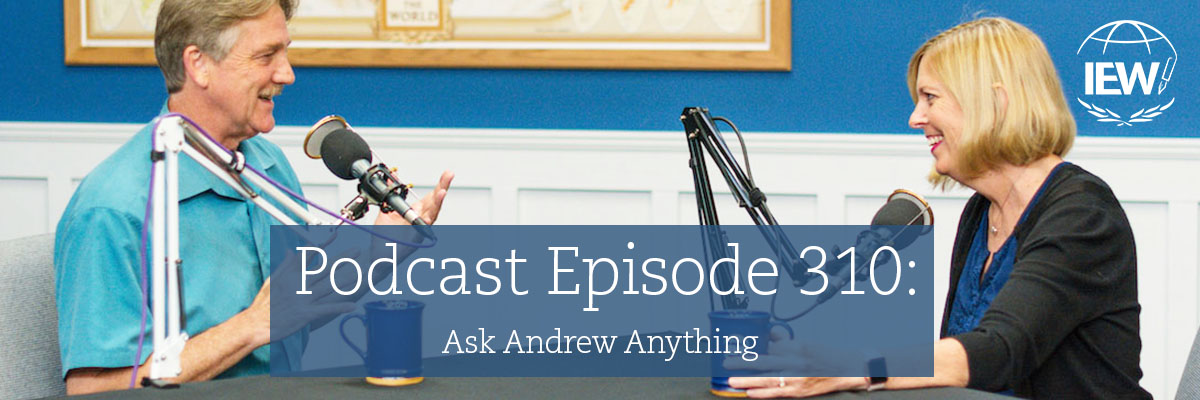
It’s that time again! Every tenth podcast is set aside so that listeners can “ask Andrew anything.” In podcast Episode 310 listeners asked the following questions: How do I know if I’m expecting too... read more
Working in IEW’s customer service department, I receive many calls from customers, especially new customers who are concerned that IEW seems too simple. They worry the expectations are not high enough. Often the... read more

In the latest podcast, Episode 213, Robert Bortins, chief executive officer for Classical Conversations (CC), joined Andrew Pudewa and Julie Walker in the studio. Bortins was there to share some exciting news: Classical... read more

I was new to homeschooling with a preschooler, a kindergartner, and a second grader. We had just made a major move to a new part of the country, devoid of any acquaintances. The... read more
Why is IEW a good fit for students with special needs? This week Andrew Pudewa and Julie Walker read through testimonials from teaching parents to help answer the question. Tune in to this... read more
Join Andrew Pudewa and Julie Walker as they discuss dysgraphia with Jennifer Mauser, one of IEW’s Educational Consultants and a Master Barton tutor. Learn what dysgraphia is and discover ways that you can... read more
# Nathanael Olander grew up an “IEW kid.” His mom, Danielle Olander, is an IEW homeschool exhibitor. Together the two of them authored Rockets, Radar, & Robotics*, a technology-themed writing curriculum. The idea for... read more
American culture appreciates speed. So many people seem to be in a hurry. People fly down the interstate in their cars. Fast food lines move people through quickly so they can get on... read more
While the act of reading appears, at least on the surface, to be simple, it is anything but. Reading is actually an extremely complicated activity that involves lots of simultaneous processes within the... read more
The library has always been my happy place. The smell of books. The neatly organized stacks. The access to anything I could ever possibly want to know. Our little branch library is only... read more

With the arrival of the new year, individuals often make resolutions and set new goals for themselves. Teachers reevaluate classroom practices and resolve to start the new semester with renewed energy and strong... read more
For many years there have been two primary diagnostic exams for students preparing to attend college, the SAT® and the ACT®. Now, though, there is a new exam available that is an even... read more
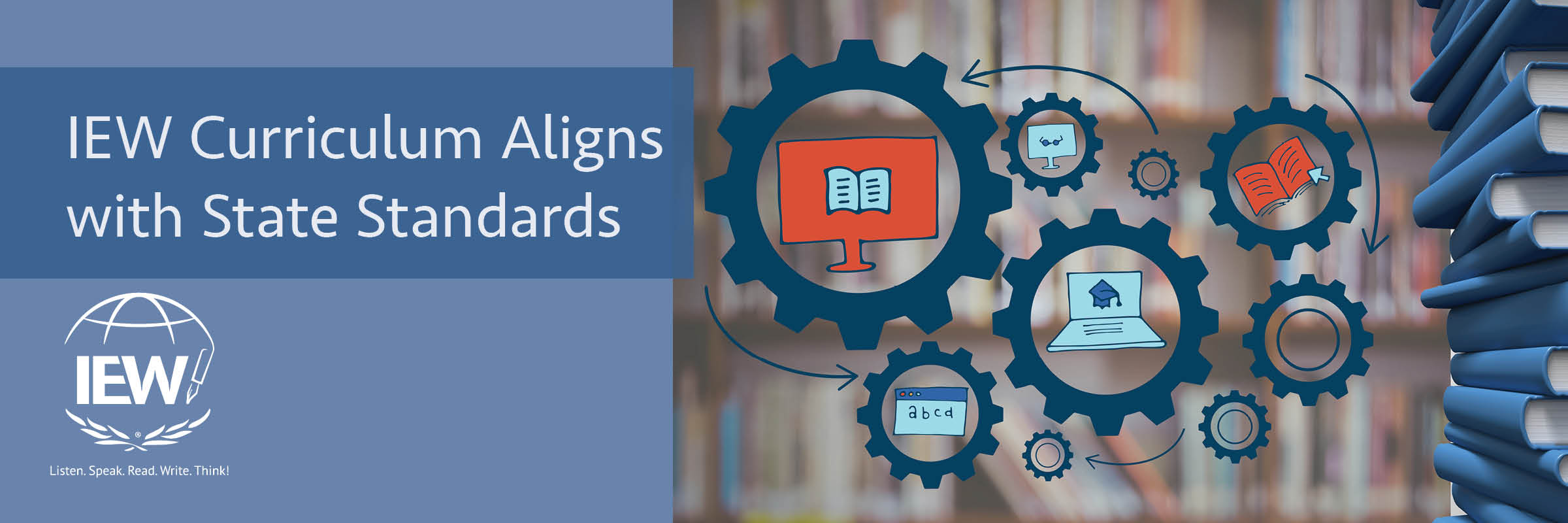
Administrators, curriculum directors, and schoolteachers often call IEW’s Schools Department asking if our curriculum meets state educational standards. Some schools or charter schools are not allowed to recommend items if they are not... read more

On Day 3 of Twelve Days of Christmas Giving, IEW is giving you a three-week sample from Writing Across the Curriculum. Be sure you are registered for the event to receive the email... read more
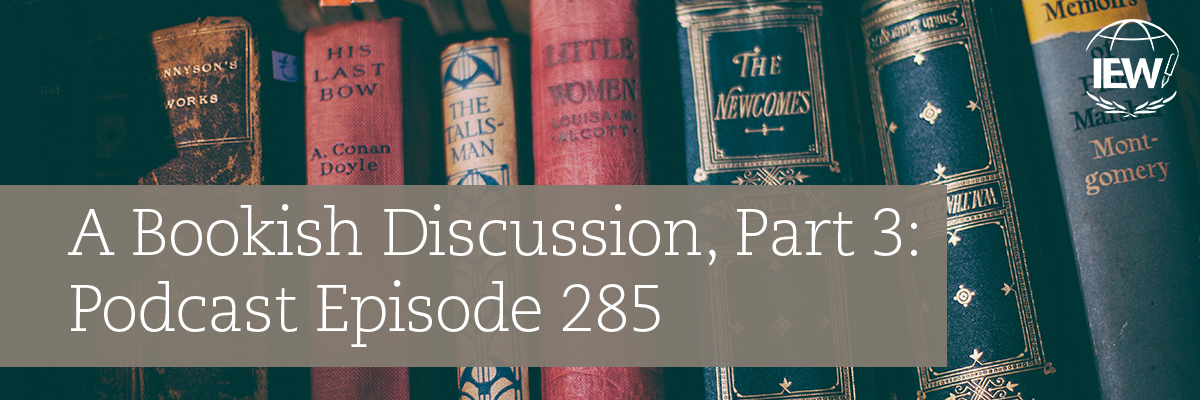
With podcast Episode 285 Andrew Pudewa concludes recounting the accumulated twenty-year tally of his “Best Book of the Year List.” To listen to the first two episodes, visit the links here for Episode... read more
Whether you use one of IEW’s Writing Across the Curriculum courses or a Structure and Style® for Students video-based course, it is a win-win for your students. While both use a spiral method... read more

One of the hallmarks of IEW’s Structure and Style® methodology is to assign students composition checklists that follow EZ+1. What does this mean? Simply this: adjust the checklist so that the student is only... read more
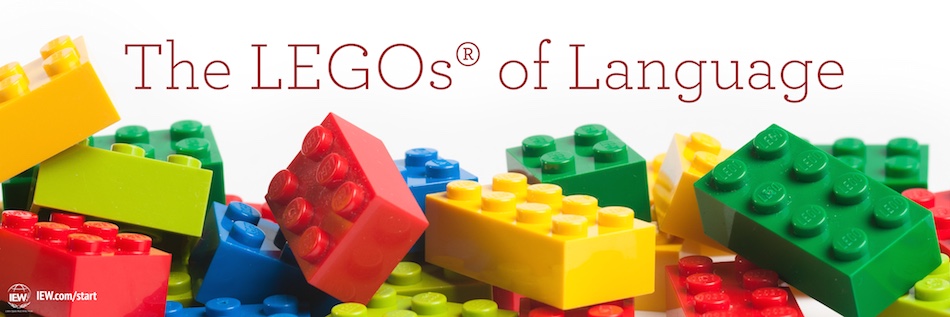
This week, for your enjoyment, we are revisiting a classic post from our archives. We hope you enjoy Andrew's thoughts on the LEGOs® of Language! Most all children—especially boys—love to play with building toys,... read more

Last week, Andrew Pudewa and Julie Walker hosted a webinar called “A Crash Course for Accidental Homeschooling.” If you weren’t able to participate in the live event, you are in luck. You can... read more

In fifth grade I attended a small Christian school in Sarasota, Florida. It was an exciting year because our classroom was on the middle school wing instead of the elementary wing. We all... read more

As the academic year begins to wind down and you begin to reach the end of your writing curriculum, you may be considering ways you can keep your students’ skills strong over the... read more
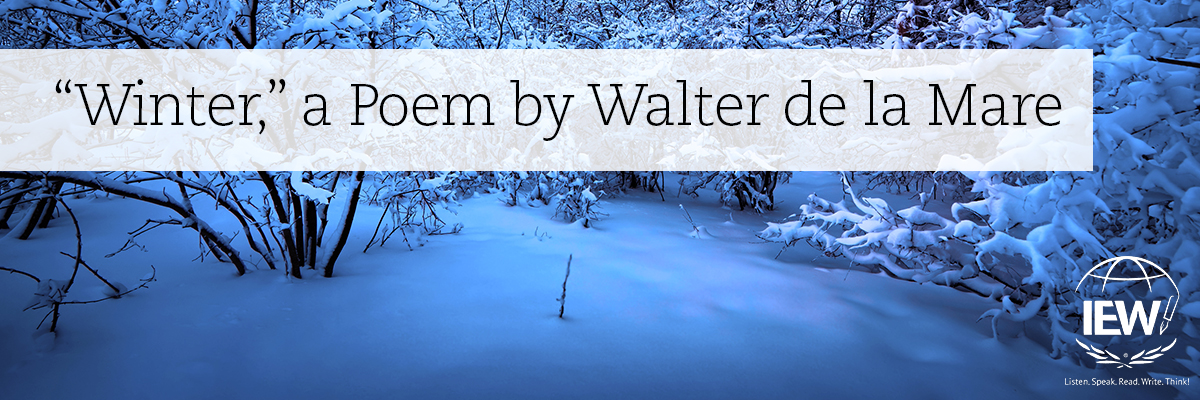
Today’s featured poem is composed by Walter de la Mare, the poet who also crafted “Some One,” a poem encountered in Level 2 of IEW’s Linguistic Development through Poetry Memorization. After you finish... read more

Have you ever wondered how to motivate your students without resorting to bribery? Occasionally our exceptional customer service team receives a question that only Andrew Pudewa himself can answer. This blog post represents... read more
There are many options available to teach IEW writing to your students. One of the most enjoyable and successful ways to begin is to use Teaching Writing: Structure and Style (TWSS2) and the Structure... read more
As educators, whether of the traditional brick-and-mortar variety, the homeschool variety, or anything in between, we earnestly desire to prepare our students well for the “real world.” Dutifully we spend time constructing our... read more

If your students are using IEW’s new Structure and Style for Students (SSS) program this year, you may be wondering whether you actually need Teaching Writing: Structure and Style (TWSS) in order to... read more
Spring is in the air. How can you tell? Birds are building nests, trees are beginning to bud, and conferences for teachers and parents are starting to occur all over the country. Andrew... read more
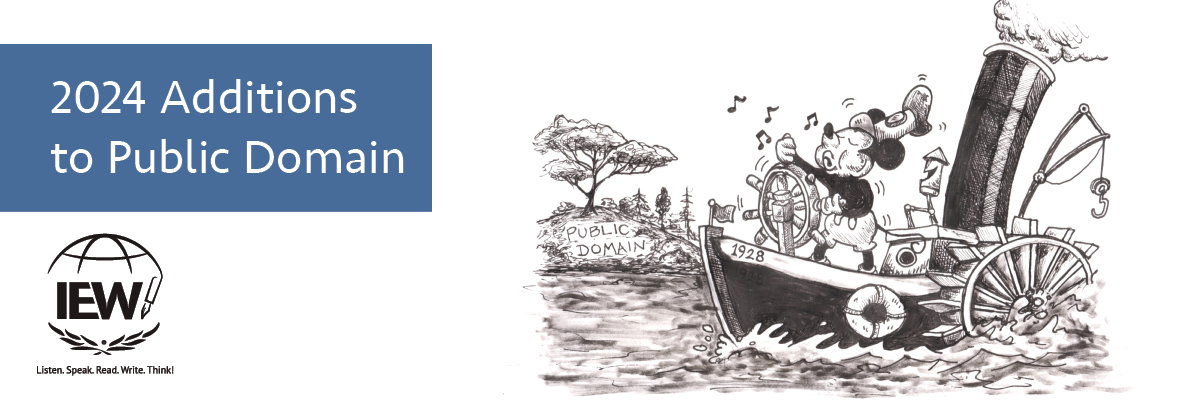
With the flip of the calendar to a new year, the United States is also enjoying the addition of several new titles to the public domain. Public domain materials are no longer covered... read more

What was your first thought when you heard the title of Andrew Pudewa’s talk, Teaching Boys and Other Children Who Would Rather Make Forts All Day? If you’re anything like me, you began... read more

My daughter and I have enjoyed venturing back into ancient history studies this past year. Of the four-year history cycle that we study, it has always been my favorite. And out of ancient... read more
Now that school is back in session, we wanted to share some suggestions that will help you inspire your students throughout the year and into the future. The word inspire comes from two... read more
A note before you begin: This post contains many helpful links to materials, related blogs, and additional information on our Schools website. We recommend that you read the blog all the way... read more
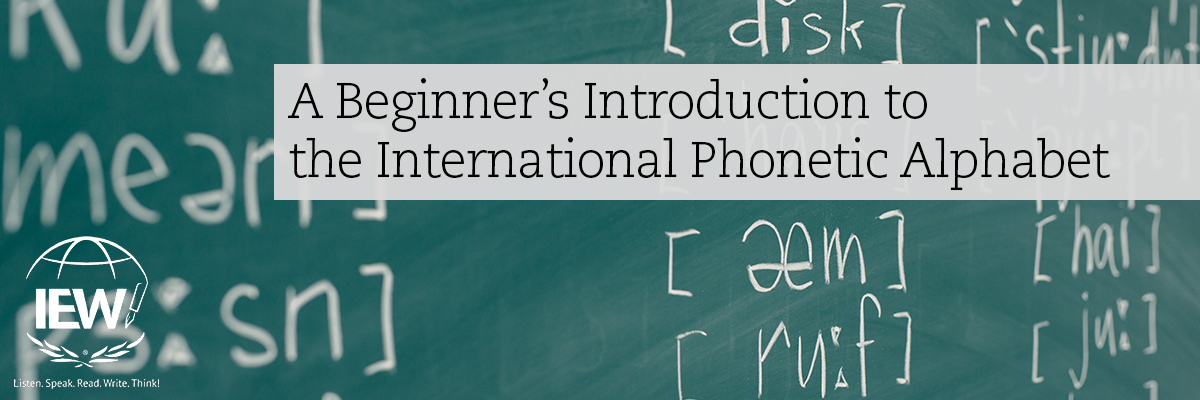
kæn juː riːd ðɪs If you have not heard of the International Phonetic Alphabet (IPA), then the above characters likely look extremely odd. If you don’t know what they say, you can find out... read more

One of the most frequent questions IEW’s customer service receives is “How much parent involvement does this program require?” This is understandable. Homeschool parents juggle multiple students at multiple levels, run a household,... read more

A History of Inconsistency Over the course of my thirty-four-year career as an elementary school teacher, I taught at seven schools in three school districts in three different states. The districts ranged from rural... read more
“How do I love thee? Let me count the ways.” This first line of Elizabeth Barrett Browning’s Sonnet 43 is familiar to most people. As we continue with our theme of “Furnishing the... read more

The Structure and Style® methodology provides a framework for incorporating writing into other subject areas. It is also flexible and easily adapted to specific situations. A state history project is one of these.... read more

In our last blog post, we described the initial steps you need to take in order to plan for a successful year utilizing our flagship course, Teaching Writing: Structure and Style, as the... read more

As educators, we all dream of the day that our students are motivated and excited about each assignment. Imagine if instead of having to pester and hound our stubborn students, they cheerfully and... read more

I’ve sometimes wondered if I should begin a Perfectionists Anonymous group. It isn’t uncommon for me to put off projects because I don’t have the time to do them perfectly, whether the project... read more

From time to time we enjoy highlighting former structure and style students to showcase their achievements both academically and professionally. Students who learn this writing method are able to confidently use the skills... read more

Why are the Primary Posters necessary in a K–2 classroom? One of the questions we hear frequently from teachers and principals concerns our Primary Posters for Kindergarten, Grade One and Grade Two: “Is this... read more

Questions! They can unnerve us, cause us to doubt, and force us to recognize our lack of knowledge. We can sometimes avoid them because they make us THINK! In our recent Arts of... read more
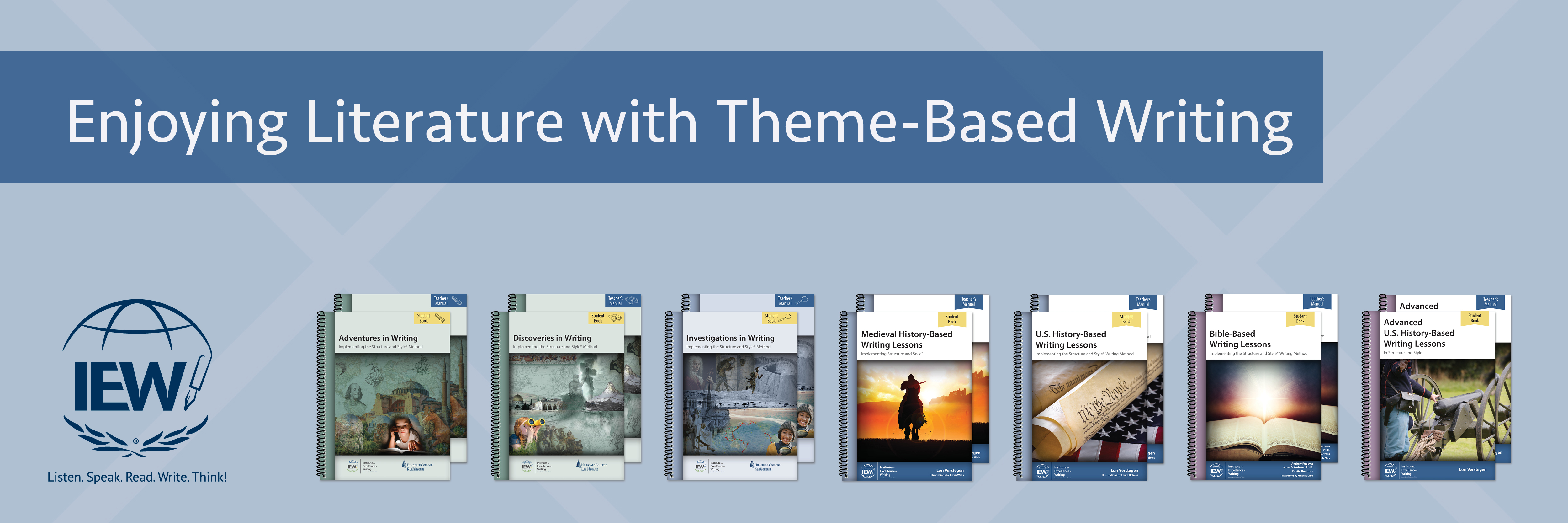
Reading and listening to high-quality literature is a vital component of a student’s education. When students engage with literature, some wonderful things happen: vocabulary expands, syntax develops, and comprehension matures. Not only that,... read more

One of the most powerful tools in any writer’s toolbox is not a fancy stylistic technique or a complex sentence structure—it is the simple act of asking questions. At IEW we see this... read more
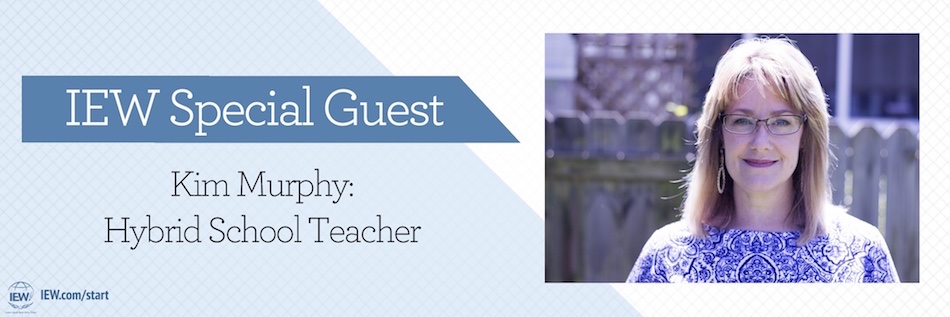
In recent years, more and more parents have opted for a new educational approach that many believe offers the best of both worlds: hybrid schooling. While hybrid schooling still allows for a hands-on... read more
As educators we have a lot to keep track of. Planning lessons, grading, evaluating progress, and communicating with students and parents require our time and attention. Now add to these tasks the typical... read more

The three R’s—reading, writing, and arithmetic—are generally agreed to be the foundation upon which all other subjects, including science and history, are laid. But buried within the writing component is the thing we... read more
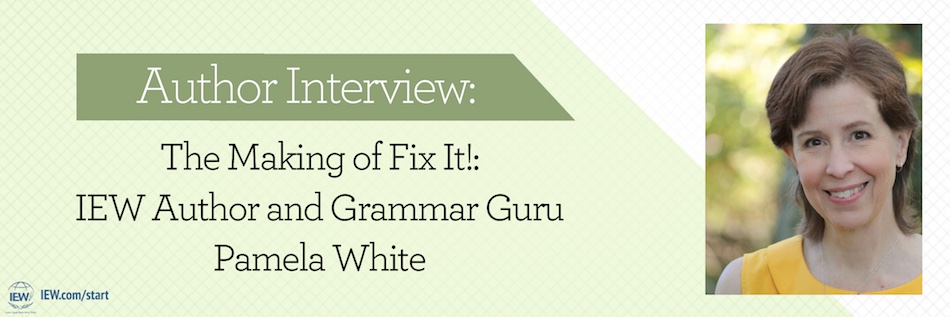
Pamela White is IEW’s “grammar guru.” Author of the popular Fix It! Grammar series and IEW’s online department head for Level C classes, Pamela recently sat down with us to talk about how she... read more
When I was a junior in high school, I enrolled in my first English class with Mrs. Texley. She taught honors English to eleventh and twelfth graders in my small-town Kansas high school.... read more

“Who learns Latin? Why on earth are they learning Latin? Latin is a dead language!” I boldly stated in ignorance a few years ago. As I was contemplating the next steps on our homeschooling... read more

“Sometimes since I've been in the garden I've looked up through the trees at the sky and I have had a strange feeling of being happy as if something was pushing and drawing... read more

Now that high school is far in my rearview mirror, I can attest that the most formative academic experience I had in my teen years was competing in a speech and debate league. At... read more
As teachers, our hearts go out to the reluctant writer—the student who thinks putting pen to paper is painful and who Andrew Pudewa describes in the Teaching Writing: Structure and Style seminar as... read more
People are unique. Just as some people feel most at home in an urban environment, others chafe at the sounds and sights of the city and long for the quiet comfort of a... read more

“We’re on our own for supper tonight. Mom has her book club.” This is a monthly refrain in our house. Throughout most of my adult life, I’ve been talking about books with others,... read more

“I would maintain that thanks are the highest form of thought, and that gratitude is happiness doubled by wonder.” When I came across this quote by G.K. Chesterton, the connection to IEW’s theme... read more
In my house I have a son who I’m trying to help grow up into the man he’s meant to be. He is my sweet, precious boy, and I love him very much.... read more

Meet Sahar and her daughters, Sierra and Sonora. Sahar’s girls participated in Mr. Pudewa’s Structure and Style for Students Year 2 Level A class. We reached out to the family to learn more... read more
Every year, new words are added to the dictionary. In 2018, for instance, words like “bougie,” “bingeable,” and “predictive” were added by Merriam-Webster. But did you know that behind the scenes there is... read more

Amy Wormald is an in-the-trenches veteran of IEW, both learning from and teaching the Structure and Style Writing Method. She learned writing as a student through IEW and then used it as a... read more

I recently had the opportunity to speak with a remarkable woman—Barbara Freeman. With sincerity, passion, and more energy than most, Barbara diligently works to advance the message of the University-Model school. How did... read more
“I hear and I forget; I see and I remember; I write and I understand.” According to this Chinese proverb, writing about something leads to understanding it. While writing instruction is commonly considered... read more

Clothes make the man. It’s a cliché, but there is truth to that statement. People tend to make judgments based on appearance. However, there is an even more powerful determinant of one’s destiny:... read more

Part 1 of this three-part series described four roadblocks that stand in the way of the reluctant writer. Part 2 will explain Units 1 and 2 of the Structure and Style method, which is a... read more
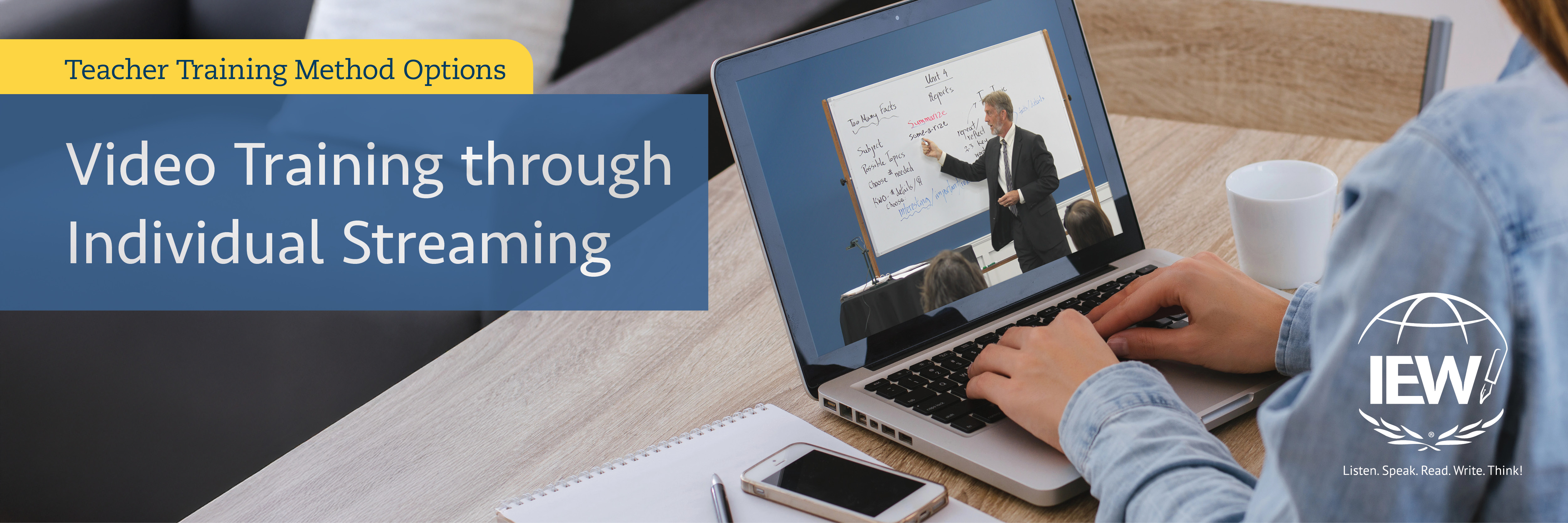
Finding enough time to train your teachers in a group setting can be a challenge. Administrators’ schedules are busier than ever, and teachers have plenty to do in their classrooms without requiring them... read more
During my thirty-four-year career as an elementary school teacher, I taught at seven schools in four school districts in three states. The districts ranged from rural to suburban to inner city, each with... read more
In teaching we often focus on how or what students write: the correct answer, the polished sentence, the completed paragraph. The deeper question—the one that shapes critical thinking—is why. A powerful way to... read more
I have been in the “IEW world” since fifth grade when I was first introduced to its method. Since then, I have known it intimately as a student, as a customer service representative,... read more

In the somewhat musty memories tucked into the corners of my mind, I can vaguely recall my thoughts about homeschooling before I took the plunge. Perhaps I had a bit of hubris, but... read more

Our IEW alumni enter the professional world well equipped with solid communication skills, whether their jobs are in journalism, science, law, or somewhere else. Today we feature a former student who has taken... read more

On June 17 in the United States, we celebrate Father’s Day, a day to recognize the special role that fathers hold in their families. Evan Smith, one of our fabulous IEW dads, wrote... read more

While the official start of summer is still a few weeks away, Memorial Day unofficially ushers in the highly anticipated season. Over the next few weeks, we are going to share some ideas... read more
Right before I began homeschooling, I assiduously prepared my little classroom. Tackling the task with gusto, I established a space that mimicked the classrooms of my youth, right down to the American flag... read more

Over the past year I have been teaching a high school class. I titled the course “Essays, Latin, and Literature.” I informed the students on the first day my aims were two-fold. First,... read more

If you are anything like me, you look forward to bidding farewell to the doldrums of winter with immense anticipation for springtime and all of the beauty that suddenly pours forth! In celebration... read more

IEW offers many excellent programs for language arts. Among them are products dedicated to written expression, speaking, literature, spelling, and handwriting. In this blog post we take a closer look at our Writing... read more
When was the last time you went outside for a walk and really slowed down to notice the nature around you? How about your children? When have they? If your answer is, “I... read more
One of my most favorite high school classes to teach is literary analysis. Partly the reason is because I hold an English degree and focused most of my own studies in literary analysis.... read more

Enjoy Jill Pike's concrete response to a parent’s recent request for help regarding the art of invention. Inventive writing is difficult because it begins with a blank page—what to write? This is why IEW... read more

by Linda Mikottis and Jean Nichols If you are a classroom teacher, chances are you have a number of students in your classroom with a language-based learning disability. Whether your students have been formally... read more
This year has been quite a remarkable one for our family. In the midst of the chaos of COVID-19, we have graduated two students: one from high school and the other from college.... read more
Lately I have been thinking more and more about reading. What is reading, exactly? What processes in the brain does it involve? Why do we read? As a dyslexia tutor, I am fascinated... read more

Enjoy this guest post by Sarah Mackenzie, author and creator of the popular blog, Read-Aloud Revival. When you’re done, check out Sarah’s newest book, The Read-Aloud Family, available from IEW later this spring.... read more
# by Missy Andrews Enjoy this guest blog post written by Missy Andrews, co-author of Teaching the Classics and Worldview Detective. Much has been made in recent years of the prime opportunity childhood presents to shape... read more

Recently we received an email from Marie Greenhalgh. Marie is an IEW Registered Instructor. She contacted us, mentioning that she had noticed that her family was incorporating Structure and Style ideas not only... read more
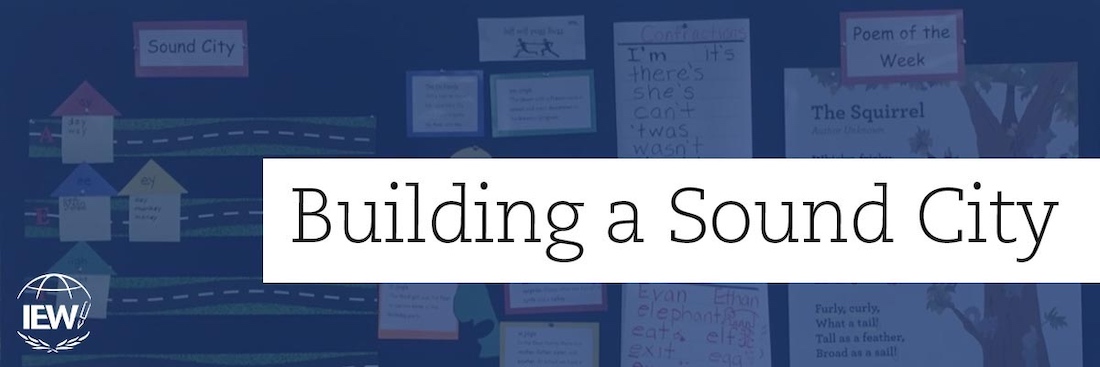
What do city streets, a senior retreat, digraph deliveries, and a silent letter library have in common? They can all be found in a Sound City! Building a Sound City bulletin board delightfully... read more
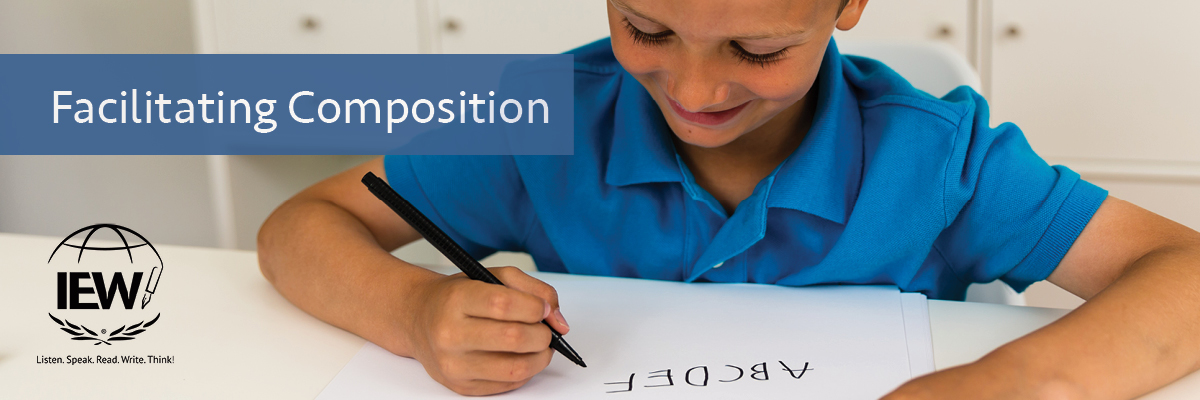
Parts 1, 2, and 3 of this series described the tremendous influence of Anna Ingham’s Blended Sound-Sight Program of Learning in the development of IEW’s Classroom Supplement and Lesson Plans for K–2. In... read more
How are astronauts protected from space dust traveling at the speed of a bullet? How do ants know when another ant... read more
Loosely defined, rhetoric is the art of persuasion. In Podcast 175, Andrew Pudewa and Julie Walker talk about what persuasion is,... read more
Over the past two podcasts, Episodes 221 and 222, Andrew Pudewa and Julie Walker discussed the topic of motivation. As educators,... read more
My teacher training began around age eight. After my grandfather died, we moved to be closer to my grandmother, and my... read more
In her 1977 article “Writing as a Mode of Learning,” Janet Emig states, “Writing serves learning uniquely because writing as process-and-product... read more
Do writing skills really matter if you are wanting to pursue a STEM pathway? Jamie Poston, a computer science and engineering... read more
IEW is widely recognized for exceptional writing courses for the homeschool, classroom, co-op, and tutorial, providing students with excellent content to... read more
IEW teaches students to write with structure and with style. Style includes vocabulary. Structure is the elements found in compositions. Throughout... read more
“Why, Mum, why?” According to my mother, that was my constant refrain when I was young. I guess it matched my... read more
Now that the relaxing Christmas break is over, are you finding yourself suddenly thrust back in the business of life and... read more
Louis Lemmon: Hybrid School Administrator Founded in 2005, Lake Pointe Academy is a K–12 University-Model® school of approximately 195 students. Louis Lemmon served... read more
Many of us at IEW are veteran homeschoolers and are being peppered with questions and concerns from friends who are suddenly... read more
Many years ago when I was a much younger, somewhat bewildered homeschool mom standing in front of the IEW® booth at... read more
Graduating from high school last year, Jacob Mauser has taken the IEW writing skills he learned while being homeschooled to college... read more
What elements need to be in place for a student to have solid reading comprehension? In 1986 psychologists William Tumner and... read more
As a dyslexia tutor, one of the ways I connect with other tutors who do the same thing is through social... read more
The last day of school is almost here! Students’ minds are already thinking weeks ahead about camps, road trips, swimming, and... read more
It’s that time again! Every tenth podcast is set aside so that listeners can “ask Andrew anything.” In podcast Episode 310... read more
Working in IEW’s customer service department, I receive many calls from customers, especially new customers who are concerned that IEW seems... read more
In the latest podcast, Episode 213, Robert Bortins, chief executive officer for Classical Conversations (CC), joined Andrew Pudewa and Julie Walker... read more
I was new to homeschooling with a preschooler, a kindergartner, and a second grader. We had just made a major move... read more
Why is IEW a good fit for students with special needs? This week Andrew Pudewa and Julie Walker read through testimonials... read more
Join Andrew Pudewa and Julie Walker as they discuss dysgraphia with Jennifer Mauser, one of IEW’s Educational Consultants and a Master... read more
# Nathanael Olander grew up an “IEW kid.” His mom, Danielle Olander, is an IEW homeschool exhibitor. Together the two of them... read more
American culture appreciates speed. So many people seem to be in a hurry. People fly down the interstate in their cars.... read more
While the act of reading appears, at least on the surface, to be simple, it is anything but. Reading is actually... read more
The library has always been my happy place. The smell of books. The neatly organized stacks. The access to anything I... read more
With the arrival of the new year, individuals often make resolutions and set new goals for themselves. Teachers reevaluate classroom practices... read more
For many years there have been two primary diagnostic exams for students preparing to attend college, the SAT® and the ACT®.... read more
Administrators, curriculum directors, and schoolteachers often call IEW’s Schools Department asking if our curriculum meets state educational standards. Some schools or... read more
On Day 3 of Twelve Days of Christmas Giving, IEW is giving you a three-week sample from Writing Across the Curriculum.... read more
With podcast Episode 285 Andrew Pudewa concludes recounting the accumulated twenty-year tally of his “Best Book of the Year List.” To... read more
Whether you use one of IEW’s Writing Across the Curriculum courses or a Structure and Style® for Students video-based course, it... read more
One of the hallmarks of IEW’s Structure and Style® methodology is to assign students composition checklists that follow EZ+1. What does this... read more
This week, for your enjoyment, we are revisiting a classic post from our archives. We hope you enjoy Andrew's thoughts on... read more
Last week, Andrew Pudewa and Julie Walker hosted a webinar called “A Crash Course for Accidental Homeschooling.” If you weren’t able... read more
In fifth grade I attended a small Christian school in Sarasota, Florida. It was an exciting year because our classroom was... read more
As the academic year begins to wind down and you begin to reach the end of your writing curriculum, you may... read more
Today’s featured poem is composed by Walter de la Mare, the poet who also crafted “Some One,” a poem encountered in... read more
Have you ever wondered how to motivate your students without resorting to bribery? Occasionally our exceptional customer service team receives a... read more
There are many options available to teach IEW writing to your students. One of the most enjoyable and successful ways to... read more
As educators, whether of the traditional brick-and-mortar variety, the homeschool variety, or anything in between, we earnestly desire to prepare our... read more
If your students are using IEW’s new Structure and Style for Students (SSS) program this year, you may be wondering whether... read more
Spring is in the air. How can you tell? Birds are building nests, trees are beginning to bud, and conferences for... read more
With the flip of the calendar to a new year, the United States is also enjoying the addition of several new... read more
What was your first thought when you heard the title of Andrew Pudewa’s talk, Teaching Boys and Other Children Who Would... read more
My daughter and I have enjoyed venturing back into ancient history studies this past year. Of the four-year history cycle that... read more
Now that school is back in session, we wanted to share some suggestions that will help you inspire your students throughout... read more
A note before you begin: This post contains many helpful links to materials, related blogs, and additional information on our... read more
kæn juː riːd ðɪs If you have not heard of the International Phonetic Alphabet (IPA), then the above characters likely look extremely... read more
One of the most frequent questions IEW’s customer service receives is “How much parent involvement does this program require?” This is... read more
A History of Inconsistency Over the course of my thirty-four-year career as an elementary school teacher, I taught at seven schools in... read more
“How do I love thee? Let me count the ways.” This first line of Elizabeth Barrett Browning’s Sonnet 43 is familiar... read more
The Structure and Style® methodology provides a framework for incorporating writing into other subject areas. It is also flexible and easily... read more
In our last blog post, we described the initial steps you need to take in order to plan for a successful... read more
As educators, we all dream of the day that our students are motivated and excited about each assignment. Imagine if instead... read more
I’ve sometimes wondered if I should begin a Perfectionists Anonymous group. It isn’t uncommon for me to put off projects because... read more
From time to time we enjoy highlighting former structure and style students to showcase their achievements both academically and professionally. Students... read more
Why are the Primary Posters necessary in a K–2 classroom? One of the questions we hear frequently from teachers and principals concerns... read more
Questions! They can unnerve us, cause us to doubt, and force us to recognize our lack of knowledge. We can sometimes... read more
Reading and listening to high-quality literature is a vital component of a student’s education. When students engage with literature, some wonderful... read more
One of the most powerful tools in any writer’s toolbox is not a fancy stylistic technique or a complex sentence structure—it... read more
In recent years, more and more parents have opted for a new educational approach that many believe offers the best of... read more
As educators we have a lot to keep track of. Planning lessons, grading, evaluating progress, and communicating with students and parents... read more
The three R’s—reading, writing, and arithmetic—are generally agreed to be the foundation upon which all other subjects, including science and history,... read more
Pamela White is IEW’s “grammar guru.” Author of the popular Fix It! Grammar series and IEW’s online department head for Level C... read more
When I was a junior in high school, I enrolled in my first English class with Mrs. Texley. She taught honors... read more
“Who learns Latin? Why on earth are they learning Latin? Latin is a dead language!” I boldly stated in ignorance a... read more
“Sometimes since I've been in the garden I've looked up through the trees at the sky and I have had a... read more
Now that high school is far in my rearview mirror, I can attest that the most formative academic experience I had... read more
As teachers, our hearts go out to the reluctant writer—the student who thinks putting pen to paper is painful and who... read more
People are unique. Just as some people feel most at home in an urban environment, others chafe at the sounds and... read more
“We’re on our own for supper tonight. Mom has her book club.” This is a monthly refrain in our house. Throughout... read more
“I would maintain that thanks are the highest form of thought, and that gratitude is happiness doubled by wonder.” When I... read more
In my house I have a son who I’m trying to help grow up into the man he’s meant to be.... read more
Meet Sahar and her daughters, Sierra and Sonora. Sahar’s girls participated in Mr. Pudewa’s Structure and Style for Students Year 2... read more
Every year, new words are added to the dictionary. In 2018, for instance, words like “bougie,” “bingeable,” and “predictive” were added... read more
Amy Wormald is an in-the-trenches veteran of IEW, both learning from and teaching the Structure and Style Writing Method. She learned... read more
I recently had the opportunity to speak with a remarkable woman—Barbara Freeman. With sincerity, passion, and more energy than most, Barbara... read more
“I hear and I forget; I see and I remember; I write and I understand.” According to this Chinese proverb, writing... read more
Clothes make the man. It’s a cliché, but there is truth to that statement. People tend to make judgments based on... read more
Part 1 of this three-part series described four roadblocks that stand in the way of the reluctant writer. Part 2 will explain Units... read more
Finding enough time to train your teachers in a group setting can be a challenge. Administrators’ schedules are busier than ever,... read more
During my thirty-four-year career as an elementary school teacher, I taught at seven schools in four school districts in three states.... read more
In teaching we often focus on how or what students write: the correct answer, the polished sentence, the completed paragraph. The... read more
I have been in the “IEW world” since fifth grade when I was first introduced to its method. Since then, I... read more
In the somewhat musty memories tucked into the corners of my mind, I can vaguely recall my thoughts about homeschooling before... read more
Our IEW alumni enter the professional world well equipped with solid communication skills, whether their jobs are in journalism, science, law,... read more
On June 17 in the United States, we celebrate Father’s Day, a day to recognize the special role that fathers hold... read more
While the official start of summer is still a few weeks away, Memorial Day unofficially ushers in the highly anticipated season.... read more
Right before I began homeschooling, I assiduously prepared my little classroom. Tackling the task with gusto, I established a space that... read more
Over the past year I have been teaching a high school class. I titled the course “Essays, Latin, and Literature.” I... read more
If you are anything like me, you look forward to bidding farewell to the doldrums of winter with immense anticipation for... read more
IEW offers many excellent programs for language arts. Among them are products dedicated to written expression, speaking, literature, spelling, and handwriting.... read more
When was the last time you went outside for a walk and really slowed down to notice the nature around you?... read more
One of my most favorite high school classes to teach is literary analysis. Partly the reason is because I hold an... read more
Enjoy Jill Pike's concrete response to a parent’s recent request for help regarding the art of invention. Inventive writing is difficult because... read more
by Linda Mikottis and Jean Nichols If you are a classroom teacher, chances are you have a number of students in your... read more
This year has been quite a remarkable one for our family. In the midst of the chaos of COVID-19, we have... read more
Lately I have been thinking more and more about reading. What is reading, exactly? What processes in the brain does it... read more
Enjoy this guest post by Sarah Mackenzie, author and creator of the popular blog, Read-Aloud Revival. When you’re done, check out... read more
# by Missy Andrews Enjoy this guest blog post written by Missy Andrews, co-author of Teaching the Classics and Worldview Detective. Much has been... read more
Recently we received an email from Marie Greenhalgh. Marie is an IEW Registered Instructor. She contacted us, mentioning that she had... read more
What do city streets, a senior retreat, digraph deliveries, and a silent letter library have in common? They can all be... read more
Parts 1, 2, and 3 of this series described the tremendous influence of Anna Ingham’s Blended Sound-Sight Program of Learning in... read more
"Children like to do what they can do." This week, Andrew and Julie delve into the three laws of motivation and provide insight on how to implement them in your student's learning environment. Stay tuned towards the end when Andrew reveals the two secret weapons for creating enthusiasm in your students.
Remember to send your questions to Podcast@IEW.com, and perhaps yours will be answered the next time we Ask Andrew Anything (AAA).
If you have any questions about IEW or our products, do not hesitate to contact our Customer Service Team at 800.856.5815 or Info@IEW.com
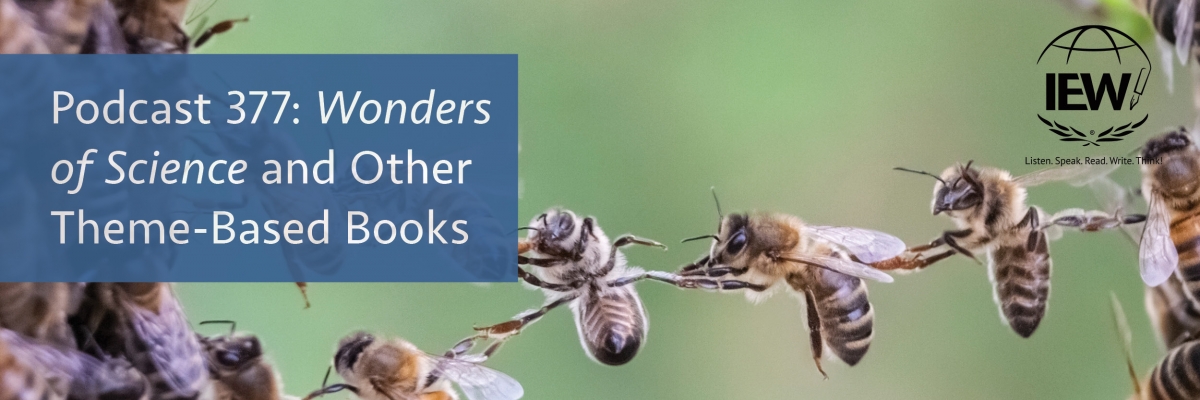
Wonders of Science Writing Lessons joined the theme-based writing series in March 2023. In this podcast Andrew Pudewa and Julie Walker bring clarity to the IEW theme-based product line and give recommendations on where to start and where to continue. They also explore the reason why these are the most frequently asked questions from our customers. Listen in as they praise the benefits and wonders of the IEW theme-based writing lessons.
If you have questions for Andrew, send them to podcast@IEW.com
Perhaps your question will be answered at the next Ask Andrew Anything (AAA).
If you have questions about IEW products or classes, contact customer service at 800.856.5815 or info@IEW.com
What motivates anybody to learn? Answering this question, Andrew and Julie begin this two-part series by discussing the four forms of relevancy. Learn the importance of capitalizing on your student's interests, and gain insight on the least effective form: enforced relevancy.
Remember to send your questions to Podcast@IEW.com, and perhaps yours will be answered the next time we Ask Andrew Anything (AAA).
If you have any questions about IEW or our products, do not hesitate to contact our Customer Service Team at 800.856.5815 or Info@IEW.com
In part two of this series, Andrew and Julie discuss the second form of relevancy: Inspired Relevancy. Even if a child does not have an intrinsic interest in something, they can still be inspired to learn about it if someone they love has a genuine interest in it. Discover the different ways students are inspired to learn, and gain some insight on how you can apply that to your students' studies.
Remember to send your questions to Podcast@IEW.com, and perhaps yours will be answered the next time we Ask Andrew Anything (AAA).
If you have any questions about IEW or our products, do not hesitate to contact our Customer Service Team at 800.856.5815 or Info@IEW.com
If you have ever worked with children, you have probably noticed some differences between boys and girls. This week, Andrew and Julie hone in on the topic. Referencing research and recounting his own experience, Andrew provides informative insight on the learning differences between boys and girls and shares how awareness of the differences can be useful in a learning environment.

Remember to send your questions to Podcast@IEW.com, and perhaps yours will be answered the next time we Ask Andrew Anything (AAA).
If you have any questions about IEW or our products, do not hesitate to contact our Customer Service Team at 800.856.5815 or Info@IEW.com.
Conclude this podcast series with Andrew and Julie as they discuss evaluating writing. With the current mainstream grading system not being an effective motivator for students, the duo explores alternatives to providing good and insightful feedback on your student's writing and encourages teachers and teaching parents to nurture an environment of excellence.
Remember to send your questions to Podcast@IEW.com, and perhaps yours will be answered the next time we Ask Andrew Anything (AAA).
If you have any questions about IEW or our products, do not hesitate to contact our Customer Service Team at 800.856.5815 or Info@IEW.com
This is the eighteenth episode of twenty-four in the podcast series Reviewing Our Greatest Hits. This show was initially launched on January 24, 2018, as Episode 125.
If you're like many families, then you've experienced a bit (or a lot!) of burnout at various times during a school year. Join in on the conversation as Andrew and Julie offer encouragement while they discuss the three laws for keeping you and your students motivated.
Remember to send your questions to Podcast@IEW.com, and perhaps yours will be answered the next time we Ask Andrew Anything (AAA).
If you have any questions about IEW or our products, do not hesitate to contact our Customer Service Team at 800.856.5815 or Info@IEW.com
With memory losing its value in the modern age, Andrew and Julie turn their attention to the goodness of the art. Beginning with the origin, Andrew shares the history of memory and how important it was in the ancient world. Join us this week as the duo discusses how memorization furnishes the mind, and be inspired as Andrew explains how memory is the mother of artistic invention.
Remember to send your questions to Podcast@IEW.com, and perhaps yours will be answered the next time we Ask Andrew Anything (AAA).
If you have any questions about IEW or our products, do not hesitate to contact our Customer Service Team at 800.856.5815 or Info@IEW.com
This is the second episode of twenty-four in the podcast series Reviewing Our Greatest Hits. This show was initially launched on November 14, 2018, as Episode 165.
In part two of this series, Andrew and Julie discuss the second form of relevancy: inspired relevancy. Even if children do not have an intrinsic interest in something, they can still be inspired to learn about it if someone they love has a genuine interest in it. Discover the different ways students are inspired to learn, and gain some insight on how you can apply that to your students' studies.
Remember to send your questions to Podcast@IEW.com, and perhaps yours will be answered the next time we Ask Andrew Anything (AAA).
If you have any questions about IEW or our products, do not hesitate to contact our Customer Service Team at 800.856.5815 or Info@IEW.com
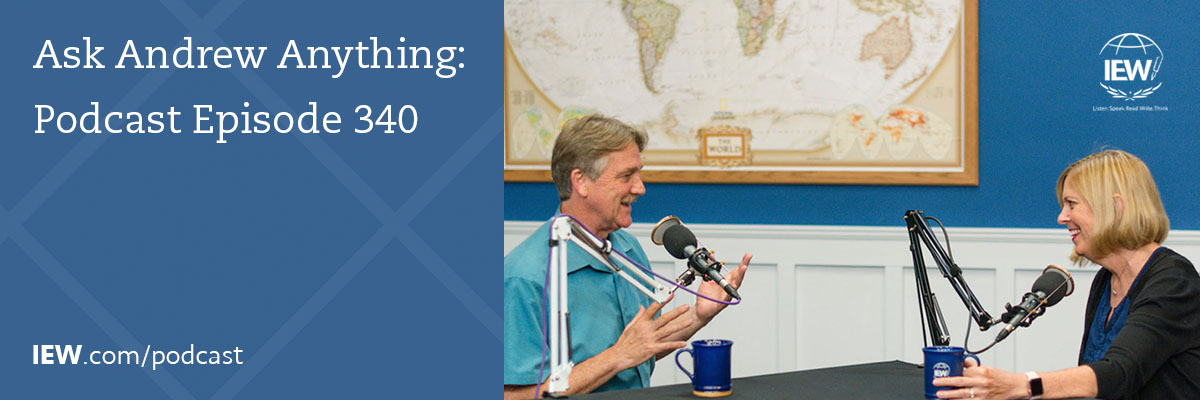
Whether they are broad or technical, serious or humorous, Andrew enjoys receiving and answering questions. In this week's episode, Andrew enthusiastically addresses inquiries posed by teachers and teaching parents. From suggestions about motivation to advice on teaching a student with dysgraphia, Andrew responds to each question with experience and insight.
Remember to send your questions to podcast@IEW.com, and perhaps yours will be answered the next time we Ask Andrew Anything (AAA).
If you have any questions about IEW or our products, do not hesitate to contact our Customer Service Team at 800.856.5815 or info@IEW.com.
This is the ninth episode of twenty-four in the podcast series Reviewing Our Greatest Hits. This show was initially launched on May 18, 2017, as Episode 94.
In this podcast Andrew and Julie address some of the elements of individualized learning. Discover how customizing your students' materials can enhance their learning abilities and motivate them to complete their tasks.
Remember to send your questions to Podcast@IEW.com, and perhaps yours will be answered the next time we Ask Andrew Anything (AAA).
If you have any questions about IEW or our products, do not hesitate to contact our Customer Service Team at 800.856.5815 or Info@IEW.com
"How children learn has a more lasting effect than what they learn." This week Andrew and Julie discuss Intrinsic Relevancy, that thing that is interesting because it is. Join us as Andrew and Julie discuss the importance of capitalizing on your students' intrinsic interests, which then motivates and teaches students how to learn.
Remember to send your questions to Podcast@IEW.com, and perhaps yours will be answered the next time we Ask Andrew Anything (AAA).
If you have any questions about IEW or our products, do not hesitate to contact our Customer Service Team at 800.856.5815 or Info@IEW.com
The start of the school year is an exciting time—a time when energy and motivation are high in the classroom. With many returning to school this month, Andrew and Julie address teachers and teaching parents by discussing ways they can carry the energy from the beginning of the semester throughout the year. From challenging your students to incorporate all of the dress-ups in one sentence, to tracking your students' progress, you'll hear tried and true tips for supercharging creativity and motivation in your classroom!
Remember to send your questions to Podcast@IEW.com, and perhaps yours will be answered the next time we Ask Andrew Anything (AAA).
If you have any questions about IEW or our products, do not hesitate to contact our Customer Service Team at 800.856.5815 or Info@IEW.com.
This is the first episode of twenty-four in the podcast series Reviewing Our Greatest Hits. This show was initially launched on November 7, 2018, as Episode 164.
"How children learn has a more lasting effect than what they learn." This week Andrew and Julie discuss Intrinsic Relevancy, that thing that is interesting because it is. Join us as Andrew and Julie discuss the importance of capitalizing on your students' intrinsic interests, which then motivates and teaches students how to learn.
Remember to send your questions to Podcast@IEW.com, and perhaps yours will be answered the next time we Ask Andrew Anything (AAA).
If you have any questions about IEW or our products, do not hesitate to contact our Customer Service Team at 800.856.5815 or Info@IEW.com

In this episode, Andrew Pudewa and Julie Walker discuss the benefits of eating meals as a family, from healthier eating habits to more confident communicators. Julie also shares a resource on cooking once a month. Listen and be encouraged to put down your phone and start a conversation over a meal.
If you have questions for Andrew, send them to podcast@IEW.com
Perhaps your question will be answered at the next Ask Andrew Anything (AAA).
If you have questions about IEW products or classes, contact customer service at 800.856.5815 or info@IEW.com
This is the third episode of twenty-four in the podcast series, Reviewing Our Greatest Hits. This show was initially launched on November 21, 2018, as Episode 166.
To finish up this conversation on relevancy, Andrew and Julie discuss the last of the four forms of relevancy: contrived relevancy and enforced relevancy. Learn how creating a game can motivate your student to learn, and discover how enforced relevancy is the least effective motivator as it can lead to a dislike for learning.
Remember to send your questions to Podcast@IEW.com, and perhaps yours will be answered the next time we Ask Andrew Anything (AAA).
If you have any questions about IEW or our products, do not hesitate to contact our Customer Service Team at 800.856.5815 or Info@IEW.com
To finish up this conversation on relevancy, Andrew and Julie discuss the last of the Four Forms of Relevancy: Contrived Relevancy and Enforced Relevancy. Learn how creating a game can motivate your student to learn, and discover how Enforced Relevancy is the least effective motivator as it can lead to a dislike for learning.
Remember to send your questions to Podcast@IEW.com, and perhaps yours will be answered the next time we Ask Andrew Anything (AAA).
If you have any questions about IEW or our products, do not hesitate to contact our Customer Service Team at 800.856.5815 or Info@IEW.com
In this podcast Andrew and Julie welcome blogger and homeschool mom of four boys, Monica Swanson. Monica asks Andrew some frequently asked questions from her blog readers on topics like motivation and reading to help her as she writes the last chapter of her book, Boy Mom (working title). Tune in until the end to hear Monica ask her son's fun questions for Andrew.
Remember to send your questions to Podcast@IEW.com, and perhaps yours will be answered the next time we Ask Andrew Anything (AAA).
If you have any questions about IEW or our products, do not hesitate to contact our Customer Service Team at 800.856.5815 or Info@IEW.com
Join us as Andrew discusses his research and cites studies that emphasize the learning differences between boys and girls. Learn how to motivate boys and other active learners by creating relevancy and respecting each child's individual needs.
Remember to send your questions to Podcast@IEW.com, and perhaps yours will be answered the next time we Ask Andrew Anything (AAA).
If you have any questions about IEW or our products, do not hesitate to contact our Customer Service Team at 800.856.5815 or Info@IEW.com
This is the fourth episode of twenty-four in the podcast series Reviewing Our Greatest Hits. This show was initially launched on July 18, 2018, as Episode 148.
In this podcast Andrew and Julie welcome Monica Swanson, a blogger and homeschool mom of four boys. Monica asks Andrew some of her blog readers' frequently asked questions on topics like motivation and reading, to help her as she writes the last chapter of her book, Boy Mom. Tune in to hear Monica ask her son's fun questions for Andrew (near the end).
Remember to send your questions to Podcast@IEW.com, and perhaps yours will be answered the next time we Ask Andrew Anything (AAA).
If you have any questions about IEW or our products, do not hesitate to contact our Customer Service Team at 800.856.5815 or Info@IEW.com
Have you committed one of these four errors in your teaching? Overcorrecting, holding back help, unclear assignments, and over-expectation can frustrate your students and hamper your best efforts. Andrew Pudewa refers to these as the “Four Deadly Errors of Teaching Writing.” Join the Arts of Language podcast as Andrew and Julie Walker discuss these errors along with practical ways to overcome them.
If you have questions for Andrew, send them to podcast@IEW.com
Perhaps your question will be answered at the next Ask Andrew Anything (AAA).
If you have questions about IEW products or classes, contact customer service at 800.856.5815 or info@IEW.com
Are there factors that make learning easier? As Andrew notes, “If something is relevant to you, if it is significant, meaningful, useful, interesting, helpful to you, then it is easy to study and learn.” This week Andrew and Julie discuss the four forms of relevancy: intrinsic, inspired, contrived, and enforced. Andrew and Julie dive into these ideas and share how they can be used to help both students and teachers!
If you have questions for Andrew, send them to podcast@IEW.com
Perhaps your question will be answered at the next Ask Andrew Anything (AAA).
If you have questions about IEW products or classes, contact customer service at 800.856.5815 or info@IEW.com
With the end of the school year comes new opportunities to spend time outside. Listen to this week’s episode as Andrew Pudewa and Julie Walker discuss furnishing the mind with time spent outdoors. We all know that spending time outside is good for children. How might spending time outside also improve students’ writing skills?


If you have questions for Andrew, send them to podcast@IEW.com
Perhaps your question will be answered at the next Ask Andrew Anything (AAA).
If you have questions about IEW products or classes, contact customer service at 800.856.5815 or info@IEW.com

Is the workplace trend of quiet quitting spilling over into education? Join Andrew Pudewa and Julie Walker for a discussion about motivation and how to help kids develop greater attention spans and a desire to learn. Andrew talks about the importance of helping students develop hobbies and learn to make and do real things away from screens.
If you have questions for Andrew, send them to podcast@IEW.com
Perhaps your question will be answered at the next Ask Andrew Anything (AAA).
If you have questions about IEW products or classes, contact customer service at 800.856.5815 or info@IEW.com

In this episode Andrew Pudewa and Julie Walker are joined by Jennifer Mauser, IEW Schools Division Educational Consultant and our in-house expert on learning differences. Andrew and Julie ask Jennifer about teaching and helping students with dyslexia, dysgraphia, and ADHD. The Structure and Style® method can be especially helpful for these students because it breaks down the writing process into manageable steps. They discuss how IEW’s methods and materials also assist gifted and talented students.
If you have questions for Andrew, send them to podcast@IEW.com
Perhaps your question will be answered at the next Ask Andrew Anything (AAA).
If you have questions about IEW products or classes, contact customer service at 800.856.5815 or info@IEW.com

It is time for another “Ask Andrew Anything” podcast episode! In this ongoing series, Julie Walker presents Andrew Pudewa with questions from both teachers and teaching parents. This week many of the questions revolve around the topic of motivation. Andrew’s answers provide insight and encouragement as teachers and students embark on the last half of the academic year.
If you have questions for Andrew, send them to podcast@IEW.com
Perhaps your question will be answered at the next Ask Andrew Anything (AAA).
If you have questions about IEW products or classes, contact customer service at 800.856.5815 or info@IEW.com

In an age of increased technology use, many students are reading on tablets and typing their work. This week Andrew Pudewa gathers his research to discuss the effects of technology in an educational setting. In this insightful episode you will learn about the differences between reading on paper versus on a screen, the benefits of writing notes instead of typing them, and the advantages of using a pen rather than a pencil.
If you have questions for Andrew, send them to podcast@IEW.com
Perhaps your question will be answered at the next Ask Andrew Anything (AAA).
If you have questions about IEW products or classes, contact customer service at 800.856.5815 or info@IEW.com
Should writing be confined to a single subject? Andrew and Julie address the question by discussing writing across the curriculum. Whether it be learning about history or studying science, learn how the incorporation of writing across multiple subjects allows for students to be more engaged with the content they're learning and gives them the opportunity for the application of their skills in a variety of ways.
Remember to send your questions to Podcast@IEW.com, and perhaps yours will be answered the next time we Ask Andrew Anything (AAA).
If you have any questions about IEW or our products, do not hesitate to contact our Customer Service Team at 800.856.5815 or Info@IEW.com

Listen to Andrew Pudewa and Julie Walker as they discuss the Unit 6: Summarizing Multiple References teaching process. Remembering that this is a process, not a product, teachers need to model the research and writing steps with their students. The skills taught in Unit 6 may seem simple, but they form the foundation for research reports and essays.
If you have questions for Andrew, send them to podcast@IEW.com
Perhaps your question will be answered at the next Ask Andrew Anything (AAA).
If you have questions about IEW products or classes, contact customer service at 800.856.5815 or info@IEW.com

Join Andrew Pudewa and Julie Walker for an exciting announcement about a new digital tool—IEW® Writing Companion. They are joined by Heidi Thomas, who worked with Joseph Tabenkin to create IEW® Writing Companion. She describes how IEW Writing Companion solves common problems and provides the assistance that students need to successfully “do what they check and check what they do” as Andrew always encourages. Don’t miss this episode!
If you have questions for Andrew, send them to podcast@IEW.com
Perhaps your question will be answered at the next Ask Andrew Anything (AAA).
If you have questions about IEW products or classes, contact customer service at 800.856.5815 or info@IEW.com
In honor of Mother's Day, Andrew switches things up and interviews Julie Walker, IEW's Director of Marketing and a longtime friend. After meeting Andrew in 1997, Julie took IEW's methodology and used it to teach her three boys and has since applied it to her own life. Join us for this special episode as Julie discusses her journey to IEW, and be encouraged by Julie's wisdom and advice for all moms out there.
Remember to send your questions to Podcast@IEW.com, and perhaps yours will be answered the next time we Ask Andrew Anything (AAA).
If you have any questions about IEW or our products, do not hesitate to contact our Customer Service Team at 800.856.5815 or Info@IEW.com
Since October is dyslexia awareness month, Susan Barton of the Barton Reading and Spelling System joins the Arts of Language Podcast to offer insight on dyslexia. With years of experience, Susan explains dyslexia's intricacies and discusses the temporary accommodations teachers can provide to allow dyslexic students to still thrive and prove their knowledge.
Remember to send your questions to Podcast@IEW.com, and perhaps yours will be answered the next time we Ask Andrew Anything (AAA).
If you have any questions about IEW or our products, do not hesitate to contact our Customer Service Team at 800.856.5815 or Info@IEW.com
In this episode, Andrew and Julie examine the work of IEW, review the problems with the current education system, and discuss IEW's goal in helping students become competent communicators and thinkers.
Remember to send your questions to Podcast@IEW.com, and perhaps yours will be answered the next time we Ask Andrew Anything (AAA).
Andrew and Julie discuss the most concrete of the language arts: writing. Learn how writing can be cultivated before your student even begins to put words to paper, and gain some insight on the tremendous value of copy work as it builds fluency and stamina.
Remember to send your questions to Podcast@IEW.com, and perhaps yours will be answered the next time we Ask Andrew Anything (AAA).
If you have any questions about IEW or our products, do not hesitate to contact our Customer Service Team at 800.856.5815 or Info@IEW.com
This is the seventeenth episode of twenty-four in the podcast series Reviewing Our Greatest Hits. This show was initially launched on November 8, 2016, as Episode 68.
Branching off from last week's special education series, Andrew and Julie open up this conversation by discussing Gifted and Talented Education (GATE). Tune in to learn what it is, the challenges involved, and how IEW can be optimized so that students will have opportunities to use their abilities to the fullest.
Remember to send your questions to Podcast@IEW.com, and perhaps yours will be answered the next time we Ask Andrew Anything (AAA).
If you have any questions about IEW or our products, do not hesitate to contact our Customer Service Team at 800.856.5815 or Info@IEW.com
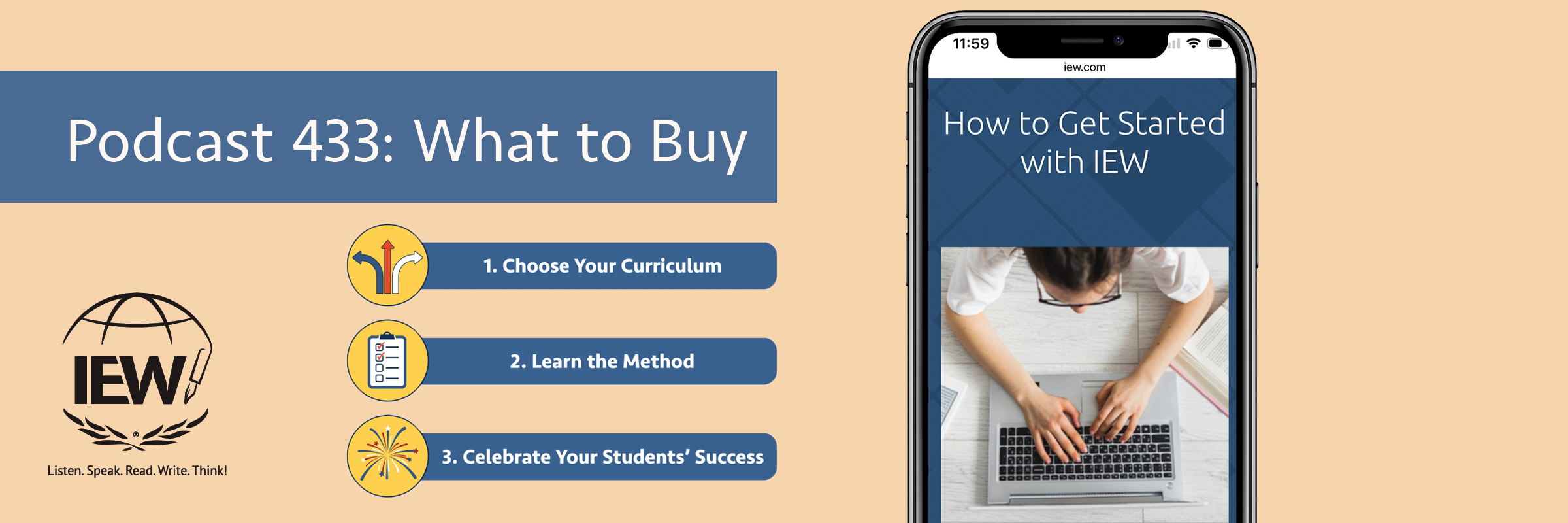
In this episode Andrew Pudewa and Julie Walker answer the question: What should I buy? They simplify the steps for implementing IEW’s Structure and Style materials in your homeschool or classroom.
If you have questions for Andrew, send them to podcast@IEW.com
Perhaps your question will be answered at the next Ask Andrew Anything (AAA).
If you have questions about IEW products or classes, contact customer service at 800.856.5815 or info@IEW.com
Picking up from last week, Andrew and Julie turn to the third element of the conversation: care in the classroom. Whether you are a schoolteacher or a teaching parent, learn how prioritizing and filling yourself allows you to overflow with love towards your students and children. Stay tuned to hear the duo discuss how they have transformed their lifestyles, and glean how self-care has helped them in serving others.
Remember to send your questions to Podcast@IEW.com, and perhaps yours will be answered the next time we Ask Andrew Anything (AAA).
If you have any questions about IEW or our products, do not hesitate to contact our Customer Service Team at 800.856.5815 or Info@IEW.com
Can memory be stored somewhere other than our brains? Tune into this episode to find out! Picking up where they left off, Andrew and Julie conclude the series on memory by going through the joys of memory and providing suggestions as to how to cultivate the art.
Remember to send your questions to Podcast@IEW.com, and perhaps yours will be answered the next time we Ask Andrew Anything (AAA).
If you have any questions about IEW or our products, do not hesitate to contact our Customer Service Team at 800.856.5815 or Info@IEW.com
This is the twelfth episode of twenty-four in the podcast series Reviewing Our Greatest Hits. This show was initially launched on January 5, 2016, as Episode 24.
Andrew and Julie open up their conversation this week by discussing the fading motivation to "do hard things" in our society. With an ever-growing need for proficient communicators, Andrew directs his attention to the importance of cultivating an environment where students strive for excellence and desire to become competent communicators and thinkers.
Remember to send your questions to Podcast@IEW.com, and perhaps yours will be answered the next time we Ask Andrew Anything (AAA).
Andrew has been going through his top read of each year. But does he have a top read of the decade? He just might! With insight and context Andrew and Julie continue down the list of Andrew's top reads from the years 2013 through 2020. Since Andrew hasn't picked his top read of 2021, he instead talks about books that have helped shape his health and well-being during this year.
Remember to send your questions to Podcast@IEW.com, and perhaps yours will be answered the next time we Ask Andrew Anything (AAA).
If you have any questions about IEW or our products, do not hesitate to contact our Customer Service Team at 800.856.5815 or Info@IEW.com
Taking a break from talking dress-ups and motivation, Andrew and Julie explore a different topic this week: cooking. Join us in part one of this two-part series as Andrew and Julie share some of their favorite recipes and discuss the culinary concoction that began Andrew's cooking journey: chocolate mousse.
Remember to send your questions to Podcast@IEW.com, and perhaps yours will be answered the next time we Ask Andrew Anything (AAA).
If you have any questions about IEW or our products, do not hesitate to contact our Customer Service Team at 800.856.5815 or Info@IEW.com

In this Live Ask Andrew Anything episode, Andrew Pudewa and Julie Walker answer questions submitted by listeners. Listen as they discuss how to find the literature suggestions in IEW’s courses, how to decide what courses to use first with younger students, why the levels of some of the theme-based books have changed, what books Andrew is reading now, and more!
If you have questions for Andrew, send them to podcast@IEW.com
Perhaps your question will be answered at the next Ask Andrew Anything (AAA).
If you have questions about IEW products or classes, contact customer service at 800.856.5815 or info@IEW.com
Join us in this episode of "Ask Andrew Anything" as Andrew responds to questions submitted by our podcast listeners. Offering helpful tips and humorous insight, Andrew explains ways to motivate students and where to get started with IEW.
QUESTIONS ASKED:
2:11 - Shannon asks, "I have a girl, but she would rather be digging in the dirt, doing science experiments, or playing in her tree house than doing sit-down work, especially writing. How can you make IEW work for a kinesthetic/tactile learner that prefers to play and experiment?"
9:24 - Karen asks, "I have high school students, and I use a literature-based English curriculum. The books are fantastic, but my students are reluctant to do the reading outside of class time. They also do not want to do other homework outside of class time. Do you have suggestions for motivating students to work independently?"
14:11 - Julie asks, "My son has a short attention span when it comes to lesson time. How can I help with that but still let him build forts?"
16:45 - Angela asks, "I've been a homeschooling mom for over ten years. Normally I'm not nervous about how my kids are doing in the grand scheme of things. Dealing with high school, however, has been a totally different story. How do you know for sure that this is really enough? I think about how my son will succeed in life, what is he doing after high school and college. How can I really know that what we're doing is enough and all will be well?"
23:26 - Julie asks, "How do you deal with a moody and incompliant teen?"
27:22 - Brianne asks, "Where do I start? What do I need in order to teach my middle school student to be prepared for high school writing?"
Remember to send your questions to Podcast@IEW.com, and perhaps yours will be answered the next time we Ask Andrew Anything (AAA).
If you have any questions about IEW or our products, do not hesitate to contact our Customer Service Team at 800.856.5815 or Info@IEW.com
In this two-part webinar recording, Andrew and old-time friend and mentor Dr. Webster walk you through Unit 8: Formal Essay Models. Join us as Andrew explains the elements of an essay and discusses what differentiates Unit 8 from the previous units. Additionally, Dr. Webster answers questions and provides suggestions for tackling essay assignments.
5:04 - Melissa asks, "I have a fourteen-year-old, an eleven-year-old, and a nine-year-old all doing the same Student Writing Intensive group B together this year. The nine-year-old loves to write and is keeping up great with the others. Would it be unheard of for all of them to do the Student Continuation Level B together?"
7:24 - Erica says, "My two daughters are struggling with writing the conclusion and introduction paragraphs. We would appreciate more specifics on how to create a great attention-grabbing intro and a thoughtful conclusion."
11:53 - Christi asks, "My oldest, twelve, is a naturally comfortable writer and is beginning to be very resistant to writing outlines in general. Any suggestions on how to continue to help her see why they are important?"
18:59 - Melissa asks, "Do students write them in this order on their first draft then the correct order on the formal draft? Will it be easy for those typing? I wasn't sure on handwritten."
20:19 - Terra asks, "My fifteen-year-old student has been assigned a ten page science paper. I would like to know if you still include the most important and why. Would you state your opinion as an expert without using "I"? How do you write it in a way that keeps it a factual report and not an essay?"
Remember to send your questions to Podcast@IEW.com, and perhaps yours will be answered the next time we Ask Andrew Anything (AAA).
If you have any questions about IEW or our products, do not hesitate to contact our Customer Service Team at 800.856.5815 or Info@IEW.com
No webinars.
No FAQ.